Getting injured in NSW triggers an immediate question: who covers your medical bills, lost wages, and recovery costs? The answer depends entirely on where the injury happened and who was at fault. Two insurance systems dominate this landscape – Compulsory Third Party (CTP) insurance and public liability insurance – but they operate in completely different spheres with different rules, different payout structures, and different paths to compensation.
Most people discover these distinctions at the worst possible time: lying in a hospital bed, facing mounting expenses, and receiving conflicting advice about which insurer to pursue. Understanding the fundamental differences between CTP vs public liability before an injury occurs removes confusion when it matters most.
What CTP Insurance Actually Covers
CTP Insurance Purpose and Scope
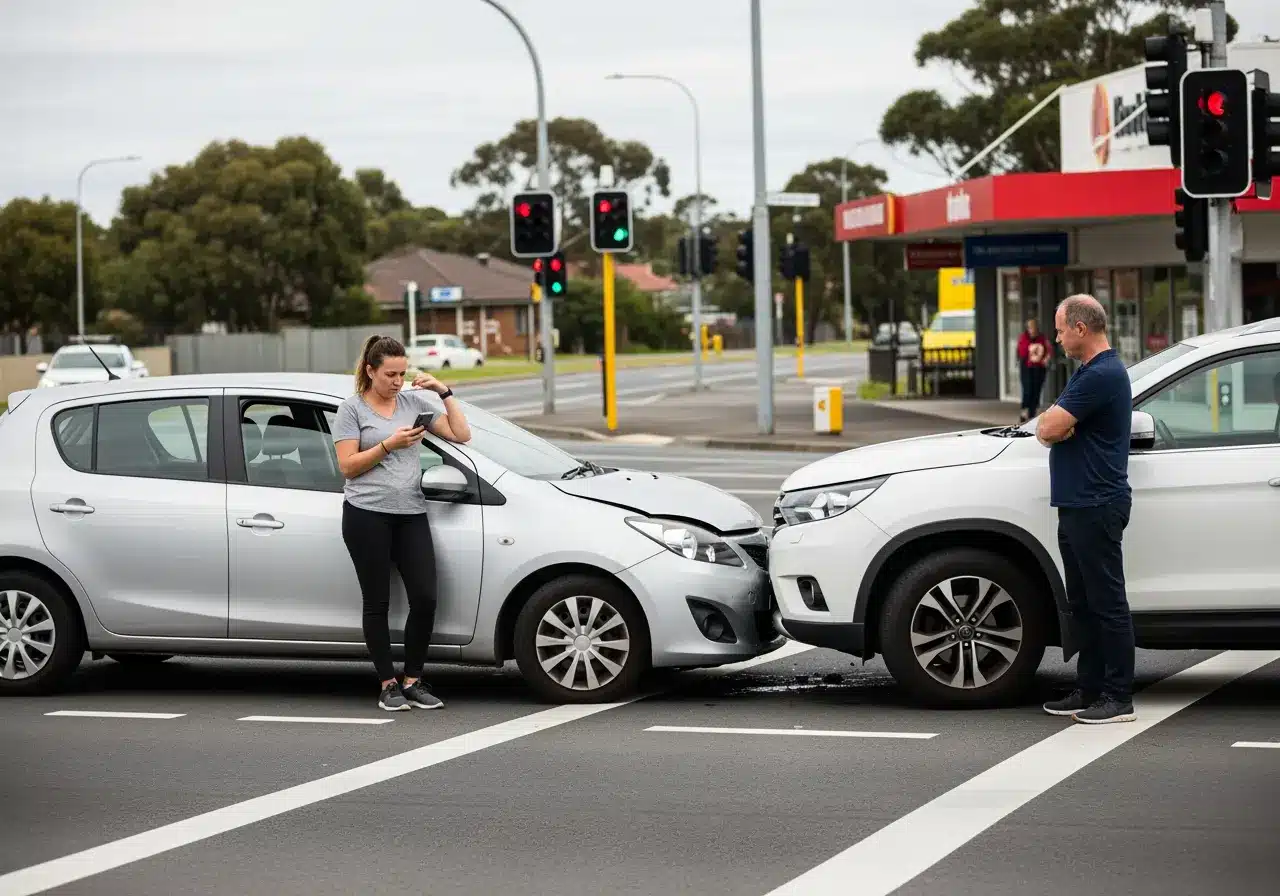
CTP insurance exists for one specific purpose: compensating people injured in motor vehicle accidents on NSW roads. Every registered vehicle in New South Wales must carry a CTP policy, commonly called a Green Slip. This isn’t optional coverage – it’s a legal requirement embedded in the vehicle registration process.
When a car, motorcycle, truck, or bus injures someone, the CTP insurer pays compensation. This applies whether the injured person was a driver in another vehicle, a passenger in any vehicle involved, a pedestrian struck by the vehicle, a cyclist hit by the vehicle, or a motorcyclist involved in the collision.
Motor vehicle accident claims in NSW are governed by the Motor Accidents Injuries Act 2017, which sets out the structured process for accessing CTP entitlements.
Coverage Beyond Medical Bills
For those who are not at-fault, the coverage extends beyond just medical bills and weekly payments. CTP insurance compensates for lost income, future earning capacity and pain and suffering. For those who have ‘non-threshold’ injuries, they can also claim medical expenses for as long as they need them. For injuries causing permanent impairment above 10%, there’s no monetary cap on economic losses.
Here’s what separates CTP vs public liability: you don’t need to prove the other driver was negligent to receive some benefits. Even if you were partially at fault, you may still qualify for “statutory benefits” for up to 52 weeks to cover medical treatment, rehabilitation, and lost income. Full compensation requires establishing the other party’s fault, but this initial safety net exists regardless.
How Public Liability Insurance Operates
Coverage Scope and Common Scenarios
Public liability insurance covers injuries that occur on someone else’s property or through someone else’s negligence – but outside the motor vehicle context. Businesses, property owners, councils, and organisations carry this insurance to protect against claims when someone gets hurt due to unsafe conditions or negligent actions.
Common public liability scenarios include slipping on a wet supermarket floor without warning signs, tripping on broken pavement outside a shopping centre, getting injured by falling merchandise in a retail store, suffering harm from faulty equipment at a gym, being attacked by a dog on someone else’s property, and getting hurt at a public event due to inadequate safety measures.
The Negligence Proof Requirement
Unlike CTP insurance, public liability claims require proving negligence. The injured person must demonstrate that the property owner, business, or organisation owed a duty of care to keep the premises reasonably safe, breached that duty through action or inaction, caused the injury through that breach, and created damages that deserve compensation.
This evidentiary burden makes public liability claims more complex than many CTP cases. You can’t simply show you got injured – you must prove someone else’s negligence caused that injury.
The Critical Distinction: Fault Requirements
CTP Modified Fault Scheme
The fault requirement creates the sharpest divide between these two insurance coverage injury NSW systems. CTP insurance in NSW operates under a modified fault scheme. To claim full economic loss, you need to show you suffered from a “non-threshold” injury and to further claim for pain and suffering, you also need to show you suffer from a whole person impairment of more than 10%.
Public Liability Full Negligence Proof
Public liability claims demand full negligence proof regardless of injury severity. Even if you suffered catastrophic harm, you must establish that the property owner or business breached their duty of care. This often requires witness statements confirming the dangerous condition, photographic evidence of the hazard, maintenance records showing neglect, expert testimony about reasonable safety standards, and documentation proving the business knew or should have known about the risk.
Some public liability defendants argue “obvious risk” defences, claiming the danger was so apparent that no reasonable person would need warning. NSW law recognises this defence in certain circumstances, potentially barring compensation even when a hazard existed.
Coverage Limits and Compensation Caps
CTP Insurance Coverage
CTP insurance in NSW provides coverage for economic losses in cases which involve “non-threshold” injuries. If your injuries cause permanent impairment exceeding 10%, you can also claim for pain and suffering which is currently capped at $691,000 (1 October 2025). For personal injury claims of the most serious nature involving catastrophic impairment, there is no cap on economic losses such as medical treatment, lost earnings, and care costs.
Public Liability Policy Limits
Public liability insurance policies carry predetermined limits, typically ranging from $10 million to $20 million for commercial policies. While this sounds substantial, catastrophic injuries can exhaust even these limits when accounting for lifetime care costs, permanent loss of earning capacity, and ongoing treatment needs.
Time Limits for Making Claims
CTP Claim Timeframes
Both insurance types impose strict time limits, but the deadlines differ significantly.
CTP claims must be lodged within six months of the accident. This means formally notifying the relevant insurer and providing required documentation within that window. Missing this deadline doesn’t automatically destroy your claim – you can apply for an extension up to three years after the accident – but you must provide reasonable explanation for the delay. Courts grant these extensions cautiously, and waiting creates unnecessary risk.
Public Liability Limitation Period
Public liability claims face a three-year limitation period from the date of injury. This sounds more generous, but it creates a dangerous complacency. Building a strong public liability case requires extensive evidence gathering, witness interviews, expert reports, and legal preparation. Starting this process in year two or three leaves insufficient time for thorough case development.
Both claim types benefit enormously from immediate action. Evidence disappears, memories fade, witnesses relocate, and surveillance footage gets deleted. The difference between a successful claim and a rejected one often comes down to evidence secured in the first weeks after injury.
The Claims Process: CTP vs Public Liability
CTP Structured Statutory Process
CTP claims follow a structured statutory process mandated by the Motor Accident Injuries Act 2017. The process includes accident notification within 28 days, claim lodgement within three months with supporting documentation, independent medical examinations to establish injury severity, settlement negotiations, and if settlement fails, dispute resolution through the Personal Injury Commission.
The system provides clear procedural steps, defined timeframes, and statutory benefits available while the claim progresses.
Public Liability Unstructured Process
Public liability claims lack this structured framework. The process typically involves incident documentation, liability investigation, injury assessment, a formal demand letter notifying the potential defendant and their insurer, negotiation through direct discussion or mediation, and if settlement fails, court proceedings in the District Court or Supreme Court.
Public liability claims move at the pace the parties choose, not according to statutory timetables. This flexibility can benefit claimants who need extended treatment before assessing permanent impairment, but it also allows insurers to delay and frustrate legitimate claims.
What Happens When Both Might Apply
Ambiguous Liability Scenarios
Some accidents create ambiguity about which insurance coverage injury NSW system applies. Consider a cyclist hit by a car while riding through a shopping centre car park – the car’s CTP insurance applies because a motor vehicle caused the injury, even though it occurred on private property.
Or consider a passenger injured when their driver crashes due to a pothole the local council failed to repair. The driver’s CTP insurance covers the immediate injuries, but the council’s public liability insurance might also bear responsibility for creating the dangerous road condition.
Legal Analysis Requirements
These overlapping situations require careful legal analysis to identify all potential compensation sources. Personal injury lawyers regularly navigate these overlapping scenarios to identify all available compensation avenues. Sometimes pursuing both avenues simultaneously makes sense; other times, focusing on the stronger claim yields better results.
Workers compensation lawyers sydney and comcare workers compensation sydney specialists also encounter overlapping claims regularly – particularly for workers injured in motor accidents or on third-party premises where both a workers compensation entitlement and a separate CTP or public liability claim may exist simultaneously.
Why the Distinction Matters for Your Compensation
CTP Insurance Advantages
The insurance type determines not just who pays, but how much you receive and how quickly you receive it.
CTP insurance advantages include a structured statutory process with defined timeframes, no need to prove negligence for initial benefits, and specialised dispute resolution through the Personal Injury Commission.
Public liability advantages include a longer time limit for lodging claims, potentially higher non-economic loss compensation in some cases, no permanent impairment threshold for accessing compensation, and the ability to pursue multiple defendants if several parties share responsibility.
Handling Differences Between Schemes
The differences extend to how insurers handle claims. CTP insurers operate under regulatory oversight and statutory obligations that create some predictability. Public liability insurers face fewer constraints and often take more aggressive defence positions, particularly on liability issues.
For workers compensation claimants injured by a third party’s negligence, separate common law claims may run alongside any CTP or public liability proceedings. Similarly, Comcare claims for Commonwealth employees may involve parallel proceedings if a third party’s negligence contributed to the injury. Workers compensation lawyers sydney frequently manage these concurrent claims, and comcare workers compensation sydney entitlements are often assessed alongside any third-party compensation.
Common Mistakes That Cost Claimants Money
Assuming Coverage and Accepting Early Offers
Assuming your health insurance covers everything is a costly mistake. Private health insurance pays for immediate treatment, but it doesn’t compensate for lost wages, future care needs, or pain and suffering. Failing to pursue the relevant liability insurance leaves significant compensation unclaimed.
Accepting early settlement offers is equally damaging. Both CTP and public liability insurers often make early offers before the full extent of injuries becomes clear. Accepting these offers typically requires signing a release that prevents any future claims, even if complications develop later.
Missing notification deadlines creates unnecessary obstacles. Failing to notify the CTP insurer within 28 days or lodge a claim in time weakens your position even if you can still pursue the claim.
Social Media and Failure to Preserve Evidence
Giving recorded statements without legal advice allows insurers to lock claimants into early versions of events. These statements later get used to challenge claims.
Posting on social media is another common and expensive mistake. Insurers routinely monitor claimants’ social media profiles looking for posts that contradict claimed injuries. Failing to preserve evidence – waiting weeks to photograph the accident scene, obtain witness details, or request surveillance footage – often means that evidence disappears before you can secure it.
Where injuries result in long-term disability, a TPD claim through superannuation should also be explored alongside any CTP or public liability compensation.
When to Seek Legal Advice
Situations Requiring Professional Advice
Both CTP and public liability claims benefit from early legal involvement, but certain situations make professional advice essential: injuries causing permanent impairment or long-term disability; disputed liability where the insurer denies the claim; multiple parties potentially bearing responsibility; injuries in circumstances where the applicable insurance isn’t immediately clear; claims approaching time limit deadlines; and settlement offers that seem low compared to the injury severity.
Legal Advice Benefits and Compensation Reality
Goodman Spring is a personal injury law firm assisting injured Australians across NSW with motor vehicle accident, TPD, public liability, workers compensation, and Comcare claims – all on a no win no fee basis. The right legal team doesn’t just handle paperwork – they investigate liability, gather evidence, engage medical experts, negotiate with insurers, and if necessary, run the case through the Personal Injury Commission or court system. For significant injuries, professional legal representation typically recovers far more than the legal fees cost.
Conclusion
The distinction between CTP vs public liability determines everything about your injury claim: who you sue, what you must prove, how long you have to act, what compensation you can receive, and which legal process you navigate. Getting this wrong at the outset can mean pursuing the wrong insurer, missing critical deadlines, or accepting inadequate compensation.
Both systems impose strict time limits and evidentiary requirements that punish delay. The weeks immediately following an injury represent the most critical period for evidence gathering, claim notification, and strategic decision-making.
Every case is different – outcomes depend on your individual circumstances, and legal advice should be sought for your specific situation. To understand which insurance coverage injury NSW system applies to your claim, speak with our compensation claim specialists or call (02) 9261 1799 for a free initial consultation.