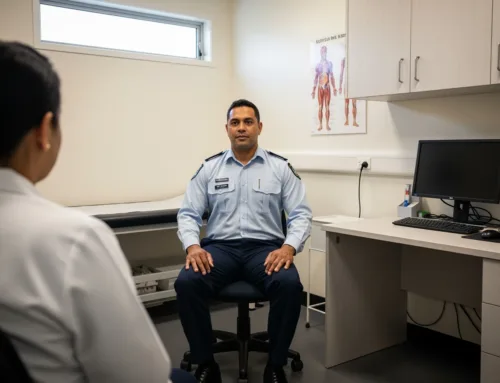
If you are a police officer, firefighter, or paramedic in NSW, your workers’ compensation rights differ significantly from those of standard workers. You hold what is called exempt worker status – a classification that provides enhanced entitlements when you are injured on the job.
Understanding these rights matters. You face unique workplace risks that the NSW workers’ compensation system specifically recognises through expanded coverage and greater financial protection. This article explains what your enhanced rights cover, how they differ from standard entitlements, and what to do when things go wrong.
Understanding NSW Exempt Worker Rights
What Makes You an Exempt Worker?
NSW law defines exempt workers as employees in specific emergency service and law enforcement roles. The classification exists because your job exposes you to higher injury risks than most occupations.
This status applies to NSW Police officers of all ranks, Fire and Rescue NSW firefighters, NSW Ambulance paramedics and ambulance officers, NSW Rural Fire Service permanent staff, State Emergency Service paid workers, Corrective Services NSW officers, and Mines Rescue personnel.
Your NSW exempt worker rights stem from the Workers Compensation Act 1987, which was amended to recognise that emergency service workers face distinct workplace hazards requiring special protection.
Legal Framework for Enhanced Protection
The legislation acknowledges that your role demands more than standard coverage. If you are unsure whether your position qualifies, workers compensation lawyers experienced in exempt worker claims can review your employment status and explain which entitlements apply to you.
Emergency service injury laws exist because standard workers’ compensation thresholds were never designed with your role in mind. The enhancements across impairment thresholds, weekly payment durations, and psychological injury coverage reflect the reality of what emergency service work demands.
How Your Rights Differ from Standard Workers
Whole Person Impairment Thresholds
The most significant difference lies in permanent impairment compensation. Standard workers in NSW face a 15% Whole Person Impairment (WPI) threshold before they can claim lump sum compensation for permanent injuries.
Under emergency service injury laws, even a 1% permanent impairment qualifies you for compensation. No minimum threshold applies. This means injuries that would leave standard workers without any lump sum payment entitle you to financial recognition.
WPI measures how much your injury affects your overall body function. A medical specialist conducts the assessment using standardised guidelines and produces a percentage rating. Even a modest rating carries significant compensation value for exempt workers.
Weekly Payment Protections
Standard workers receive weekly payments for up to five years after their injury date. After that, payments continue only if they meet strict work capacity tests.
Your weekly payments continue without a time limit if you cannot return to work. This protection remains in place for as long as your incapacity continues, provided you meet basic participation requirements in your recovery. For emergency service workers with serious long-term injuries, this uncapped support is a vital financial safety net.
Medical and Treatment Coverage
Both standard and exempt workers receive coverage for reasonable medical treatment. However, your enhanced status means insurers face greater scrutiny when attempting to dispute treatment claims.
The system recognises that emergency service injuries often require extensive, long-term treatment. Your access to ongoing rehabilitation, specialist consultations, and psychological support typically receives broader approval than for standard workers.
Psychological Injury Coverage for Emergency Service Workers
How Standard Restrictions Do Not Apply to You
Your job exposes you to traumatic incidents that most workers never encounter. You witness deaths, serious injuries, violence, and human suffering regularly. NSW exempt worker rights include enhanced psychological injury coverage that specifically addresses this reality.
Standard workers must prove their psychological injury resulted from unreasonable management action or specific workplace events in certain ways. These restrictions do not apply to you with the same force. If you develop PTSD, depression, or anxiety from workplace exposure to trauma, your claim receives different consideration under emergency service injury laws.
Common Psychological Conditions in Emergency Services
Common conditions include Post-Traumatic Stress Disorder from critical incidents, depression following cumulative exposure to trauma, anxiety disorders related to workplace violence, and adjustment disorders after serious workplace events.
The system acknowledges that psychological injuries in emergency services often develop gradually through repeated exposure rather than single incidents. Your personal injury claim can reflect this cumulative trauma. This ensures your mental health is treated with the same priority as physical injuries.
Death Benefits for Your Family
If you die from a workplace injury, your family receives enhanced death benefits. Standard workers’ families receive capped lump sum payments based on their relationship to the deceased.
Your family’s entitlements extend further. Dependent children receive ongoing weekly payments until they turn 16, or until 21 if they remain in full-time education. Your spouse receives weekly payments for life if they do not remarry. These payments provide genuine long-term financial security for families of emergency service workers.
Common Injuries and Correct Reporting
Injury Patterns by Role
Different emergency services face distinct injury patterns. NSW Police officers commonly experience shoulder and knee injuries from physical confrontations, back injuries from wearing heavy-duty duty belts, PTSD from critical incidents and cumulative trauma, and assault-related injuries including fractures and head trauma.
Firefighters typically experience respiratory conditions from smoke and chemical exposure, heat-related illnesses, musculoskeletal injuries from equipment handling, and burns and thermal injuries.
Paramedics commonly experience musculoskeletal injuries from carrying equipment and patient handling, back and neck injuries, psychological injuries from trauma exposure, and assault injuries during emergency responses.
Reporting Your Injury Correctly
You must report your injury to your employer within a reasonable time after it occurs. For emergency services, this typically means as soon as practically possible after the incident.
Documentation should include the date, time, and location of the incident, what you were doing when the injury occurred, the specific nature of your injury, and the names of any witnesses.
Psychological Injury Reporting
For psychological injuries, reporting becomes more complex. You might not immediately recognise that your symptoms stem from work-related trauma. Report the injury as soon as you make this connection, even if months have passed since the traumatic incident. Your employer must provide you with a workers’ compensation claim form within seven days of receiving your injury report.
Journey injuries – those occurring while travelling to or from work – receive coverage for all workers in NSW. For exempt workers, emergency call-outs and travel between multiple work locations during a shift clearly qualify as work-related travel.
When Insurers Dispute Exempt Worker Claims
Common Insurer Tactics
Despite your enhanced rights under NSW exempt worker rights provisions, insurers still dispute exempt worker claims. Common tactics include sending you to insurer-appointed doctors who downplay your injuries, arguing your psychological injury stems from personal life stress rather than workplace trauma, and claiming you have reached maximum medical improvement prematurely.
You do not have to accept these disputes. Engaging a compensation lawyer sydney workers and emergency service personnel trust ensures you have experienced support to challenge unfair decisions from the outset.
Dispute Resolution Options
The Personal Injury Commission of NSW provides an independent forum to resolve disputes, including medical assessments where conflicting medical opinions are independently assessed. Most disputes resolve before reaching arbitration. Having experienced legal representation significantly improves your chances of a favourable outcome.
For motor vehicle accidents occurring during emergency response duties, motor vehicle accident compensation rights may also apply in addition to your workers’ compensation entitlements.
Pre-Existing Conditions and Aggravation
Many workers fear that pre-existing conditions will prevent them from claiming. If your work significantly contributes to your injury or aggravates a pre-existing condition, you can claim compensation. The injury does not need to be the only cause – just a substantial contributing factor.
For exempt workers, the physical demands of emergency service work – carrying heavy equipment, performing rescues, working in physically demanding situations – can clearly aggravate underlying conditions. Your claim does not fail simply because you had a pre-existing vulnerability.
Permanent Impairment, Time Limits, and Superannuation
Key Deadlines You Must Know
NSW workers’ compensation has strict time limits. Missing these deadlines can affect your claim. You must report your injury within six months of becoming aware it is work-related, lodge your claim within six months of the injury, and claim lump sum compensation within five years of the injury date.
The five-year limit for lump sum claims is particularly important. You can claim once your condition stabilises, even within the first year after injury. If you have missed a deadline, seek legal advice immediately as some can be extended in special circumstances.
Superannuation and TPD Claims
Many exempt workers also hold income protection insurance or TPD claim cover through their superannuation. These policies provide additional compensation beyond workers’ compensation. You can pursue both simultaneously.
TPD claims require you to prove you are permanently unable to work in your own occupation or any occupation. The evidence you gather for your NSW exempt worker rights claim often directly supports your TPD claim.
Be aware that some super policies contain offsets for workers’ compensation payments, meaning your payout might be adjusted by any lump sum you receive through workers’ compensation. A lawyer experienced in both workers’ compensation and TPD matters can help you navigate this.
Suitable Duties and Return to Work
Your employer can offer you suitable employment while you recover – modified duties that accommodate your injury restrictions. You must genuinely consider suitable employment offers, as refusing suitable work without good reason can reduce or stop your weekly payments.
A role is considered suitable if it matches your current work capacity as certified by your doctor and the hours and duties are appropriate for your restrictions. If you believe offered duties are not suitable, get your doctor to certify why, and document your concerns in writing.
Injuries sustained in public liability incidents while on duty may also create additional compensation pathways beyond workers’ compensation, depending on the circumstances.
Why Legal Representation Matters for Exempt Workers
Maximising Your Entitlements
You can lodge a workers’ compensation claim without a lawyer. However, legal representation significantly strengthens your position in complex or disputed claims. Many exempt workers accept initial offers that undervalue their injuries because they do not realise the full scope of their entitlements under emergency service injury laws.
Legal support assists by ensuring you claim all entitlements and not just the obvious ones, challenging low-ball permanent impairment assessments, gathering medical evidence that supports your claim, and navigating disputes with insurers effectively.
Goodman Spring is a personal injury law firm assisting injured Australians across NSW with workers’ compensation, TPD, public liability, and other compensation claims – all on a no win no fee basis. You pay nothing unless compensation is secured for you.
Commonwealth Employees and Comcare
Commonwealth government emergency service workers may be covered under a different scheme. Comcare or the relevant insurer administers workers’ compensation for many Commonwealth employees. The entitlements and dispute resolution pathways under federal law differ from the NSW system. If you are unsure which scheme applies to you, seek legal advice before lodging your claim.
Workers who face disputes through either the NSW or federal system should seek legal support early. The personal injury lawyer sydney workers and emergency service personnel rely on will understand which scheme applies and how to pursue your full entitlements within it.
Conclusion
NSW exempt worker rights provide meaningful, enhanced protection for police officers, firefighters, paramedics, and other emergency service workers who face extraordinary workplace risks. Unlike standard workers, you are not subject to the 15% WPI threshold, you receive uncapped weekly payments if you cannot return to work, and you qualify for enhanced psychological injury coverage that recognises cumulative trauma.
Your enhanced status exists because NSW law acknowledges the sacrifices emergency service workers make. Understanding these rights – and acting on them – ensures you receive every entitlement you have earned through your service.
Every case is different. The outcome of your claim depends on your specific circumstances, the nature of your injury, and the evidence available. To understand what your exempt worker status means for your situation, reach out to our exempt worker claim specialists or call (02) 9261 1799 for a free consultation.