Workplace injuries affect thousands of NSW workers annually, ranging from sudden accidents to gradual onset conditions that develop over time. Understanding your rights and the NSW injury claim process ensures you receive appropriate medical treatment, income support, and compensation following work-related injuries.
Understanding Workers Compensation in NSW
What Is Workers’ Compensation Insurance?
Workers’ compensation insurance represents mandatory coverage that all NSW employers must maintain to protect employees injured during employment. This insurance provides medical treatment, income replacement, and rehabilitation support for workers who suffer injuries or illnesses arising from their work activities.
The Workers’ Compensation Act 1987 and Workplace Injury Management and Workers’ Compensation Act 1998 govern this system, establishing employer obligations, worker entitlements, and claim procedures. These laws ensure injured workers receive timely assistance while creating frameworks for dispute resolution when disagreements arise.
Who Is Covered?
NSW workers compensation claim coverage extends to various worker categories:
Employees: All workers under employment contracts receive automatic coverage regardless of employment duration, hours worked, or payment methods. This includes full-time, part-time, and casual employees.
Deemed Workers: Certain contractor arrangements are deemed employment relationships for workers’ compensation purposes, providing coverage even when technical employment relationships don’t exist.
Apprentices and Trainees: People undergoing workplace training receive full coverage under their host employer’s insurance.
Coverage exclusions typically apply to independent contractors operating their own businesses, though determining worker classification can be complex and disputed.
Types of Workplace Injuries Covered
Physical Injuries
Physical workplace injuries constitute the most common category of workers compensation claims:
Sudden Traumatic Injuries: Accidents causing immediate harm, including falls, machinery incidents, vehicle collisions, struck-by injuries, and crush injuries, qualify for compensation when occurring during employment.
Gradual Onset Conditions: Repetitive strain injuries, back conditions from manual handling, hearing loss from noise exposure, and musculoskeletal disorders developing over time through work activities are compensable.
Aggravation of Pre-existing Conditions: Work activities that worsen existing conditions qualify for coverage, though insurers may dispute the extent to which employment versus natural disease progression caused deterioration.
Psychological Injuries
Psychological injuries receive coverage under specific conditions within the NSW injury claim process:
Work-related stress, anxiety, depression, and post-traumatic stress disorder qualify when substantially caused by employment. However, psychological injury claims face additional requirements, including minimum employment duration (typically six months with the same employer) and causation thresholds.
Common challenges include proving employment substantially caused psychological conditions rather than external life factors, and overcoming exclusions for reasonable management actions taken in appropriate ways.
Occupational Diseases
Work-related diseases, including asbestosis, silicosis, dermatitis, respiratory conditions, and hearing loss, qualify when employment exposure substantially contributed to developing the disease. Proving occupational disease causation often requires detailed employment histories, exposure evidence, and medical opinions linking workplace conditions to illnesses.
NSW Injury Claim Process: Step-by-Step Guide
Immediate Steps After a Workplace Injury
Taking prompt action following workplace injuries protects your rights:
Report the Injury Immediately: Notify your employer verbally and in writing as soon as possible after injuries occur. Delays in reporting can jeopardise claims and create disputes about whether injuries happened at work.
Seek Medical Treatment: Obtain immediate medical assessment and treatment. Your employer should provide information about approved medical providers, though you can generally choose your treating doctor.
Document Everything: Record injury circumstances, witnesses, photographic evidence, and maintain copies of all medical reports, certificates, and correspondence related to your injury.
Lodging Your Claim
The NSW workers compensation claim lodgment process involves:
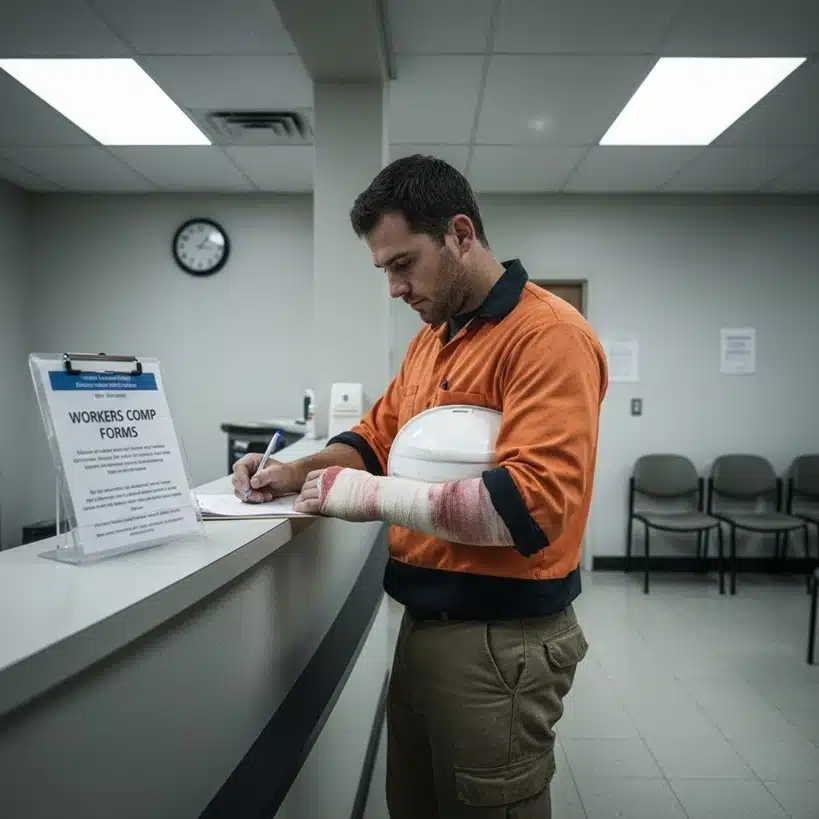
Complete Claim Forms: Workers submit injury claim forms to employers, who forward them with employer reports to their insurers. Forms require detailed injury descriptions, medical information, and employment details. Workers must lodge their workers’ compensation claim within 6 months of the date of injury.
Provide Supporting Documentation: Attach medical certificates, witness statements, incident reports, and any evidence supporting your claim. Comprehensive initial documentation strengthens claims and expedites processing.
Insurer Notification: Employers must notify insurers within 48 hours of receiving injury reports. Insurers then have specified timeframes to investigate and determine claims.
What Happens After You Lodge
Following claim lodgment, insurers investigate injury circumstances, review medical evidence, and determine liability:
Provisional Payments: When liability determination takes time, insurers often make provisional weekly payments while investigations continue, ensuring injured workers receive income support promptly.
Claim Acceptance: Insurers accepting claims confirm coverage and authorise appropriate benefits, including weekly payments and medical expenses.
Claim Rejection: Rejected claims require detailed explanations of reasons. Workers can dispute rejections through formal processes, including Personal Injury Commission proceedings.
Workers Compensation Benefits in NSW
Weekly Payments for Lost Income
NSW workers’ compensation claim provides income replacement when injuries prevent working:
First 13 Weeks: Injured workers receive approximately 95% of pre-injury average weekly earnings during initial incapacity periods.
After 13 Weeks: Payments reduce to approximately 80% of pre-injury earnings, though calculations become more complex, involving statutory maximum amounts.
Duration Limits: How long weekly payments last, will depend upon the worker’s level of whole person impairment. From 1 July 2026, there are likely to be changes to benefits to those suffering from psychological injuries.
Return to Work Impact: Earnings from suitable employment reduce weekly payments, creating financial incentives and requirements for returning to work when medically capable.
Medical and Treatment Expenses
Insurers cover reasonable and necessary medical treatment, including:
- General practitioner and specialist consultations
- Hospital and surgical procedures
- Physiotherapy, psychology, and rehabilitation services
- Medications and medical equipment
- Travel costs for attending medical appointments
Pre-approval requirements may apply for certain treatments, particularly expensive procedures or specialist consultations beyond initial assessments.
Lump Sum Compensation
The NSW injury claim process allows lump sum compensation claims for permanent impairments:
Permanent Impairment Compensation: Workers with permanent impairment exceeding 10% whole person impairment (WPI) receive lump sum compensation calculated according to statutory scales.
Work Injury Damages: Seriously injured workers meeting threshold requirements may pursue court-based damages claims for economic reasons; they can only claim economic losses beyond statutory benefits.
Vocational Rehabilitation and Support
Insurers provide return to work assistance, including:
- Workplace assessments identifying suitable duties
- Graduated return to work programs
- Vocational retraining for alternative employment when pre-injury roles remain unsuitable
- Job placement assistance and employer incentives
- Workplace modifications enabling return to work
Common Claim Challenges and Disputes
Claim Rejections
Insurers reject NSW workers’ compensation claim applications for various reasons:
Causation Disputes: Insurers argue injuries didn’t arise from employment or pre-existing conditions, but were caused by symptoms rather than work activities.
Timing Issues: Late injury reporting or delayed medical treatment creates disputes about injury genuineness or work-relatedness.
Employment Status: Insurers contest whether workers held employee status qualifying for coverage.
Rejected claims require careful analysis and often benefit from legal representation to gather additional evidence and pursue dispute resolution processes.
Medical Disputes
Conflicting medical opinions frequently arise regarding:
- Injury diagnosis and severity
- Treatment necessity and reasonableness
- Work capacity and suitable duties
- Permanent impairment assessments
- Injury causation and work-relatedness
Independent medical examinations arranged by insurers often conflict with treating doctors’ opinions, requiring resolution through additional assessments or dispute processes.
Return to Work Disputes
Disagreements about suitable duties, work capacity, and return to work timing cause significant friction. Employers may offer duties that workers consider unsuitable, while insurers pressure return to work based on medical assessments that workers dispute.
Dispute Resolution in Workers Compensation
Personal Injury Commission
The Personal Injury Commission resolves NSW injury claim disputes through:
Conciliation: Parties meet with commission staff, facilitating settlement discussions without formal hearing processes.
Arbitration: Arbitrators hear evidence and make binding determinations on disputed issues when conciliation fails.
Presidential Decisions: Complex legal questions and high-value disputes proceed to senior commission members for determination.
Legal Representation Benefits
Engaging experienced solicitors significantly improves dispute outcomes. Personal injury lawyers assist by:
- Analysing claim merits and identifying optimal strategies
- Gathering comprehensive medical and employment evidence
- Preparing detailed legal submissions
- Advocating at conciliation and arbitration hearings
- Negotiating favourable settlements
For statutory claims, the Independent Review Office issues grants of legal assistance to lawyers. This means that workers are not charged legal fees. Many solicitors offer no-win-no fee arrangements for Work Injury Damages claims. This means that there are no financial barriers to obtaining quality legal representation for workers’ compensation claims.
Protecting Your Rights Throughout the Process
Time Limits and Deadlines
Strict timeframes govern NSW workers compensation claim processes:
Injury Notification: Report injuries to employers promptly – preferably immediately or within days of occurrence.
Claim Lodgment: Lodge formal claims within six months of injury, though extensions apply in some circumstances.
Lump Sum Claims: Permanent impairment claims become more difficult the more time that passes from injury stabilisation.
Dispute Lodgment: Challenge insurer decisions within prescribed periods to preserve rights to benefits and compensation.
Employer Obligations and Protections
NSW legislation protects workers from victimisation for making legitimate claims:
Anti-Victimisation Provisions: Employers cannot dismiss, demote, or disadvantage workers for lodging workers’ compensation claims.
Job Security: Workers retain employment rights during claim periods, subject to reasonable return to work expectations when medically capable.
Suitable Duties Obligations: Employers must consider suitable duties accommodating work capacity restrictions when medically advised.
Common Mistakes to Avoid
Protecting NSW injury claim process outcomes requires avoiding:
Delayed Reporting: Late injury notification creates disputes about causation and genuineness. Report injuries immediately, regardless of initial severity assessments.
Incomplete Documentation: Provide comprehensive injury details, witness information, and medical evidence with initial claims to prevent unnecessary disputes.
Missing Medical Appointments: Attend all medical examinations, rehabilitation sessions, and return to work meetings. Non-attendance jeopardises benefits and creates adverse inferences.
Accepting Inadequate Settlements: Insurers often propose settlements before injuries stabilise or permanent impairment becomes apparent. Obtain legal advice before accepting lump sum offers or discontinuing claims.
Ignoring Return to Work Obligations: Refusing reasonable, suitable duties or failing to participate in return to work programs may terminate weekly payments. Distinguish between unreasonable employer demands (which you can dispute) and reasonable return to work expectations (which you should accommodate).
Conclusion
Understanding NSW workers compensation claim procedures and entitlements protects injured workers’ rights to medical treatment, income support, and appropriate compensation. The NSW injury claim process involves multiple stages from initial injury reporting through claim lodgment, benefit provision, and potential dispute resolution.
Taking prompt action following workplace injuries, maintaining thorough documentation, obtaining appropriate medical treatment, and understanding your legal rights throughout the process ensures you receive fair treatment and maximum entitlements under NSW workers’ compensation legislation.
When disputes arise or claims become complex, professional legal assistance proves invaluable for navigating insurer challenges, gathering persuasive evidence, and advocating effectively for your interests. Quality representation ensures you understand your options and receive the benefits and compensation you deserve following workplace injuries.
Goodman Spring provides expert guidance to injured workers navigating the complexities of workers’ compensation claim NSW procedures.
If you’ve suffered a workplace injury and need assistance with your workers’ compensation claim, contact us at Goodman Spring. Our experienced team specialises in workers’ compensation matters throughout NSW, providing expert guidance and representation to protect your rights and maximise your entitlements.