You’ve been nursing an injury claim for months, maybe longer. You’ve gathered evidence, spoken to lawyers, and now you’re told your case is heading to court. The thought of taking time off work, arranging childcare, and sitting in a courtroom for hours – possibly days – adds another layer of stress to an already difficult situation. It’s exhausting just thinking about it.
Something has changed: you might not need to set foot in a physical courtroom at all. Virtual hearings have become a genuine option for many injury cases In NSW and virtual court injury cases are reshaping how claims move through the legal system in NSW. This isn’t about replacing traditional courts entirely – it’s about giving injured people more flexibility when they’re already dealing with enough.
The shift happened quickly during the pandemic, but it’s stuck around because it genuinely works for many situations. If you’re wondering whether a virtual hearing could apply to your case, or what it actually means for your compensation claim, you’re asking the right questions.
Why This Feels Strange (and That’s Completely Normal)
Most people picture courtrooms as formal, intimidating spaces with wooden benches and a judge elevated above everyone else. There’s a reason that image persists – it’s been that way for centuries. So when your lawyer mentions appearing via video link, it can feel oddly casual for something as serious as your injury claim.
That discomfort is understandable. You might worry that a virtual hearing won’t carry the same weight or that your case won’t be taken as seriously through a screen. But the legal process remains exactly as rigorous. The judge still wears robes, witnesses still take oaths, and every word is still recorded. The formality hasn’t disappeared – it’s just been relocated.
What has changed is accessibility. You’re no longer required to sit in a waiting room for three hours because the previous case ran long. You’re not scrambling to find parking near the courthouse or explaining to your employer why you need another day off. For people managing chronic pain, mobility issues, or ongoing medical treatment, this shift removes genuine barriers.
We worked with a client from Dubbo who’d injured her spine in a workplace accident. Travelling to Sydney for multiple court appearances would’ve meant six-hour drives each way. Through virtual hearings, she participated fully in her workers’ compensation claim from her solicitor’s office in town, with her medical specialist appearing remotely from Newcastle. The claim proceeded without anyone compromising their health or finances just to be physically present.
What Actually Happens in a Virtual Hearing
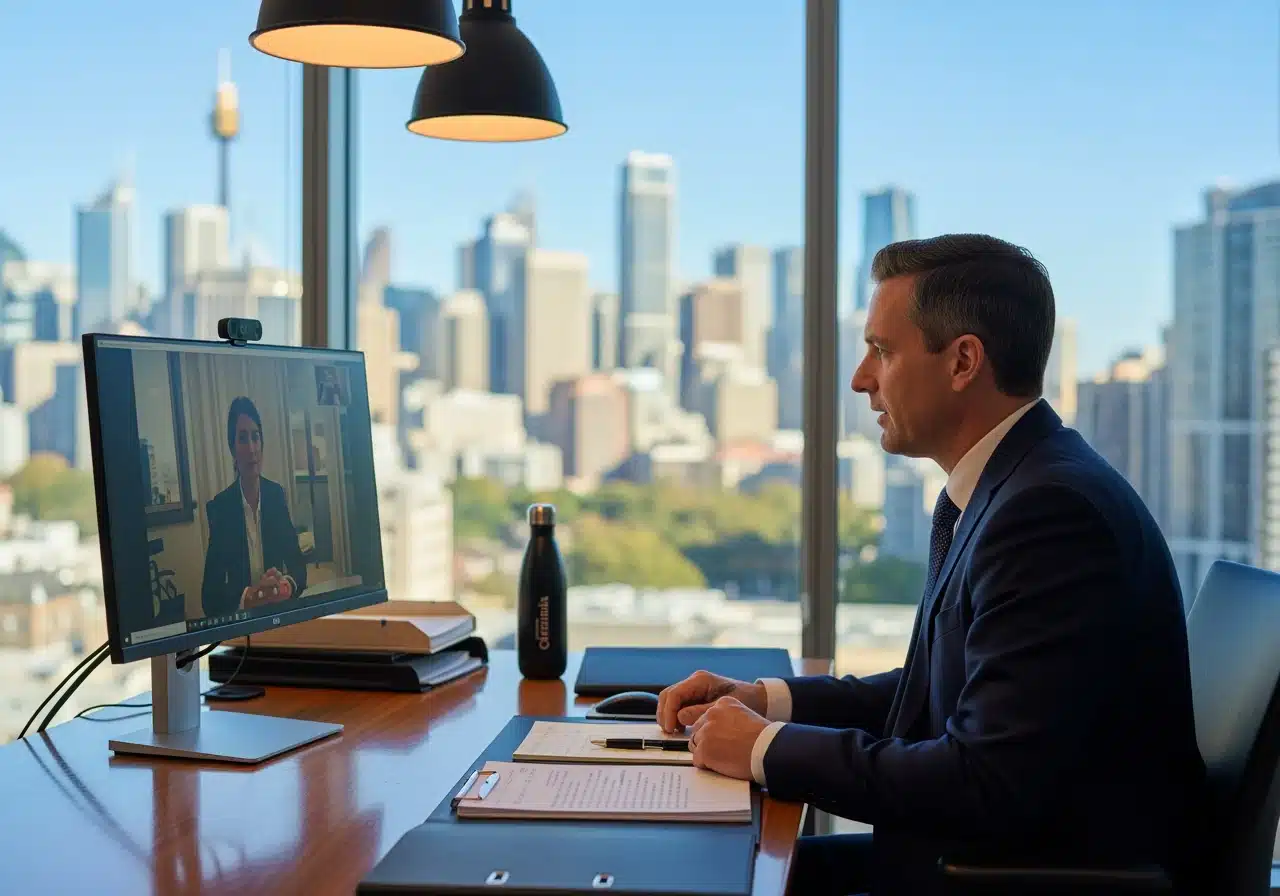
The technology is simpler than you’d expect. Most NSW courts use standard video conferencing platforms – the kind you might already use for work or family calls. You’ll receive a link from your lawyer, click it at the scheduled time, and you’re in. No special equipment needed beyond a phone, tablet, or computer with a camera and microphone.
Your lawyer will brief you beforehand about where to sit (somewhere quiet with decent lighting), what to wear (the same professional attire you’d choose for a physical court), and how to address the judge (exactly as you would in person). The judge appears on screen, along with the other party’s legal team. If witnesses are giving evidence, they appear individually when it’s their turn.
The hearing follows the same structure as a traditional one. Your lawyer presents your case, the other side responds, evidence is submitted electronically, and the judge asks questions as needed. You’ll be asked to speak when it’s relevant, and you can see everyone else on screen. It’s formal, structured, and legally binding – just conducted through screens instead of across a courtroom.
One practical advantage: if you need to refer to documents during your testimony, they’re right there on your screen or in front of you. In a physical courtroom, you’d be handed paper copies and asked to find specific pages while everyone waits. The digital format can actually make things clearer.
When Virtual Hearings Work Best
Not every injury case suits a virtual format, and that’s worth acknowledging upfront. Complex trials involving multiple witnesses, extensive cross-examination, or cases where physical evidence needs to be examined in detail often still require everyone in the same room. But many stages of injury claims work perfectly well remotely.
Pre-trial conferences handle scheduling, procedural matters, and settlement discussions. These rarely need face-to-face interaction and they’re often the first hearings to go virtual. Directions hearings sort out what evidence will be admitted and set timelines. Again, these administrative steps translate easily to video.
Mediation sessions have adapted surprisingly well. You might assume that settlement negotiations need everyone around a table, but many mediators report that virtual sessions actually reduce tension. Parties can take breaks in their own space, consult privately with their lawyers in separate digital rooms, and the physical intimidation factor disappears. We’ve settled several motor vehicle accident claims through virtual mediation where clients felt more comfortable speaking up than they might have in person.
Short hearings for specific applications – like extending time limits or admitting additional evidence – work efficiently online. These used to mean half a day out of your life for a 20-minute appearance. Now they’re genuinely 20 minutes.
Full trials are more case-dependent. Some judges and parties prefer everyone present for the main event, while others are comfortable proceeding virtually if all parties agree. Your lawyer will advise what’s appropriate for your specific situation.
The Practical Benefits You’ll Actually Notice
Time is the most obvious gain. You’re not commuting to court, which for regional NSW clients can mean saving entire days. You’re not sitting in waiting areas wondering when you’ll be called. You log on at your scheduled time, participate, and log off. For people managing injuries, medical appointments, and work commitments, this flexibility matters enormously.
Cost is another factor, though it’s less direct. You’re not paying for petrol, parking, or potentially accommodation if your hearing is far from home. Your lawyer isn’t billing you for travel time. Expert witnesses – medical specialists, engineers, accident reconstruction experts – can appear without flying across the state. These savings add up, particularly in workers compensation cases where multiple medical reports might be needed.
There’s also something to be said for being in familiar surroundings. Courtrooms are designed to be intimidating – that’s partly intentional. When you’re already nervous about giving evidence or discussing traumatic events, doing so from your lawyer’s office or even your own home (with proper setup) can reduce anxiety. You’re still taking the process seriously, but you’re not also managing the stress of an unfamiliar environment.
One client described it like this: “I was already terrified about explaining my accident. Not having to walk into that big courtroom and see the other driver sitting there – it helped me focus on just telling the truth clearly.”
What You’re Probably Worried About
“Will the judge take my case less seriously?” No. Judges assess cases on evidence and legal merit, not on whether you appeared in person or via screen. The NSW courts have clear protocols for virtual hearings, and they carry the same legal weight as physical appearances. Your claim isn’t disadvantaged by the format.
“What if my internet drops out?” It happens occasionally, and there are procedures for it. Hearings pause, you reconnect, and you continue. Your lawyer will ensure you’re using a stable connection beforehand, and most courts are understanding about brief technical issues. It’s disruptive but not disastrous.
“Can I still have my lawyer next to me?” Yes. Many clients attend virtual hearings from their lawyer’s office, sitting beside them with the camera showing both of you. This gives you the same ability to receive quiet guidance during the hearing. Alternatively, your lawyer appears on a separate screen and you can message them privately if needed.
“What about showing my injuries?” Photographs and medical reports are submitted electronically and displayed on screen. If a judge needs to see something physical – like a range of movement or visible scarring – that can be demonstrated on camera or, if necessary, that portion of the hearing can be scheduled in person. The format adapts to what the case requires.
“Does the other side get any advantage?” No more than they would in person. Both parties operate under the same conditions. If anything, virtual hearings level the playing field by removing the intimidation factor that sometimes comes from large corporate legal teams filling a courtroom.
How NSW Courts Are Actually Using This
The NSW District Court and Supreme Court have embedded virtual hearing options into their standard practice directions. This isn’t experimental anymore – it’s part of how the system operates. According to the State Insurance Regulatory Authority, personal injury claims are moving through the system more efficiently than they did pre-pandemic, partly due to reduced delays from scheduling conflicts and travel logistics.
The Personal Injury Commission, which handles many workers’ compensation and motor accident disputes, has particularly embraced remote hearings. Their teleconference and video conference guidelines are detailed and well-tested. For straightforward Pain and Suffering disputes or disputes about medical treatment, virtual hearings have become standard rather than exceptional.
That said, the courts remain flexible. If your case genuinely needs an in-person hearing, that option exists. The goal isn’t to force everything online – it’s to provide choice where it makes sense.
When You Should Push for In-Person
Some situations genuinely benefit from traditional courtrooms. If your case hinges on your credibility as a witness and you’re a strong, confident speaker, being physically present can create an impact that doesn’t quite translate through a screen. Judges are skilled at assessing demeanour virtually, but there’s no denying that human interaction works differently face-to-face.
Some complex cases involving detailed expert testimony might need everyone in the same room, particularly if experts need to reference physical models or demonstrate medical procedures. When multiple experts are cross-examining each other’s findings, the back-and-forth can be clearer in person.
If you feel strongly that you want your day in court – the traditional version – that’s a valid preference. Some people need to look the other party in the eye, to have their experience acknowledged in a formal public setting. That psychological element matters, and it’s worth discussing with your lawyer. The legal outcome might be the same either way, but your sense of closure might not be.
What This Means for Your Timeline
Virtual hearings have genuinely shortened some timelines. Court availability has increased because judges can hear more matters when travel and courtroom logistics are removed. Cases that might have waited months for a hearing date are sometimes scheduled within weeks.
Settlement negotiations often move faster, too. When arranging a mediation session that doesn’t require coordinating everyone’s travel schedules, it’s easier to capitalise on momentum. We’ve had cases where a settlement offer came through, and we could schedule mediation within days rather than waiting for the next available in-person slot weeks away.
That said, the actual legal process hasn’t been rushed. The same steps still apply – gathering evidence, obtaining medical reports, and exchanging documents with the other side. Virtual hearings speed up the court-related delays, not the fundamental preparation your claim requires.
Getting Ready for a Virtual Appearance
Your lawyer will walk you through the specific requirements, but a few practical points help. Test your technology beforehand – not five minutes before the hearing starts. Find a quiet space with a neutral background. A home office works fine; your kitchen with family members walking past doesn’t.
Dress as you would for court. This signals respect for the process and helps you mentally prepare. It sounds superficial, but appearing in a business shirt rather than a t-shirt genuinely affects how you carry yourself, even through a screen.
Have your documents organised electronically. Your lawyer will provide what you need, but knowing where things are helps if you’re asked to refer to something specific. Keep a notepad handy for jotting down questions or points you want to raise with your lawyer during breaks.
Remember that you’re on camera the entire time the hearing is active. That doesn’t mean you need to sit frozen and unnatural, but it does mean staying focused. Don’t check your phone, eat, or do anything you wouldn’t do in a physical courtroom.
What Comes Next for Virtual Justice
The technology will keep improving, but the fundamentals won’t change. NSW courts have found a balance between accessibility and formality, between efficiency and thoroughness. Virtual hearings aren’t replacing traditional courts – they’re expanding options for people who need the justice system to work around their real-world constraints.
If you’re pursuing a compensation claim and the idea of multiple court appearances feels overwhelming, ask your lawyer about virtual options. Not every hearing will qualify, but many will. We’ve guided hundreds of clients through virtual hearings across motor vehicle, workplace, and public liability claims. The outcomes are just as strong, the process is just as rigorous, and the stress is often significantly less.
The legal system is supposed to serve you, not add to your burden. When technology can remove barriers without compromising justice, that’s worth embracing. Your injury claim matters regardless of whether you’re in a courtroom or on a screen. What matters is getting the compensation you’re entitled to while protecting your health and wellbeing through the process.
If you’re unsure how virtual hearings might apply to your situation, contact us for a straightforward conversation about your options. At Goodman Spring, we’ve guided clients through this evolving process and can help you understand your options. We’ll tell you honestly what format suits your case and why. No legal jargon, no pressure – just practical guidance from lawyers who’ve been doing this long enough to know that flexibility often leads to better outcomes for injured people trying to rebuild their lives.