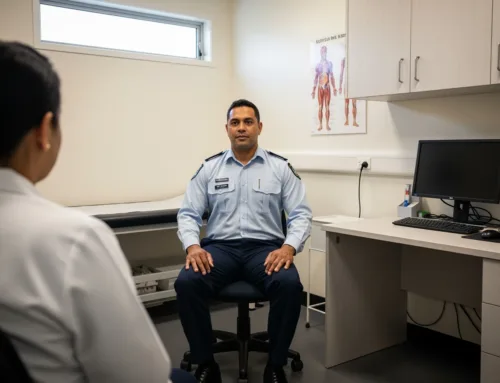
When Sarah walked into Goodman Spring’s Parramatta office in early 2023, she couldn’t make eye contact. Her hands shook as she described what had happened at the retail distribution centre where she’d worked for six years. The bullying had been relentless. The panic attacks started three months before she finally took leave. And she was convinced she didn’t have a case because, as she put it, “I don’t have a broken bone to show anyone.”
She’s not alone in thinking that. Psychological injury claims feel different from physical ones because the damage isn’t visible. There’s no X-ray, no cast, no obvious proof. But under NSW workers’ compensation law, psychological injuries are just as valid as physical ones – and Sarah’s psychological injury case NSW proved exactly that.
Why Psychological Claims Feel Impossible
The Hesitation Almost Everyone Experiences
Most people who contact Goodman Spring about workplace psychological injury have already talked themselves out of it at least once. The pattern is familiar: something is seriously wrong, but there’s a fear no one will believe it. The injury lives in sleepless nights and panic attacks – but how does someone prove that to an insurer?
This hesitation is completely understandable. Physical injuries have clear mechanisms: a heavy lift, a slip, malfunctioning machinery. Psychological injuries often develop gradually through sustained workplace stress, bullying, or traumatic incidents. The cause-and-effect feels murkier, even when the impact on life is devastating.
Why People Doubt Their Own Experience
Sarah had been seeing her GP for anxiety and depression for months before she connected it to work. She’d assumed it was just her – that she wasn’t resilient enough, wasn’t handling pressure well enough. That’s the insidious thing about psychological injury: it makes people doubt whether they’re entitled to help.
But the law doesn’t require workers to be “tough enough” to endure harmful workplace conditions. The evidence matters far more than how someone feels about their own resilience. Understanding what makes a strong workers’ compensation claim helps injured workers recognise when they have a valid case worth pursuing.
What Made Sarah’s Claim Strong
Medical Evidence Built the Foundation
Sarah’s situation involved sustained workplace bullying from a supervisor over approximately 18 months. The behaviour escalated gradually – dismissive comments became public humiliation, reasonable work requests became impossible demands designed to make her fail.
Sarah had been seeing her GP regularly once the anxiety became unmanageable. Her doctor had documented her symptoms, prescribed medication, and eventually referred her to a psychologist. This created a medical trail showing when the psychological injury emerged and how it progressed.
Her psychologist’s reports specifically linked her diagnosed conditions – major depressive disorder and generalised anxiety disorder – to the workplace environment. These diagnoses met the requirements under the Diagnostic and Statistical Manual of Mental Disorders (DSM-5), which NSW workers’ compensation law uses to determine whether a psychological condition qualifies for compensation.
Workplace Documentation and Witness Evidence
Sarah had kept emails. She’d reported concerns to HR twice, though nothing substantive changed. She had performance reviews showing years of strong work before the problematic supervisor arrived. One colleague had witnessed several incidents and was willing to provide a statement.
This corroborating evidence transformed her experience from “he said, she said” into a documented pattern. When pursuing workers’ compensation claims, workplace documentation often becomes the difference between acceptance and denial.
Sarah’s mental health had been stable before this supervisor’s arrival. The deterioration coincided directly with the bullying behaviour. There were no significant personal life events that could explain the psychological decline. This clear temporal relationship between the workplace conduct and her injury strengthened causation – the legal requirement that work substantially caused the psychological condition. According to SafeWork NSW, psychological injuries now represent a significant portion of workers’ compensation claims, and insurers scrutinise them carefully for alternative explanations.
The Obstacles That Needed Addressing
The Reasonable Management Action Defence
Even with strong evidence, Sarah’s claim wasn’t straightforward. The insurer initially disputed it, which happens more often with psychological injuries than physical ones. Understanding why helps injured workers prepare for what might come.
The employer’s insurer argued that Sarah’s psychological condition stemmed from “reasonable management action.” This is the most common defence in workplace psychological injury claims. NSW law specifically excludes compensation for psychological injuries caused by reasonable management decisions – performance reviews, disciplinary action, or roster changes carried out appropriately.
The claim needed to demonstrate that what Sarah experienced went well beyond reasonable management. The supervisor’s conduct wasn’t legitimate performance management; it was targeted, personal, and created a hostile work environment. The emails showed this clearly. So did the witness statement from her colleague, who described watching the supervisor publicly berate Sarah for minor issues whilst treating other team members normally for the same behaviours.
Questioning the Severity of Injury
The insurer also questioned whether Sarah’s injury was severe enough to meet the threshold for compensation. NSW workers’ compensation law requires that psychological injuries constitute a “psychological or psychiatric disorder” as defined in the DSM-5.
Sarah’s psychologist provided a comprehensive report confirming her diagnoses met this standard. This is where early medical intervention becomes crucial – without proper diagnosis and documentation from qualified mental health professionals, insurers will argue the condition isn’t severe enough to warrant compensation.
The Treatment Delay Complication
There’s something important here about the gap between knowing help is needed and actually getting it. Sarah had delayed seeing a psychologist for months because she couldn’t afford the gap fees on her retail wage. By the time she started treatment, her condition had worsened significantly.
This delay actually complicated her claim – the insurer suggested the severity resulted from lack of treatment rather than workplace conduct. This is one of the cruelest catches in psychological injury claims: treatment is needed to prove the injury is serious, but the injury itself often makes it harder to access or afford that treatment.
The claim addressed this by having Sarah’s GP provide a statement explaining that financial constraints and deteriorating mental health had created barriers to earlier psychological care. The State Insurance Regulatory Authority guidelines recognise these practical realities, and ensuring insurers understand them becomes essential for many injured workers facing similar circumstances.
How the Claim Actually Progressed
The Initial Dispute and Evidence-Gathering Phase
Sarah lodged her workers’ compensation claim in March 2023. The insurer had 21 days to make a liability decision – whether they’d accept the claim or dispute it. They requested additional information twice, which extended the timeline. This waiting period was extraordinarily difficult for Sarah. She wasn’t working, had no income, and didn’t know if her claim would be accepted.
In May, the insurer formally disputed her claim. They cited reasonable management action and questioned causation. This meant the matter needed to move to the Personal Injury Commission to resolve the dispute.
Before heading to the Commission, additional evidence was gathered. An independent psychiatric assessment confirmed Sarah’s diagnoses and explicitly addressed the reasonable management defence. The psychiatrist’s report explained how the supervisor’s conduct went beyond any legitimate workplace purpose and directly caused Sarah’s psychological conditions.
A second witness statement was also secured from another former employee who’d left the company after experiencing similar treatment from the same supervisor. This pattern evidence was powerful – it showed the conduct wasn’t about Sarah’s performance but about the supervisor’s behaviour.
The Emotional Complexity of Proof
Here’s where the process gets emotionally complicated. Sarah had to relive the worst workplace experiences in detail – in statements, in medical assessments, eventually in conciliation. She found this retraumatising. It’s one of the harsh realities of psychological injury claims: proving what happened requires repeatedly describing it.
What helped Sarah was understanding that each retelling served a specific purpose and moved her closer to resolution. Her psychologist also provided support throughout the process, which made a significant difference. Anyone pursuing a personal injury claim should consider maintaining psychological treatment throughout the claims process, not just for evidence purposes but for genuine mental health support.
Conciliation and Settlement
The matter went to conciliation at the Personal Injury Commission in August. At conciliation, both parties present their cases to a conciliator who helps facilitate settlement discussions. The insurer’s legal team saw the strength of the evidence – particularly the independent psychiatric report and the pattern evidence from the second witness.
After a full day of negotiation, the insurer agreed to accept liability for Sarah’s claim. This meant she’d receive weekly compensation payments, coverage for her ongoing psychological treatment, and a lump sum settlement for her permanent impairment.
What Sarah’s Case Teaches About Successful Claims
Early Medical Intervention and Thorough Documentation
Every psychological injury case NSW involves unique circumstances, but Sarah’s experience highlights patterns seen repeatedly in successful claims throughout the state.
The sooner an injured worker sees a GP or psychologist about workplace-related mental health concerns, the stronger the evidentiary foundation. Waiting until crisis point creates gaps that insurers will exploit. If work is affecting mental health, documenting it with a healthcare professional now becomes critical for any future claim.
Emails, text messages, performance reviews, meeting notes – anything that documents workplace experience or concerning behaviour should be preserved. Records of incidents that seem minor at the time become important when patterns emerge over months. This documentation often proves decisive when insurers question whether bullying or harassment actually occurred.
Reporting Formally and the Value of Witnesses
Sarah’s HR complaints didn’t fix the problem, but they created an official record that she’d raised concerns before her psychological injury became severe. This timeline matters legally. It shows attempts were made to address the situation and that the employer had notice of the problem.
If colleagues witnessed the conduct that caused psychological injury, their statements carry significant weight. People are often reluctant to ask coworkers to get involved, which is completely understandable. But in Sarah’s case, both witnesses came forward willingly because they’d seen what happened and wanted to help.
The Guilt That Comes With Psychological Injury Claims
Why This Guilt Is Misplaced
Sarah struggled with something seen in nearly every psychological injury case: guilt about claiming compensation for a mental health condition. She felt like she was being weak, making a fuss, or somehow taking advantage of the system.
This guilt is misplaced, but it’s real and it’s powerful. Many injured workers think they should have been able to handle the situation better, or that other people have it worse, or that they’re somehow failing by not just pushing through.
Here’s what’s actually true: workplace psychological injuries are recognised under NSW law because workplaces have a legal duty to provide a safe work environment. That includes psychological safety. When an employer fails in that duty and a worker develops a recognised psychiatric condition as a result, compensation isn’t a favour or a handout – it’s a legal entitlement.
The Accountability That Claims Can Create
Think of it like this: if an employer’s faulty equipment broke someone’s arm, there’d be no guilt about claiming compensation for the medical treatment and time off work. A psychological injury caused by workplace conduct is no different legally. The injury is real, the impact on life is real, and the employer’s responsibility is real.
Sarah eventually came to terms with this, but it took time. What helped her was understanding that her claim also created accountability. The company conducted a workplace investigation after her claim was lodged. The problematic supervisor was eventually moved to a different role with no direct reports. Sarah’s claim potentially prevented other employees from experiencing what she’d endured.
Where Most Claims Stumble
Delayed Treatment, Unclear Causation, and Giving Up Too Early
Psychological injury claims fail or become unnecessarily complicated for predictable reasons. Being aware of these pitfalls gives injured workers a better chance of avoiding them.
If months pass between when psychological symptoms first appear and when a doctor is consulted, insurers will question why help wasn’t sought earlier. They’ll suggest the condition isn’t serious or isn’t work-related. Seeing a GP as soon as work starts affecting mental health becomes essential, even if making a claim isn’t being considered yet.
Not all workplace stress qualifies for compensation. The law recognises that work can be demanding and that reasonable management decisions might be stressful. Psychological injury needs to result from something beyond normal workplace pressures – bullying, harassment, traumatic incidents, or sustained unreasonable conduct.
If someone is dealing with psychological conditions related to their personal life alongside workplace issues, insurers will argue the injury isn’t work-related. The law doesn’t require proving work is the only cause, but it does require showing work is a substantial contributing factor. This is where detailed medical evidence becomes crucial – mental health professionals need to explicitly address causation in their reports.
Insurers dispute psychological injury claims at higher rates than physical injury claims. An initial denial doesn’t mean there’s no case – it often just means proper legal representation is needed to present the evidence effectively. Sarah’s claim was initially denied, but that decision was successfully overturned with appropriate legal support and additional evidence.
Practical First Steps for Workers Experiencing Psychological Injury
Three Actions You Can Take This Week
If reading this because of psychological injury at work, everything doesn’t need to be sorted before taking the first step. There’s no need for a perfectly documented case, a formal diagnosis, or absolute certainty about success.
What is needed is to start protecting health and legal rights now. Book a GP appointment and be honest about how work is affecting mental health. Don’t downplay symptoms or try to tough it out. Doctors need to understand the full picture to provide appropriate treatment and documentation. Mention specific workplace incidents or conditions believed to be contributing to psychological symptoms.
Start keeping a simple record. A formal legal document isn’t necessary – a private note on a phone or computer works fine. Date each entry and briefly describe incidents that are concerning, how they felt, and any physical symptoms experienced (sleep problems, panic attacks, difficulty concentrating). This contemporaneous record becomes valuable evidence later.
Talk to a Lawyer Before Deciding Whether to Claim
Many people avoid this step because they think lawyers are expensive or they’re not sure they have a case. At Goodman Spring, we offer No Win, No Fee arrangements for workers’ compensation claims, including psychological injuries. An initial conversation costs nothing and helps injured workers understand their options with professional guidance rather than guesswork.
Sarah waited nearly a year between when the workplace bullying started and when she first contacted legal professionals. She wishes she’d reached out sooner – not necessarily to make a claim immediately, but to understand her rights and start building her case properly from the beginning.
Anyone who has experienced workplace trauma should also be aware that some psychological injuries may overlap with other injury types. For instance, workers injured in workplace vehicle incidents might have grounds for both workers’ compensation and motor vehicle accident claims.
What Happened After Sarah’s Settlement
The Outcome Beyond the Money
Sarah’s psychological injury case NSW settled in September 2023, approximately six months after she first lodged her claim. She received weekly compensation for her time off work, full coverage for her psychological treatment (which she continues today), and a lump sum settlement that recognised her permanent psychological impairment.
The money mattered – she’d been struggling financially during the months without income – but it wasn’t the most important outcome for her. What made the real difference was validation. The accepted claim and settlement meant an official acknowledgment that what she’d experienced was real, was harmful, and wasn’t her fault.
She’s not back at her old workplace. Part of her settlement included a negotiated exit from the company. She’s now working in a different industry with a supportive employer, though she’s still rebuilding her confidence. Her psychologist expects she’ll continue to experience some anxiety symptoms for the foreseeable future, but they’re manageable now with proper treatment and a healthier work environment.
Some injured workers face permanent limitations from psychological injuries that prevent them from returning to any form of work. In such severe cases, exploring Total and Permanent Disability claims through superannuation may provide additional financial support beyond workers’ compensation.
Moving Forward With Your Rights Protected
Your Right to Compensation Is Real and Legitimate
If dealing with psychological injury at work, the path won’t look exactly like Sarah’s. Workplace situations differ, symptoms differ, support systems differ. But the fundamental legal principles are the same, and so is the right to compensation when an employer’s conduct or workplace environment causes genuine psychological harm.
This isn’t about making a fuss or being weak. It’s about protecting health and exercising legal rights under NSW workers’ compensation law. That’s exactly what Sarah did, and Goodman Spring’s compensation lawyers help NSW workers navigate this complex process every day.
If there’s uncertainty about where a situation fits or whether there’s a valid claim, contact the team for a confidential discussion. We provide honest assessments and help injured workers understand their options – no obligation, no pressure, just practical guidance from lawyers who’ve handled hundreds of psychological injury claims across NSW. Call us on (02) 9261 1799.