New South Wales records approximately 300 road fatalities each year, with thousands more suffering serious injuries that trigger complex legal and insurance processes. Understanding NSW road safety laws isn’t just about avoiding fines – it’s about preventing accidents that can expose drivers to significant personal liability and reshape lives permanently.
The state’s road safety framework operates through multiple layers: criminal penalties for dangerous driving, civil liability for negligence, and administrative sanctions through the demerit point system. Each layer carries distinct consequences, and a single incident can trigger all three simultaneously.
The Legal Framework Behind NSW Road Safety
NSW road safety laws draw authority from several key pieces of legislation. The Road Transport Act 2013 establishes the regulatory framework, while the Road Rules 2014 detail specific driver obligations and the Road Transport (General) Regulation 2021 provides further operational regulations. The Crimes Act 1900 addresses serious offences like dangerous driving causing death.
This multi-layered approach means that even a momentary lapse – checking a phone, misjudging a gap, or driving while fatigued – can result in criminal charges, a civil lawsuit seeking hundreds of thousands in damages, and licence suspension. The courts have consistently held that all road users owe a duty of care to others, and breaching that duty through negligent driving creates liability regardless of whether criminal charges proceed.
Transport for NSW data shows that speed, distraction, fatigue, and impairment cause 90% of serious crashes. The legal system targets these behaviours aggressively because they’re preventable. Unlike mechanical failures or truly unavoidable circumstances, these factors represent choices that courts view as breaches of the duty of care every driver accepts when they operate a vehicle.
Speed Limits and Enforcement: More Than Just Numbers
Speed-Related Crash Statistics and Legal Consequences
Speed-related crashes kill approximately 80 people annually in NSW and seriously injure another 800. The legal consequences extend far beyond speeding fines. Exceeding the speed limit by any margin establishes a prima facie case of negligence in civil proceedings – the injured party doesn’t need to prove the speed was inappropriate for conditions, only that the limit was exceeded.
NSW operates fixed speed limits, variable limits on smart motorways, and special limits in school zones and roadwork areas. Mobile and fixed cameras detect violations, but the real legal risk comes from what happens after a speed-related crash. Courts apply a “but for” test: but for the speeding, would the accident have occurred? If the answer is no, liability follows.
How Courts Apply the “But For” Test in Speed Cases
Recent case law demonstrates how seriously courts treat speed violations. In a 2023 NSW District Court decision, a driver who crashed while travelling 15 km/h over the limit was found 100% liable despite the other vehicle making an unexpected manoeuvre. The court held that the excess speed removed the driver’s ability to respond appropriately, making the speeding the proximate cause of the collision.
Drivers should understand that speed limits represent maximum speeds in ideal conditions, not targets. The legal duty requires reducing speed when visibility decreases, roads are wet, or traffic is heavy. Maintaining the speed limit in poor conditions doesn’t shield a driver from liability if they couldn’t stop safely.
Mobile Phone Use and Distraction Laws
Detection Technology and Legal Penalties
Since December 2019, NSW has deployed mobile phone detection cameras that use artificial intelligence to identify drivers using phones. The technology captures both handheld use and drivers touching their phones while mounted. Penalties start at $362 and five demerit points, increasing to $481 and ten points in school zones or for repeat offences.
The law prohibits any touch of a phone while driving unless it’s in a fixed mounting and the driver uses a single touch for specific functions. Even checking a phone at traffic lights breaches the rules. For drivers involved in accidents, phone records become discoverable evidence in civil proceedings, meaning both parties’ legal teams can access detailed usage data to establish whether distraction contributed to the crash.
Phone Use as Evidence in Civil Proceedings
The legal implications extend beyond fines. Phone use creates a documented record that becomes powerful evidence in civil proceedings. When an accident occurs and records show phone activity at the time of impact, establishing negligence becomes straightforward. Defence lawyers struggle to overcome this evidence because it demonstrates a clear breach of attention.
Transport for NSW research indicates that texting while driving makes a crash 23 times more likely. Even brief glances away from the road – two seconds to check a notification – means travelling 33 metres blind at 60 km/h. Courts have awarded substantial damages against distracted drivers, with some judgments exceeding $2 million when serious injuries result.
Drink and Drug Driving: Criminal and Civil Consequences
BAC Limits and Escalating Penalties
NSW maintains a zero-tolerance approach to drink driving for learner and provisional licence holders, and a 0.05 blood alcohol concentration (BAC) limit for full licence holders. For drivers of heavy vehicles and public transport, the limit drops to 0.02. Drug driving laws prohibit any detectable presence of prescribed illicit drugs, regardless of impairment level.
The penalties escalate rapidly. A first-time low-range drink driving offence (0.05-0.08 BAC) results in automatic licence disqualification for three months and fines up to $2,200. Mid-range offences (0.08-0.15) trigger six-month disqualifications and potential imprisonment. High-range offences (above 0.15) result in automatic court appearances, minimum nine-month disqualifications, and likely imprisonment for repeat offenders.
Insurance Exclusions and Personal Civil Liability
Criminal penalties represent only the first layer of consequences. Any accident involving an impaired driver creates near-automatic civil liability. Insurance policies typically exclude coverage for drink or drug driving, meaning the driver personally bears the full cost of damages – which can reach millions when serious injuries occur. The injured party can pursue the driver’s personal assets, including homes and future earnings.
The legal principle is straightforward: choosing to drive while impaired constitutes such a serious breach of duty that courts impose liability almost regardless of other factors. Even if another driver contributed to the accident, the impaired driver typically bears the majority of fault. This approach reflects community standards that view impaired driving as an unacceptable risk that forfeits many legal protections.
Fatigue Management and Driver Responsibility
Fatigue contributes to approximately 20% of fatal crashes in NSW. Unlike alcohol impairment, fatigue is harder to detect and prosecute, but it creates equivalent legal liability. The law requires drivers to be “in proper control” of their vehicles, and falling asleep or experiencing microsleeps breaches this duty.
NSW has specific regulations for heavy vehicle drivers, including mandatory rest breaks and work/rest hour limits. For private drivers, the law operates more generally through the requirement to drive safely. However, when an accident occurs and evidence suggests fatigue – crossing centre lines, failing to brake, or witness statements about erratic driving – establishing negligence becomes straightforward.
Courts examine several factors when assessing fatigue-related liability: hours of continuous driving before the accident, time of day (crashes between 2-6 AM and 2-4 PM attract particular scrutiny), whether the driver had adequate sleep in the preceding 24 hours, known medical conditions affecting alertness, and medication that causes drowsiness.
Right of Way and Intersection Rules
Key Right-of-Way Rules at NSW Intersections
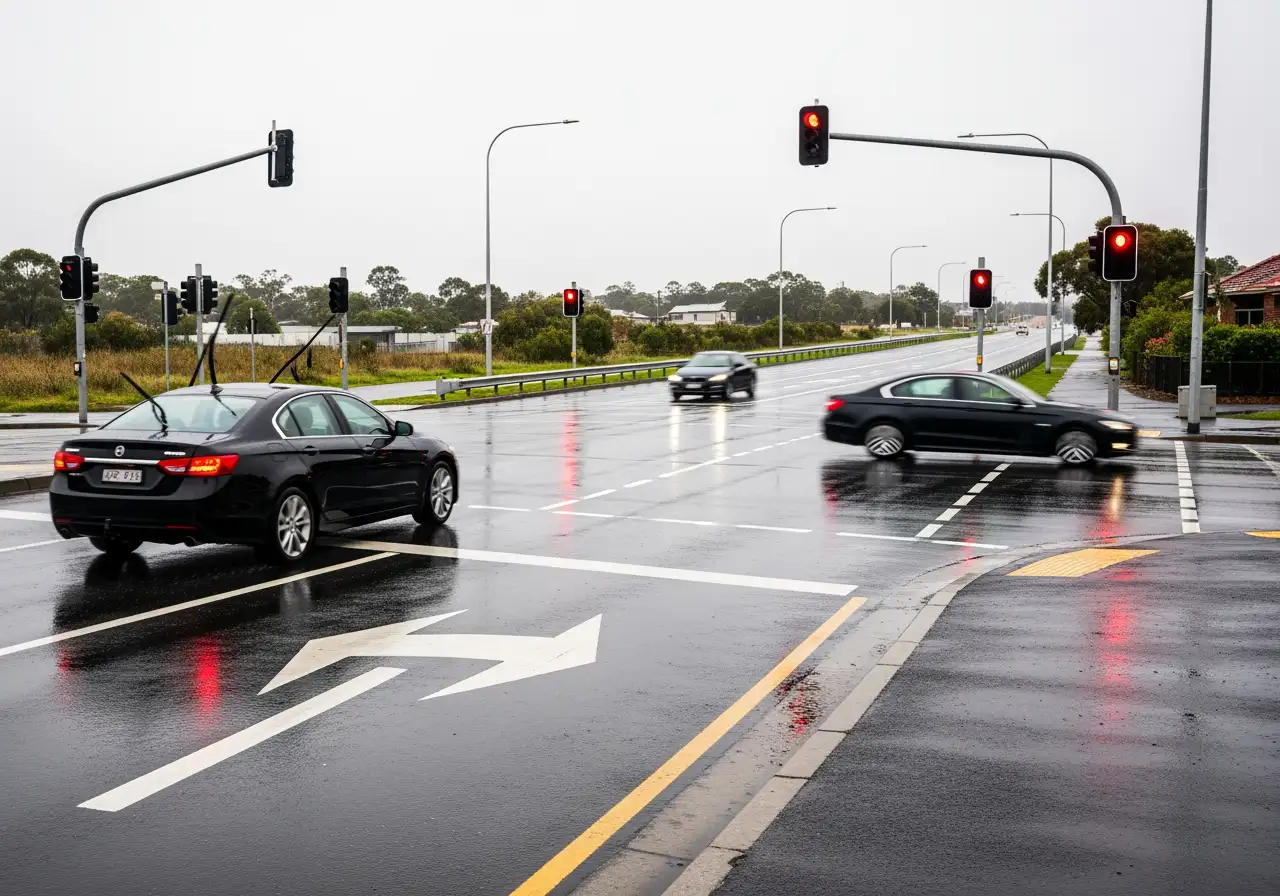
Intersection crashes account for approximately 35% of serious casualties in NSW. The road rules establish clear right-of-way principles, but confusion about these rules creates both accidents and liability disputes. The fundamental principle is that having right of way doesn’t eliminate the duty to drive safely – drivers must ensure they can proceed without creating danger, even when they technically have priority.
Key right-of-way rules include: at uncontrolled intersections, give way to vehicles approaching from the right; when turning right, give way to oncoming traffic; when turning left or right at a stop or give way sign, give way to all vehicles on the continuing road; and at roundabouts, give way to vehicles already in the roundabout.
Evidence Assessment and Contributory Liability
When accidents occur at intersections, courts examine multiple evidence sources: damage patterns on vehicles (indicating angles and speeds), skid marks and final resting positions, traffic signal timing records, witness statements, and dashcam footage.
Even when a driver has right of way, they can still bear partial liability if they failed to take reasonable steps to avoid traffic accidents NSW. A 2023 case illustrates this principle: a driver proceeding through a green light was found 25% liable when they failed to brake despite seeing another vehicle running the red light. The court held that while the red-light runner bore primary fault, the other driver had an opportunity to avoid the collision and failed to take it.
The Role of Vehicle Maintenance in Legal Liability
Vehicle defects contribute to approximately 3% of crashes in NSW, but when mechanical failure causes an accident, determining liability becomes complex. The law requires vehicles to be maintained in a safe condition, and failing to do so creates liability when defects cause accidents.
Common maintenance issues that create legal exposure include: brakes (worn brake pads or low fluid levels that extend stopping distances), tyres (tread depth below 1.5mm or pressures significantly outside recommendations), lights (non-functioning brake lights, indicators, or headlights that prevent other drivers from seeing intentions), steering (worn components that affect vehicle control), and windscreens (cracks or damage that impair visibility).
When an accident occurs and investigation reveals a vehicle defect, the question becomes whether the owner knew or should have known about the problem. Obvious issues – grinding brakes, pulling steering, or warning lights – create liability because a reasonable person would have addressed them. Even less obvious defects can create liability if regular servicing would have detected them.
For leased or fleet vehicles, liability may extend to the leasing company or employer if they failed to maintain proper service schedules. The legal principle holds that whoever controls the vehicle bears responsibility for ensuring it’s roadworthy.
Insurance Requirements and Liability Protection
NSW requires all vehicles to carry Compulsory Third Party (CTP) insurance, which covers injuries to people caused by the vehicle. However, CTP doesn’t cover property damage. This creates significant exposure for drivers who cause accidents without comprehensive insurance.
Property damage liability can easily exceed $100,000 when multiple vehicles are involved or when a crash damages infrastructure like traffic signals or barriers. Without third-party property insurance, the at-fault driver becomes personally liable for these costs.
Most insurance policies include exclusions that void coverage in specific circumstances: driving under the influence of alcohol or drugs, driving without a valid licence, using the vehicle for purposes not covered by the policy, and failing to disclose accurate information when obtaining coverage.
When these exclusions apply, the driver bears full personal liability for all damages. This can result in bankruptcy and decades of financial hardship when serious injuries occur. The legal system provides no protection for drivers who operate vehicles without proper insurance coverage. Accidents involving injuries to pedestrians or passengers on private property can also give rise to public liability claims that sit alongside or separate from standard CTP processes.
Penalties, Demerit Points, and Licence Suspensions
NSW operates a demerit point system where offences accumulate points that trigger licence suspensions when thresholds are reached. Full licence holders face suspension at 13 points in a three-year period, while provisional licence holders face suspension at just 4 points.
Common offences and their point values include: exceeding speed limit by more than 30 km/h (5 points), using a mobile phone while driving (5 points, 10 in school zones), not wearing a seatbelt (3 points), disobeying traffic lights (3 points), and not giving way (3 points).
Accumulating points creates cascading consequences. Licence suspension affects employment for many workers, particularly those in trades, sales, or any role requiring driving. This economic impact compounds the direct penalties from fines and potential criminal convictions.
The legal system offers limited relief through good behaviour periods, where drivers can elect to retain their licence for 12 months despite exceeding their point threshold. However, any offence during this period results in double the original suspension period. Courts rarely show leniency in these cases, viewing the good behaviour option as already providing a second chance.
What to Do Immediately After an Accident
The actions taken immediately after an accident significantly affect both legal liability and the ability to defend against claims. NSW road safety laws require drivers involved in crashes to follow specific procedures.
Stop immediately – failing to stop after an accident is a serious criminal offence, even for minor collisions. Leave the scene only if remaining creates danger.
Check for injuries – provide reasonable assistance to injured people and call emergency services if anyone requires medical attention.
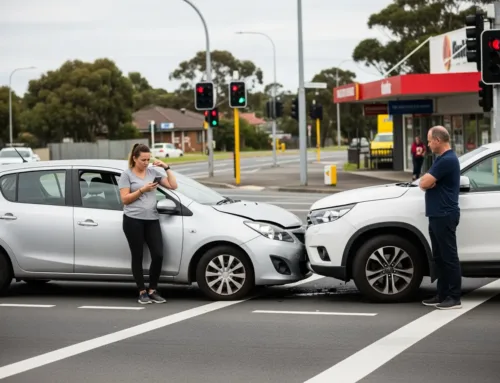
Exchange information – obtain names, addresses, phone numbers, and insurance details from all involved parties. Record registration numbers and take photos of all vehicles and the accident scene.
Report to police – accidents must be reported to police if anyone is injured, killed, or if the other party fails to provide details. For property damage only, reporting requirements vary based on damage extent.
Document everything – take extensive photos of vehicle damage, road conditions, traffic signs, and anything relevant to understanding how the accident occurred. Get contact details from witnesses.
Avoid admissions – while being courteous and checking on others, avoid making statements about fault. Saying “I’m sorry” or “I didn’t see you” can be used as evidence of liability.
Notify your insurer – Goodman Spring recommends contacting your insurance company within the timeframe specified in your policy, typically within 24-48 hours. Failing to notify promptly can void coverage.
Seek medical attention – even without obvious injuries, see a doctor within 24 hours. Some injuries manifest gradually, and delayed medical treatment creates challenges in proving the accident caused the injury.
These steps protect both your legal position and your ability to claim compensation if you’re injured. Failing to document the scene adequately makes defending against liability claims much harder, as does making admissions before understanding the full circumstances.
Understanding Civil Liability and Negligence Claims
Establishing Negligence in Motor Vehicle Claims
When accidents cause injuries, the injured party can pursue compensation through civil proceedings, separate from any criminal charges. NSW operates a two-tiered system; limited compensation for at-fault drivers and extended compensation for those not at-fault.
Establishing negligence requires proving four elements: duty of care (all drivers owe other road users a duty to drive safely), breach of duty (the driver failed to meet the standard of care expected), causation (the breach directly caused the accident and injuries), and damages (the injured party suffered actual losses).
Damages, Contributory Negligence, and Settlement
Compensation in motor vehicle accident claims may include: past and future medical expenses, past and future economic loss (lost earnings and reduced earning capacity), domestic assistance and care costs, and pain and suffering (subject to a threshold and caps).
Contributory negligence reduces awards when the injured party shares fault. For example, a passenger injured while not wearing a seatbelt typically has their damages reduced by 25%, even if the other driver caused the accident. Courts apply percentage liability based on each party’s contribution to the accident.
The practical reality is that most claims settle before trial. However, settlement negotiations occur in the shadow of potential court outcomes, meaning understanding the legal framework helps in assessing whether settlement offers are reasonable. Drivers facing claims should engage experienced legal representation early, as statements made to insurers or other parties can significantly affect liability determinations.
Special Considerations for Commercial and Heavy Vehicles
Commercial drivers face additional legal obligations under the Heavy Vehicle National Law (HVNL), which operates across NSW and other participating states. These regulations impose duties on multiple parties in the supply chain, not just drivers: employers and transport companies, consignors and consignees, loading managers, and schedulers.
This framework recognises that drivers often face pressure to exceed speed limits, drive while fatigued, or operate overloaded vehicles to meet deadlines. By extending liability to other parties who create these pressures, the law aims to address systemic causes of commercial vehicle crashes.
Evidence in commercial vehicle accidents includes: work diary records and electronic logging device data, vehicle maintenance records, loading documentation and weight records, communication records showing scheduling demands, and company policies on safety and compliance.
Accidents involving heavy vehicles result in more serious injuries and deaths due to the mass and momentum involved. This creates higher damages awards and more intensive investigations. Commercial drivers should ensure they understand their rights and obligations, including the right to refuse to drive when fatigued or when the vehicle is unsafe, regardless of employer pressure. Drivers injured in the course of employment may also have entitlements under workers compensation in addition to any motor vehicle claim.
Emerging Technologies and Legal Implications
Dashcams, advanced driver assistance systems (ADAS), and connected vehicle technologies are changing how accidents are investigated and how liability is determined. Dashcam footage provides objective evidence of what occurred, often resolving disputes that would otherwise come down to conflicting witness statements.
However, these technologies create new legal considerations. Dashcam footage that shows the recording driver committed offences before an accident can work against them. Similarly, data from vehicle computers can reveal speed, braking, and steering inputs in the seconds before impact, providing detailed evidence of driver actions.
ADAS features like automatic emergency braking raise questions about liability when the technology fails to prevent an accident. Courts are still developing frameworks for these situations, but the current approach holds that drivers remain responsible for vehicle control regardless of assistance systems. Relying on technology to prevent accidents doesn’t excuse failing to maintain proper attention and control.
The legal landscape will continue evolving as autonomous vehicle technology develops. For now, the fundamental principle remains that the person behind the wheel bears responsibility for safe operation, and technology serves only to assist, not replace, proper driver attention and judgment.
Protecting Yourself: Practical Steps to Avoid Liability
Defensive Driving, Distraction, and Fatigue Planning
Understanding NSW road safety laws provides the foundation, but translating that knowledge into consistent safe driving practices requires deliberate effort. The following approaches reduce both accident risk and legal liability.
Maintain defensive driving habits – anticipate other drivers’ mistakes and leave space to respond. Assume that other drivers might run red lights, fail to give way, or make unexpected manoeuvres.
Eliminate distractions completely – put phones in silent mode and out of reach before starting the vehicle. Even hands-free conversations reduce attention to road conditions by approximately 40%.
Plan for fatigue – schedule breaks every two hours on long trips. Recognise warning signs including heavy eyelids, yawning, difficulty focusing, or drifting between lanes.
Vehicle Maintenance, Insurance, and Dashcams
Maintain your vehicle religiously – follow manufacturer service schedules and address warning lights or unusual sounds immediately. Keep records of all maintenance work.
Understand your insurance coverage – review policy terms annually and ensure coverage limits reflect potential liability exposure. Consider increasing third-party property limits if the minimum seems inadequate.
Install a quality dashcam – choose a model that records continuously and captures clear footage in various light conditions. Ensure the SD card has adequate capacity and replace it annually.
Know when to seek legal advice – after any accident involving injuries, property damage exceeding a few thousand dollars, or disputes about fault, consult specialists in personal injury claims before making detailed statements to insurers or other parties.
These practices don’t guarantee avoiding traffic accidents in NSW – other drivers’ actions remain beyond your control. However, they dramatically reduce the likelihood of being found at fault when accidents occur, and they provide evidence supporting your account of events.
Conclusion
NSW road safety laws create a comprehensive framework designed to prevent accidents through criminal penalties, civil liability, and administrative sanctions. Understanding these laws matters because ignorance provides no legal protection when crashes occur. Drivers who breach speed limits, use mobile phones, drive while impaired or fatigued, or fail to maintain their vehicles face consequences extending far beyond traffic fines – they risk their financial security, their liberty through criminal prosecution, and their ability to drive.
The multi-layered legal approach reflects community expectations that driving is a privilege requiring constant attention and responsible behaviour. Courts consistently hold that drivers who cause accidents through preventable choices deserve limited sympathy, even when other factors contribute to the crash. This strict approach serves the broader goal of deterring dangerous behaviours that kill and injure hundreds of people annually.
Prevention remains far more effective than legal defence. Drivers who understand NSW road safety laws and implement consistent safe driving practices dramatically reduce their accident risk and their exposure to civil liability. When accidents do occur despite precautions, documented safe driving habits and proper insurance coverage provide the strongest legal protection.
If you’ve been involved in a motor vehicle accident, whether as an at-fault driver facing claims or as an injured party seeking compensation, specialist legal advice protects your interests. The interaction between criminal law, insurance contracts, and civil liability creates complexity that requires expertise. Speak with our motor vehicle accident lawyers on (02) 9261 1799 to discuss how understanding your rights and obligations under NSW road safety laws can help you navigate the legal consequences of road accidents and protect your future.