Healthcare workers dedicate their careers to caring for others. Yet they face some of the highest injury risks across all Australian industries. Behind these statistics sit nurses, doctors, allied health professionals, and support staff dealing with back injuries from patient lifting, needlestick exposures, assault from patients, and psychological trauma from workplace stress.
Understanding compensation rights matters because medical staff often prioritise patient care over their own wellbeing. This delays injury reports and minimises symptoms. The unique demands of healthcare work – rotating shifts, infectious disease exposure, physical demands, and emotional intensity – create injury patterns that differ markedly from other industries. This guide explains your rights, the compensation available, and how to protect your claim.
Common Healthcare Worker Injuries in NSW
Manual Handling and Patient Lifting Injuries
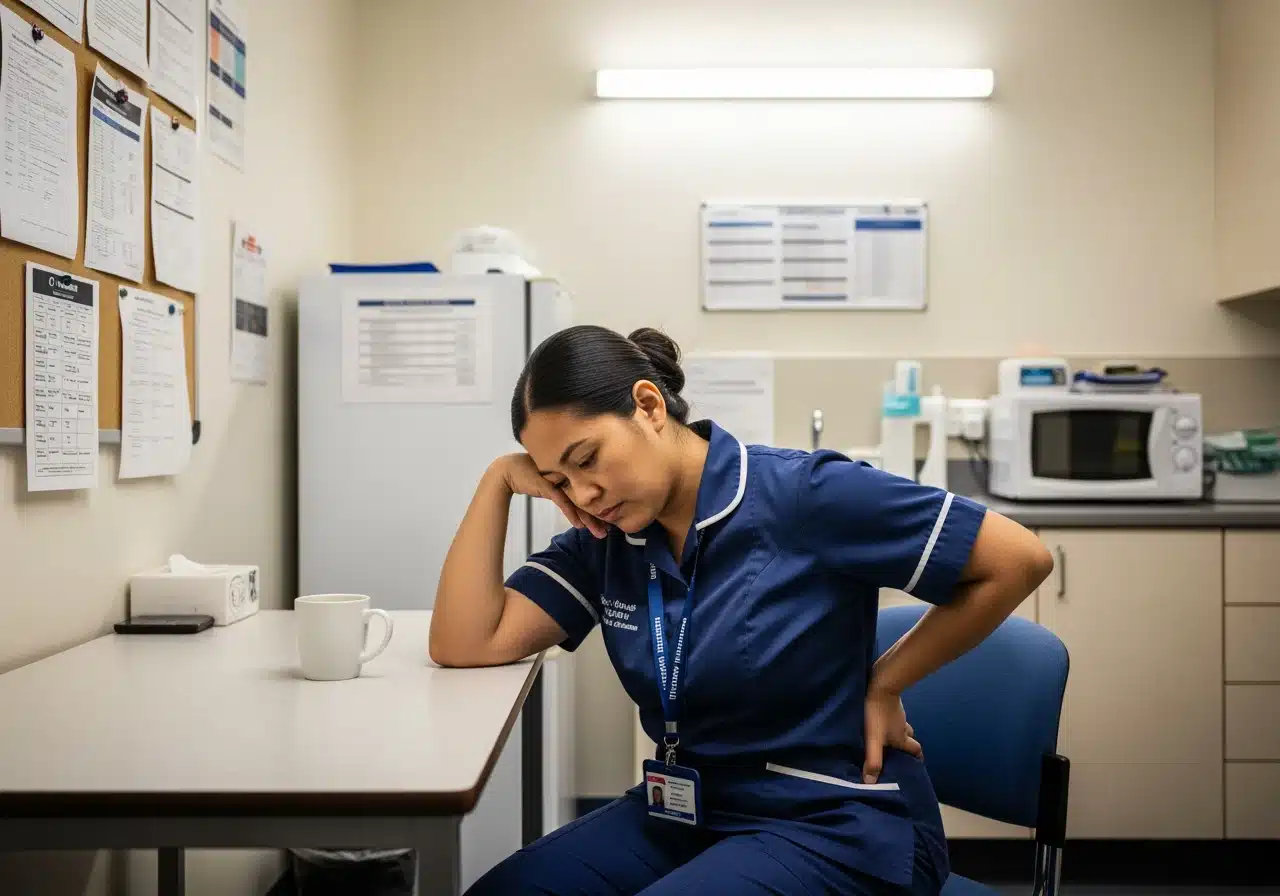
Healthcare worker injuries NSW are most commonly caused by manual handling and patient lifting. Nurses, aged care workers, and patient transport staff regularly lift, transfer, and reposition patients. These activities create cumulative strain on backs, shoulders, and knees.
Lower back injuries, herniated discs, and rotator cuff tears frequently develop over time rather than from single incidents. A nurse might perform hundreds of patient transfers monthly. Each one places incremental stress on the spine. Eventually, cumulative damage manifests as debilitating pain requiring surgery and extended time off work.
Workers compensation covers these gradual process injuries as well as acute incidents. Documentation from payslips covering the 52 weeks before injury establishes the correct pre-injury earnings figure – essential for calculating your weekly payments.
Slips, Falls, Assault, and Infectious Disease Exposure
Slips, trips, and falls in clinical environments happen frequently. Wet floors, cluttered corridors, trailing cables, and staff rushing between patients create constant hazards. Falls can cause fractures, head injuries, and soft tissue damage requiring extended recovery.
Assault and violence from patients represent an increasing concern. Emergency department staff face intoxicated or drug-affected patients. Mental health workers manage patients experiencing acute episodes. Aged care staff sometimes encounter residents with dementia who become aggressive. Physical assaults cause bruises, fractures, and lacerations. The psychological impact – fear, hypervigilance, post-traumatic stress – often proves more debilitating than physical injuries.
Needlestick injuries occur when healthcare workers accidentally puncture their skin with contaminated needles. The psychological impact often exceeds the physical injury. Waiting weeks or months for blood test results causes significant stress. Even negative results can trigger anxiety disorders requiring treatment.
Exposure to infectious diseases beyond needlestick incidents includes tuberculosis, COVID-19, and other airborne or contact-transmitted infections. When infection can be linked to workplace exposure, it becomes a compensable work injury under NSW workplace injury compensation law.
NSW Workers Compensation Coverage for Healthcare Staff
Automatic Coverage and Weekly Payment Entitlements
Healthcare workers in NSW benefit from comprehensive coverage designed to support recovery and provide financial security. Automatic coverage applies to virtually all healthcare employees – public hospitals, private practices, aged care facilities, and community health settings alike. Casual, part-time, and full-time staff receive the same protections from day one. Healthcare worker injuries NSW that go unreported often result in reduced entitlements – timely documentation is critical.
Weekly payment entitlements replace lost income during recovery. For the first 13 weeks following injury, healthcare workers receive 95% of their pre-injury average weekly earnings. After 13 weeks, payments typically reduce to 80% of pre-injury earnings, continuing as long as medical evidence supports ongoing incapacity.
Calculating pre-injury earnings for healthcare workers requires attention to shift penalties, overtime, and allowances. Registered nurses often earn significant income from shift penalties and overtime. Failing to include these components reduces weekly payments substantially. Workers compensation lawyers Sydney experienced in healthcare claims understand how to calculate these entitlements correctly and ensure nothing is missed.
Medical Treatment, Rehabilitation, and Lump Sum Compensation
Medical treatment coverage provides comprehensive support for injury recovery. All reasonable and necessary medical expenses receive approval – specialist consultations, diagnostic imaging, surgery, physiotherapy, psychology, medications, and medical equipment.
Rehabilitation and return to work programs form a core part of healthcare worker rights. Employers must make reasonable efforts to facilitate return to work. For healthcare workers, this might mean graduated return with reduced patient loads, administrative duties instead of clinical work, or retraining for different roles. The Workers Compensation Act requires employers and insurers to develop return to work plans in consultation with injured workers and their treating doctors.
Lump sum compensation for permanent impairment becomes available once injuries stabilise. Healthcare workers with permanent back injuries, psychological conditions, or other lasting impairments receive Section 66 payments based on whole person impairment assessments. These payments range from $22,480 for 11% impairment to $757,760 for 100% impairment.
Goodman Spring provides no win no fee legal support to healthcare workers across NSW and Australia navigating workers compensation claims – from initial reporting through to disputed matters and lump sum assessments.
For healthcare workers with permanent impairment exceeding 15%, common law damages claims become available. A nurse with a permanent back injury preventing return to clinical nursing might pursue personal injury compensation for the substantial income loss over their remaining working life.
Psychological Injury Claims in Healthcare Settings
PTSD and Trauma-Related Conditions
Psychological conditions increasingly form part of healthcare worker injuries NSW claims. Emergency department staff witnessing severe trauma, intensive care nurses managing patients who die despite treatment, and mental health workers assaulted by patients all face significant PTSD risks. NSW workers compensation claims for psychological conditions require careful documentation from the outset to meet the evidentiary threshold.
Compensable PTSD requires professional diagnosis, evidence linking the condition to specific workplace incidents, and documentation of functional impairment. Unlike physical injuries visible on X-rays, psychological conditions rely on reported symptoms and professional assessment. These claims face higher evidentiary thresholds than physical injury claims.
Vicarious trauma from repeated exposure to patients’ traumatic histories affects mental health nurses, psychologists, and social workers. Compensation claims must establish that workplace trauma exposure exceeded normal expectations for the role.
Infectious Disease Exposure Claims
COVID-19 claims highlighted the complexities of proving workplace transmission. Healthcare workers treating COVID-positive patients contracted the virus at rates far exceeding the general population. Factors supporting workplace transmission include documented exposure to infected patients, adherence to infection control protocols, and timing of infection relative to workplace exposure events.
Tuberculosis exposure occurs when healthcare workers treat infected patients before diagnosis confirms TB presence. Testing positive for TB following workplace exposure supports NSW workers compensation claims for treatment and any lasting health effects.
Bloodborne pathogen exposure from needlestick injuries requires immediate post-exposure prophylaxis and months of follow-up testing. If actual infection occurs, the long-term health consequences and treatment needs receive comprehensive coverage under the NSW compensation scheme.
Proving Workplace Causation for Healthcare Injuries
Incident Reporting and Medical Evidence
Establishing that injuries arose from employment forms the foundation of any successful claim. Report injuries immediately to supervisors and through facility incident reporting systems. Delayed reporting raises questions about whether injuries were work-related. An injured healthcare worker who works several shifts before reporting faces arguments that the injury must not have been severe or perhaps occurred outside work. Workplace injury compensation is only accessible when there is a clear documented link between the injury and employment.
Medical evidence linking injury to work requires treating doctors to provide clear causation opinions. Generic statements about injuries being “consistent with” work activities don’t satisfy requirements. For gradual process injuries like cumulative back strain, medical reports must explain how repetitive patient lifting over time caused progressive damage leading to the current condition.
Witness Statements and Documentation
Witness statements from colleagues provide crucial corroboration. Co-workers who witnessed a fall, assisted with a difficult patient transfer, or observed patient assault provide independent verification of how injury occurred. Obtain witness contact details immediately after incidents – memories fade and colleagues transfer to different facilities.
Hospital policies and safety protocols become relevant when proving employer negligence for common law claims. Evidence that facilities failed to follow safe patient handling procedures or ignored reported safety concerns supports personal injury negligence claims beyond statutory compensation.
Infection control documentation proves particularly important for infectious disease exposure claims. Records showing adherence to PPE protocols and infection control policies demonstrate appropriate precautions were taken, supporting claims that transmission occurred despite reasonable care.
For healthcare workers employed under Commonwealth-regulated arrangements – such as those working for federally funded aged care providers or in Australian Government Health services – comcare workers compensation Sydney lawyers can advise on whether Comcare legislation applies instead of the NSW icare system. Identifying the correct scheme at the outset determines the right claim pathway and applicable benefits.
Rights When Employers Dispute Healthcare Claims
Grounds for Disputes and Independent Medical Examinations
Insurers dispute medical staff injury rights claims more frequently than many workers expect. Common grounds include arguments that injuries pre-existed employment, resulted from non-work activities, or that psychological conditions stem from personal rather than work factors.
Independent medical examinations by insurer-selected doctors form part of the dispute process. Workers must attend these examinations unless they have valid medical reasons. IME doctors spend perhaps 30-60 minutes with the injured worker. Treating doctors who have followed the worker’s condition for months have more comprehensive understanding. When medical opinions conflict, arbitrators frequently prefer treating doctors’ opinions as more reliable.
Legal Representation in Disputed Claims
Personal Injury Commission processes provide dispute resolution pathways. Medical disputes proceed to independent medical assessment. Merit disputes about whether injuries arose from employment proceed to arbitration hearings where both sides present evidence.
Workers compensation lawyers Sydney with experience in healthcare compensation claims understand the medical issues, the evidentiary requirements, and how to present cases effectively at PIC hearings. Attempting to navigate disputes without legal representation places healthcare workers at severe disadvantage against insurer lawyers. Getting early advice from workers compensation lawyers Sydney familiar with the healthcare sector makes a significant difference to claim outcomes.
For Commonwealth employees pursuing federal claims, Comcare claims require different legal knowledge to NSW icare matters. The legislation, benefit structures, and dispute pathways differ significantly between the two systems. Comcare workers compensation Sydney specialists can advise federal healthcare employees on which scheme applies and what entitlements are available under the Safety, Rehabilitation and Compensation Act 1988.
Returning to Healthcare Work After Injury
Graduated Return to Work and Alternative Duties
The physical and psychological demands of healthcare work create unique return-to-work challenges. Graduated return programs allow healthcare workers to resume duties progressively as recovery proceeds. A nurse returning after back surgery might initially work reduced hours on administrative duties, then progress to light clinical duties with lifting restrictions.
Medical certificates must specify restrictions clearly – “no patient lifting,” “maximum four-hour shifts,” “administrative duties only.” Employers must respect these restrictions and provide suitable modified duties. Effective graduated return requires cooperation between treating doctors, employers, and the injured worker.
Alternative duties and workplace modifications accommodate permanent restrictions that prevent return to previous roles. Vocational rehabilitation programs funded through workers compensation can retrain registered nurses as clinical educators or practice nurses. These transitions maintain employment in healthcare while accommodating physical restrictions.
Role-Specific Considerations and Job Protection
Different healthcare positions create specific injury risk profiles. Emergency department staff experiencing elevated violence exposure may have strong claims documenting patterns of workplace violence and inadequate employer responses. Aged care workers suffering injuries from unsafe patient handling in resource-constrained environments may have particularly strong public liability or negligence claims against employers who failed to provide safe systems of work.
Job protection while on compensation prevents dismissal related to workers compensation claims. Adverse action protections under the Fair Work Act prohibit termination because workers exercised compensation rights. Healthcare workers concerned about job security should document all communications with employers and seek legal advice promptly.
If a healthcare worker’s injuries are severe or permanent, a TPD claim through their superannuation fund may provide additional financial support beyond what workers compensation covers – particularly relevant for nurses or allied health professionals who cannot return to clinical work in any capacity.
Conclusion
Healthcare worker injuries in NSW present unique challenges. The combination of physical demands, infectious disease exposure, psychological stress, and assault risks creates an injury profile requiring specialised compensation knowledge. Healthcare worker injuries NSW claims are among the most complex in the workers compensation system – the intersection of medical evidence, workplace causation, and legal requirements creates challenges that specialist advice can address. Healthcare workers’ tendency to prioritise patient care over personal health often results in delayed injury reporting and inadequate documentation – undermining claims when they eventually become necessary.
Understanding medical staff injury rights protects your financial security and recovery during injury-related incapacity. The NSW workers compensation system provides comprehensive benefits: weekly payments, medical treatment coverage, rehabilitation support, and lump sum compensation for permanent impairment. Accessing these benefits requires timely reporting, proper documentation, and persistence when insurers dispute claims. Every case is different – outcomes depend on your specific circumstances, and legal advice should be sought for your particular situation.
For healthcare workers facing disputed claims, serious injuries, or concerns about return to work, contact our workers compensation lawyers on (02) 9261 1799 to discuss your specific situation with specialists who understand both the compensation system and the realities facing healthcare professionals.