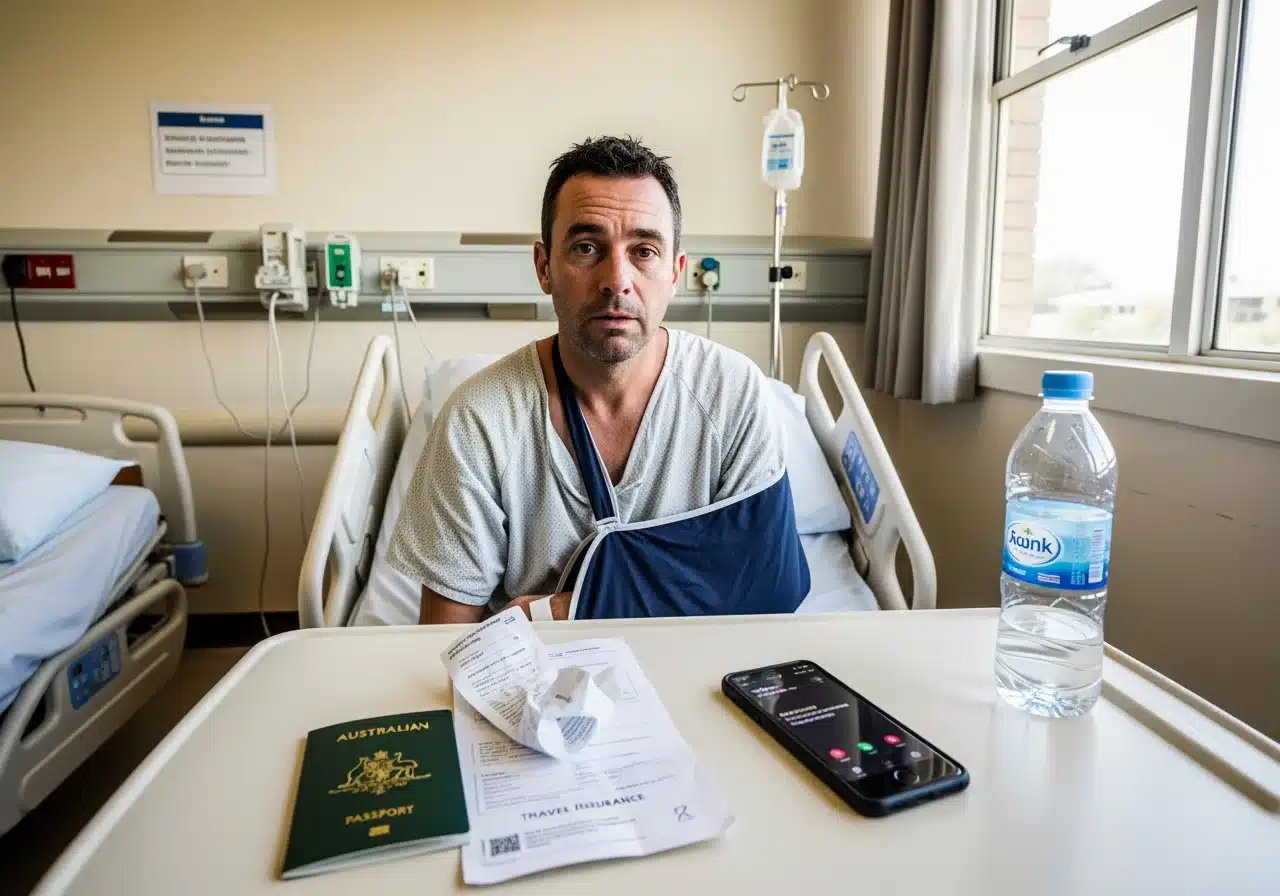
Travel insurance seemed like an unnecessary expense until the taxi driver in Bangkok ran a red light. Perhaps the hotel balcony railing in Bali gave way without warning. Maybe a ski lift malfunction in Japan left someone with a fractured spine. When serious injuries occur overseas, the immediate concern is medical treatment.
Once back home in Australia, a different question takes over: can compensation be pursued? The short answer is yes. But overseas injury compensation involves navigating international law, insurance policies, and jurisdictional complexities that don’t exist in domestic claims. Understanding your options early can mean the difference between full financial recovery and years of medical debt.
Understanding Jurisdiction in International Injury Claims
Australian courts can hear compensation claims for injuries sustained overseas, but only under specific circumstances. The key factor is establishing a sufficient connection between Australia and either the defendant or the incident.
How Australian Courts Decide If They Can Hear Your Case
Forum non conveniens is the legal principle that determines whether Australian courts are the appropriate venue. It sounds complex, but it simply means courts consider where the case most appropriately belongs. Factors include where the defendant resides, where witnesses are located, where evidence is held, and which country’s laws should apply.
If an Australian-based tour operator organised the trip, or an Australian company employed someone when the injury occurred, workers compensation or common law pathways through Australian courts become more straightforward.
Challenges with Foreign Defendants
The complexity increases when the responsible party is a foreign entity with no Australian presence. A hotel chain operating solely in Thailand, for instance, may require filing claims in Thai courts under Thai law. That prospect involves international lawyers, translation costs, and unfamiliar legal processes.
Understanding this distinction early helps you focus on the strongest available pathway for your overseas injury compensation claim.
When Australian Courts Accept Overseas Injury Claims
Several scenarios allow Australian residents to pursue overseas injury compensation through Australian courts.
Package Tour and Travel Agency Liability
Package tour injuries organised by Australian companies present one clear pathway. If booking occurred through an Australian travel agency or tour operator, they may bear liability for injuries caused by their negligence in selecting unsafe providers, failing to warn of known risks, or providing inadequate supervision.
The contract was formed in Australia. That gives Australian courts clear jurisdiction. Personal injury claims through Australian courts in these circumstances are far more straightforward than pursuing foreign defendants.
Workplace Injuries During International Assignments
Workplace injuries during international assignments fall under Australian workers compensation laws when employees are injured overseas while performing duties for Australian-based employers. The Workers Compensation Act 1987 provides coverage regardless of where the injury occurred, though the employer must be based in Australia and the work must be connected to Australian employment.
Workers compensation lawyers sydney see these cases regularly. Workers injured overseas while on Australian employment duties have a no-fault compensation pathway available to them. In cases of permanent disability, a TPD claim through superannuation may also be available. Workers compensation lawyers sydney advise that pursuing both workers compensation and common law damages simultaneously is possible in some circumstances. Workers injured on overseas assignments should also check whether their situation triggers any motor vehicle accident claim rights if the injury occurred in a vehicle incident overseas.
Product Liability and Cruise Ship Claims
Product liability claims become viable if defective products manufactured or distributed by companies with Australian operations caused injuries overseas. This applies to everything from faulty medical devices to defective rental vehicles, provided the manufacturer or distributor has sufficient connection to Australia.
Cruise ship injuries present unique challenges. Cruise lines often include forum selection clauses in their terms and conditions. However, Australian Consumer Law may override these clauses if deemed unfair, and maritime law adds further complexity.
The Role of Travel Insurance in Overseas Injury Compensation
Travel insurance typically covers medical expenses and emergency evacuation. It rarely addresses compensation for pain and suffering, lost wages beyond the policy period, or long-term disability. Mistaking an insurance payout for full compensation is a costly error.
What Travel Insurance Actually Covers
Most travel insurance policies include subrogation clauses. This means if the insurer pays your medical costs, they gain the right to pursue the at-fault party for reimbursement. This can complicate overseas injury compensation claims if the insurer’s recovery efforts conflict with broader claims for non-economic damages.
Goodman Spring assists injured Australians in understanding the interaction between travel insurance payouts and broader compensation entitlements across motor vehicle, public liability, and personal injury claims.
Pre-Existing Conditions and Notification Deadlines
Pre-existing conditions create frequent disputes in overseas injury claims. Insurers often deny claims if they determine the injury relates to undisclosed health conditions. This becomes particularly problematic when injuries aggravate existing conditions.
The time limits for notifying insurers of incidents are typically strict, often requiring notification within 24-48 hours. Missing these deadlines can void coverage entirely, regardless of the injury’s severity. Reading policy documents before departure, not after an incident, is essential.
Navigating Foreign Legal Systems
When jurisdiction requires filing claims in foreign courts, Australian residents face substantial challenges. Legal costs in popular tourist destinations can exceed Australian rates, and outcomes are unpredictable without familiarity with local legal standards.
Limitation Periods in Foreign Jurisdictions
Limitation periods vary dramatically between countries. Australia generally allows three years from the date of injury to file personal injury claims. Some countries impose periods as short as six months. Thailand’s limitation period for negligence claims is one year. Missing these deadlines eliminates any possibility of overseas injury compensation, regardless of how serious the injury was.
Public liability claims against foreign hotel or venue operators may need to be filed in that country’s courts within those shortened timeframes, making immediate legal advice essential.
Burden of Proof and Cultural Differences in Compensation
The burden of proof differs between legal systems. Some countries require injured parties to prove negligence to a higher standard than Australia’s “balance of probabilities” test. Others place the burden on defendants to prove they weren’t negligent.
Cultural attitudes toward compensation also vary. Countries with different personal injury law frameworks may award significantly lower damages than Australian courts, even for catastrophic injuries. What constitutes fair compensation in Australia may be considered excessive in other jurisdictions.
Pursuing Claims Against Australian-Based Entities
The most straightforward path to overseas injury compensation involves claims against Australian defendants. Tour operators, travel agencies, and employers based in Australia can be held accountable for injuries their negligence caused overseas.
Tour Operator Duty of Care Beyond Borders
Duty of care extends beyond Australian borders when companies organise international activities. If an Australian adventure tour company fails to properly assess the safety of overseas providers, conducts inadequate risk assessments, or misrepresents the safety of activities, they can be liable for resulting injuries.
Recent cases have established that Australian tour operators cannot simply outsource risk by contracting with foreign providers. If the operator knew or should have known about safety deficiencies, they bear responsibility. This applies to unsafe accommodation and inadequately maintained adventure equipment alike.
Employment-Related Overseas Injuries and TPD Claims
Employment-related injuries overseas fall under Australian workers compensation when the employment relationship is based in Australia. This provides a no-fault compensation pathway that doesn’t require proving negligence. Workers may pursue both workers compensation and common law damages in some circumstances.
In cases of permanent disability, a TPD claim may also be available through superannuation. This provides a lump sum payment for those who can no longer return to work in their usual occupation due to an injury sustained overseas.
For Commonwealth government employees injured while on overseas duty, comcare workers compensation sydney specialists note that the Safety, Rehabilitation and Compensation Act 1988 (Cth) provides specific coverage. Comcare workers compensation sydney entitlements extend to Australian Public Service employees injured in the course of their overseas duties, providing a federal pathway distinct from state-based workers compensation schemes.
Evidence Collection Challenges in International Claims
Building a strong compensation claim requires evidence. Collecting it from overseas locations presents unique obstacles. Police reports may be in foreign languages, medical records might use different diagnostic standards, and witnesses may be impossible to locate months after the incident.
Immediate Documentation Requirements
Immediate documentation becomes even more critical for overseas injuries than domestic ones. Photographing the accident scene, obtaining contact information for witnesses, securing copies of all medical records before leaving the country, and filing police reports even if local authorities seem dismissive are essential steps.
Evidence that seems easily retrievable while on-site becomes nearly impossible to obtain once back in Australia.
Foreign Medical Records, Translation, and Video Evidence
Medical records from foreign hospitals require translation by certified translators, adding time and cost to claims. Different medical terminology and diagnostic criteria can complicate establishing injury severity. Australian medical experts may need to review foreign records to provide opinions that Australian courts will accept.
Video evidence has become increasingly valuable in overseas injury claims. Security camera footage from hotels, dashcam footage from vehicles, and tourist photos from other travellers can provide crucial evidence. Obtaining this footage requires prompt action before it is deleted or overwritten.
Time Limitations and Immediate Steps
Acting quickly after overseas injuries is essential. Beyond medical treatment, several time-sensitive steps protect your compensation rights.
Documentation, Insurer Notification, and Legal Consultation
Document everything immediately. Photograph the accident scene, injuries, and any hazards that contributed to the incident. Obtain written statements from witnesses before they disperse. Secure copies of all medical records, police reports, and incident reports filed with hotels, tour operators, or other entities.
Notify travel insurers within the required timeframe, typically 24-48 hours, even while still receiving medical treatment. Failure to notify insurers promptly can void coverage entirely.
Consult with lawyers experienced in overseas injury compensation claims as soon as possible after returning to Australia. Waiting months to seek legal advice can eliminate compensation rights entirely.
Multiple Parties, Joint Liability, and No-Win-No-Fee Options
Overseas injuries frequently involve multiple potentially liable parties. Identifying all potential defendants maximises compensation prospects. Joint and several liability principles in Australia mean full compensation can be recovered from any defendant found liable, even if others share responsibility.
A motor vehicle accident claim may also be available for those injured in overseas taxi collisions or tourist bus crashes if an Australian operator or employer bears responsibility.
Cost concerns about pursuing overseas claims often prove unfounded. Many compensation lawyers work on no-win-no-fee arrangements, meaning legal costs aren’t paid unless claims succeed. This also applies to Comcare claim matters for Commonwealth employees injured overseas while on duty. A personal injury lawyer sydney can assess whether your circumstances support a viable overseas claim and advise on the most appropriate pathway.
Where the injury occurred during overseas employment, workers compensation lawyers sydney can advise whether the claim is best pursued under the Workers Compensation Act 1987, as a Comcare matter, or through common law. A second opinion from a personal injury lawyer sydney experienced in international claims is worthwhile before choosing a pathway.
Conclusion
Serious injuries overseas create challenges that extend far beyond immediate medical treatment. Understanding your compensation rights, documenting incidents thoroughly, and seeking prompt legal advice after returning to Australia can make all the difference.
Overseas injury compensation claims involve additional complexity compared to domestic injuries. But they remain viable for many injured travellers. The key factors are establishing jurisdiction, identifying all potentially liable parties, preserving evidence, and acting within applicable limitation periods. Every claim is different – outcomes depend on your specific circumstances and the evidence available.
Don’t assume travel insurance is your only recourse. Australian law provides multiple pathways to compensation, even for injuries that occurred overseas. The sooner you explore your options with experienced legal professionals, the better your rights can be protected. For a free consultation about your overseas injury claim, contact our personal injury lawyers on (02) 9261 1799.