When an insurer disputes your injury claim, they will often request that you attend an independent medical examination. These assessments carry significant weight in compensation decisions – yet most claimants walk into them unprepared, unaware that everything from waiting room behaviour to examination responses gets documented and analysed.
An IME is not truly independent in the traditional sense. The insurer selects and pays the examining doctor. This creates an inherent tension that shapes how these evaluations unfold. Understanding this dynamic – and knowing how to protect your interests – makes the difference between an assessment that supports your claim and one that undermines it.
What Qualifies as an Independent Medical Examination
Definition and Purpose
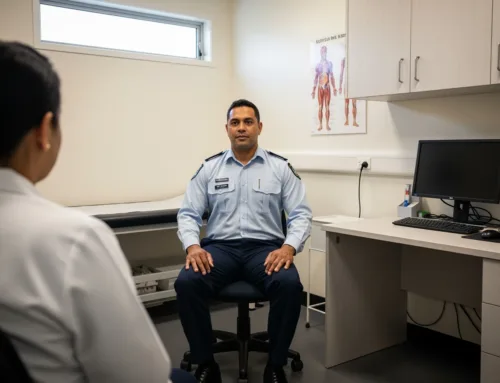
Independent medical exam assessments in NSW occur when an insurer exercises its right to have you assessed by a doctor of their choosing. This happens under workers compensation or CTP insurance schemes. The term “independent” refers only to the doctor’s lack of prior involvement in your treatment – not their neutrality. They are engaged and paid by the party questioning your claim.
These examinations serve multiple purposes for insurers. They verify the nature and extent of your injuries. They assess whether your current symptoms align with the initial injury mechanism. They determine work capacity and establish the need for ongoing treatment. Each finding directly affects your compensation entitlements.
Legal Framework Governing IMEs
The legislative framework varies by claim type. Workers compensation claims in NSW operate under the Workers Compensation Act 1987 and the Workplace Injury Management and Workers Compensation Act 1998. CTP motor accident claims follow the Motor Accident Injuries Act 2017. Public liability and other personal injury claims may involve IMEs as part of pre-litigation negotiations or tribunal-ordered assessments.
Insurers typically request independent medical exam NSW assessments when they dispute your treating doctor’s opinions, question your injury severity, or want to terminate income benefits or treatment funding. The timing often coincides with claim milestones – before accepting liability, before issuing a work capacity decision, or after you have been off work for an extended period.
Your Rights and Obligations During the Assessment Process
Attendance Requirements and Proper Notification
NSW legislation balances the insurer’s right to medical assessment with protections for injured workers and accident victims. You must attend properly notified IMEs – refusing without valid reason can result in suspension of benefits.
“Properly notified” means receiving reasonable advance notice, typically at least 14 days. The notice must include clear information about the examination’s purpose, the doctor’s name and specialty, the appointment location and time, and which body parts or injuries will be assessed.
Support Person Rights and Examination Scope
You can bring a support person to any IME injury claims assessment. This right exists across all NSW injury compensation schemes. The support person cannot be a legal practitioner and must remain as an observer only – they cannot participate in the examination or answer questions on your behalf. Their presence serves as a witness to what occurs and what is said. This matters if the report later contains inaccuracies.
The examining doctor can only assess injuries and body parts specified in the appointment notice. If your notice only mentions your back, the doctor cannot conduct a shoulder examination or comment on that injury. This limitation protects against scope creep and unexpected assessments.
Form Signing and Recording Considerations
You have no obligation to sign forms you do not fully understand. Doctors sometimes present consent forms or medical record releases that extend well beyond the examination itself. Read everything carefully. If a form requests access to unrelated medical records or contains broad liability waivers, you can decline. The examination can proceed without your signature on anything beyond standard privacy acknowledgments required by law.
Recording the examination is a grey area in NSW law. No explicit prohibition exists against audio or video recording for personal injury medical assessments, but examining doctors often object. If you want to record, notify the insurer and doctor in advance. Consult your legal representative before taking this step, as undisclosed recordings can create complications if your matter proceeds to a tribunal or trial.
The Examination Process from Arrival to Departure
Assessment Begins at Arrival
The assessment begins the moment you enter the medical centre. Reception staff note your arrival time, how you move, whether you use mobility aids, and your general demeanour. Waiting room behaviour gets observed and documented. Claimants who appear comfortable sitting for long periods but later report severe back pain create inconsistencies that undermine credibility.
Formal Examination Structure
The formal examination follows a structured sequence. The doctor reviews your medical history – asking about the injury mechanism, symptoms, treatment received, current functional limitations, and how the injury affects daily activities and work. These questions are not casual conversation. Your answers are recorded and compared against previous statements to treating doctors, rehabilitation providers, and investigators.
Physical examination follows. The doctor assesses your range of motion, strength, reflexes, and sensation. They observe how you move, whether you guard certain movements, and consistency between your reported limitations and demonstrated function. Orthopaedic examinations may include joint manipulation, gait analysis, and specific tests. Psychological assessments involve structured interviews, standardised questionnaires, and mental status evaluations.
Duration and Documentation
Examination duration varies by injury complexity. Simple assessments might take 30 to 45 minutes. Comprehensive evaluations of multiple injuries or psychological conditions can extend to two hours or more. Unusually brief examinations raise questions about thoroughness and should be noted.
Throughout the process, the doctor takes detailed notes extending beyond medical findings to subjective impressions about your credibility, consistency, and effort during testing. Phrases like “symptom magnification” or “inconsistent effort” appear frequently in unfavourable reports, often based on subtle cues the examiner interprets as signs of exaggeration.
Preparing for Your Independent Medical Examination
Days Before the Appointment
Preparation begins days before the appointment. Gather all relevant medical records, imaging reports, specialist letters, and treatment summaries. While the examining doctor receives records from the insurer, their file may be incomplete or outdated. Bringing comprehensive documentation ensures nothing gets overlooked.
Create a written summary of your injury history – the accident date, how it happened, immediate symptoms, diagnoses, all treating practitioners, treatments attempted, current symptoms, and functional limitations. This document serves as your reference during the examination, helping you provide consistent, accurate information even if the doctor’s questioning style is confusing or confrontational.
Documenting Functional Limitations and Medications
List all medications you are currently taking, including prescription drugs, over-the-counter pain relievers, and supplements. Note dosages and frequency. Medication regimens provide objective evidence of symptom severity and treatment requirements.
Document your functional limitations specifically. Rather than saying you cannot do much, prepare concrete examples – how long you can stand before needing to sit, how far you can walk, what you cannot lift, what tasks you need help with, and how the injury disrupts your sleep. Specific examples carry far more weight than general complaints.
Examination Day Logistics
Arrive on time – early enough to complete paperwork without rushing, but not so early that extended waiting room time creates opportunities for inconsistent observations. Dress in comfortable clothing that allows easy access to injured areas. If you normally use mobility aids, pain relief devices, or supportive bracing, bring and use them as you ordinarily would.
Bring your support person if you have arranged for one. Brief them beforehand about their observer role and ensure they understand not to interrupt or answer questions on your behalf.
During the Examination: Critical Do’s and Don’ts
Answer Honestly and Stick to Facts
Answer all questions honestly and completely. Exaggerating symptoms or fabricating limitations will be detected through inconsistencies and physical examination findings, destroying your credibility. Conversely, downplaying difficulties or trying to appear stoic can result in a report that understates your genuine impairments.
Stick to facts rather than opinions. When asked about pain levels, describe the character, location, frequency, and what triggers or relieves it. When discussing functional limitations, explain what you cannot do and what happens when you try. There is no penalty for asking for clarification if you do not understand a question.
Maintain Consistency and Do Not Overperform
Do not volunteer information beyond what is asked. The examination is not a conversation with your treating doctor. Answer questions directly and completely, but avoid tangents or unnecessary elaboration that might introduce inconsistencies.
Be consistent with your reported limitations throughout the physical examination. If you have stated you can only raise your arm to shoulder height, do not reach overhead to adjust your clothing without thinking. If you report severe difficulty walking, do not stride briskly across the examination room. These inconsistencies get documented and interpreted as evidence of exaggeration.
Do not perform any physical test beyond your actual capabilities. If a movement causes significant pain, stop and say so. You are not required to injure yourself further or endure unreasonable pain to satisfy the examiner. However, do make reasonable effort during testing – appearing to give up immediately without trying creates the impression of poor cooperation.
Stay Calm and Courteous
Stay calm and courteous regardless of the examiner’s demeanour. Some doctors conducting insurer-requested assessments adopt sceptical or even hostile questioning styles designed to provoke defensive or emotional responses. Your composure reflects positively on your credibility throughout the process.
Common Pitfalls That Undermine Claims
Social Media and Surveillance Around IMEs
Social media activity before and after IMEs creates significant problems for claimants. Insurers routinely monitor claimant social media accounts. Photos or posts showing activities inconsistent with your reported limitations – even one-time events that caused significant pain afterwards – can be presented as evidence of fraud or exaggeration.
Surveillance often intensifies around IME appointments. Investigators document your movements arriving at and leaving the medical centre, noting whether your observed function matches your reported limitations. Claimants who limp heavily into the examination but walk normally to their car create devastating inconsistencies.
Inconsistent Statements and Failing to Report Improvement
Inconsistent statements across multiple assessments represent one of the most common problems. Before each assessment, review what you have previously reported to ensure consistency – not because you are fabricating a story, but because accurate, consistent reporting reflects the genuine reality of your situation.
Failing to report improvement or recovery honestly damages credibility more than the improvement itself. Injuries heal, and compensation systems account for recovery. Claiming ongoing severe symptoms that have actually improved leads to reports documenting inconsistencies between your statements and objective findings, casting doubt on everything you have reported.
Missing or Late Appointments
Missing or arriving late to IME appointments without valid reason can result in immediate benefit suspension. It also creates a negative impression before the examination even begins. If a genuine emergency prevents attendance, notify the insurer immediately and provide supporting documentation.
Understanding the IME Report and Its Impact
Report Submission and Contents
The examining doctor submits their report to the insurer after the assessment. This document contains your reported history, examination findings, opinions about your injuries, current impairment level, work capacity assessment, treatment needs, and prognosis. The report’s conclusions directly influence decisions about ongoing benefits, treatment funding, and claim resolution offers.
You are entitled to receive a copy of the IME report. Workers compensation insurers must provide reports affecting benefit decisions. CTP insurers typically provide reports as part of the claims process. If you do not receive the report automatically, request it in writing.
Reviewing the Report for Errors
Review the report carefully with your legal representative. Check for factual errors in the injury history, misrepresentation of your statements, omission of significant symptoms or limitations, and opinions that do not align with documented objective findings.
Errors and omissions are common in IME reports. These mistakes can be corrected through written clarification requests to the examiner or by obtaining rebuttal reports from your treating specialists. A personal injury lawyer can help you identify which errors are most significant and advise on the most effective response.
When IME Reports Contradict Treating Doctors
When the IME report contradicts your treating doctors’ opinions, the insurer typically favours the IME findings. However, IME reports do not automatically override treating doctor opinions. Treating doctors have longitudinal knowledge of your condition and insights unavailable during a single examination.
For public liability claims, IME reports carry the same weight and require the same strategic response as in workers compensation matters. You can read more about how public liability claims handle conflicting medical evidence on the Goodman Spring website. In cases involving significant permanent impairment, a TPD claim through superannuation may still succeed even where an IME report minimises the injury’s impact on employment capacity.
When to Seek Legal Representation
Engaging a Lawyer Before the IME
Engaging a compensation lawyer before attending an IME is strongly advisable. Legal representation ensures you understand your rights, receive proper preparation, have someone reviewing the examination notice for procedural compliance, and have representation ready to challenge an unfavourable report immediately.
The examination notice itself provides the first opportunity for legal intervention. Lawyers can object to insufficient notice periods, inappropriate examiner selection, examination locations that create unreasonable travel burdens for injured claimants, or vague examination scopes that do not specify which injuries will be assessed.
Goodman Spring is a Sydney-based personal injury law firm assisting injured Australians across NSW with workers compensation, CTP, public liability, and TPD claims – all on a no win no fee basis.
Post-IME Legal Consultation
If you have already attended an IME without legal representation and received an unfavourable report, immediate consultation with a compensation lawyer becomes critical. Time limits apply to challenging insurer decisions based on IME findings, and delay reduces your options.
Legal representation is particularly important when the IME report recommends benefit termination, finds you have full work capacity despite ongoing symptoms, concludes you have reached maximum medical improvement when your treating doctors disagree, or contains factual errors that significantly affect the assessment’s conclusions.
Moving Forward After the Independent Medical Examination
IME as One Data Point
The IME injury claims assessment represents one data point in your overall claim, not the final word. Continue following your treating doctors’ advice, attending all scheduled treatments, documenting your ongoing symptoms and limitations, and complying with reasonable rehabilitation and return-to-work planning.
If the IME report leads to adverse benefit decisions, you have review and appeal rights. Workers compensation claimants can request internal review of insurer decisions, then proceed to the Personal Injury Commission if necessary. CTP claimants have similar dispute resolution pathways. These processes allow independent decision-makers to weigh the independent medical exam NSW report against all other evidence in your claim.
Commonwealth government employees facing adverse IME outcomes in Comcare or the relevant insurer claims have equivalent rights to seek review and challenge insurer decisions through the Administrative Review Tribunal (ART).
Maintaining Detailed Records
Maintain detailed records of how your injuries affect your daily life, work capacity, and overall functioning. Contemporaneous documentation – pain diaries, function logs, and regular treating doctor visits – provides powerful evidence countering IME opinions that minimise your impairments.
Every case is different. The outcome of an IME challenge depends on your specific circumstances, the quality of your supporting medical evidence, and the legal strategy employed. Seeking advice early gives you the best chance of protecting your entitlements.
Conclusion
The independent medical exam NSW process can feel adversarial – and in many respects it is. The insurer seeks opinions supporting claim denial or benefit reduction, while you need an accurate assessment of your genuine injuries and limitations. Understanding what occurs during these examinations, preparing thoroughly, and exercising your rights ensures the process does not undermine your legitimate compensation entitlements.
Your injuries are real. Your limitations are genuine. Proper preparation and legal support ensure the examination accurately reflects your condition. To discuss your IME situation and understand your options, speak with our workers compensation lawyers or call (02) 9261 1799 for a free consultation.