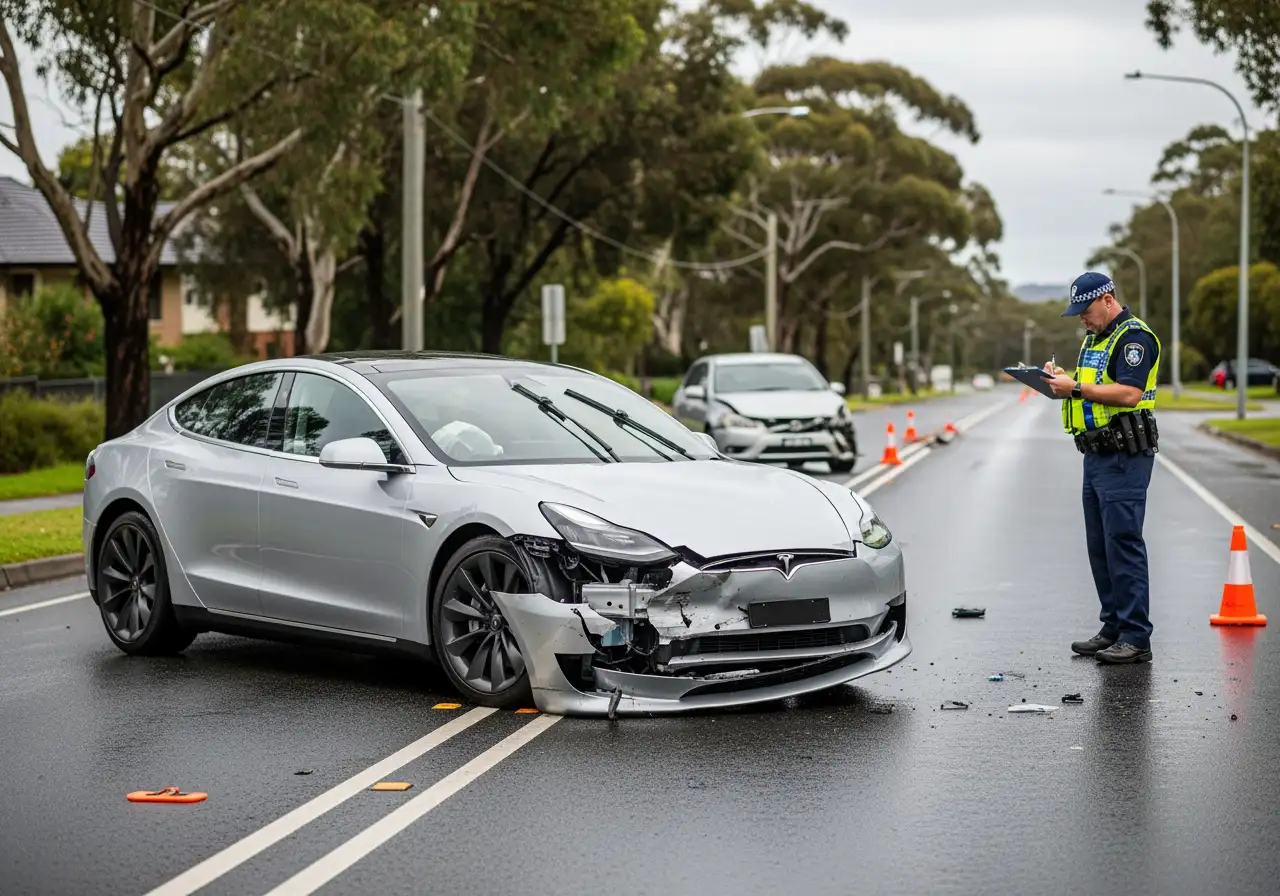
Autonomous and semi-autonomous vehicles are already on NSW roads, creating confusion around something that used to be straightforward: determining who’s at fault when there’s a crash. If you’ve been injured in an accident involving a self-driving or driver-assist vehicle, you’re probably feeling uncertain about where to even start with a compensation claim.
The truth is, the law hasn’t quite caught up with the technology yet. That’s frustrating because it means there’s no simple answer to who pays when a computer makes a driving error. But it doesn’t mean you’re without options – it just means your self-driving car accident claim NSW might look different from a traditional motor vehicle accident case.
Understanding Self-Driving Car Accident Claims NSW
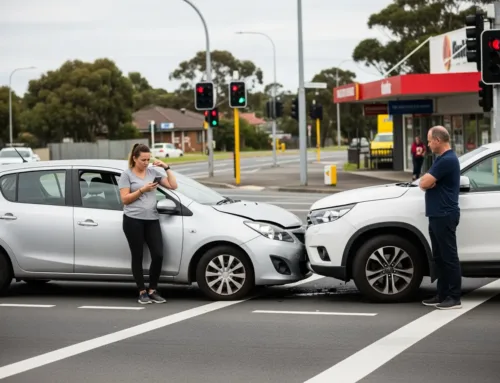
Traditional car accidents have a clear framework. Someone runs a red light, rear-ends you, or fails to give way. Their insurer covers your damages. You know the process, even if you’ve never been through it before.
Self-driving car accidents scramble that clarity. Was the driver monitoring the system properly? Did the software malfunction? Was there a sensor defect? Should the car manufacturer be liable instead of the driver? These questions don’t have neat answers yet, and that ambiguity makes injured people hesitate to pursue legitimate claims.
You might be wondering if it’s even worth the effort. When the legal landscape is unclear, it feels safer to accept whatever initial offer comes your way or to assume you don’t have a case. But these claims are absolutely viable. They’re just more complex, and they require a different approach than standard motor vehicle accident claims.
What Counts as a Self-Driving Car in NSW
Let’s clarify what we’re actually talking about. Most vehicles on NSW roads aren’t fully autonomous – they’re semi-autonomous. That distinction matters enormously for your claim.
Level 2 automation is what most people encounter. This includes Tesla Autopilot, Mercedes-Benz Drive Pilot, and similar systems. The car can steer, accelerate, and brake, but you’re legally required to stay alert and keep your hands ready. The vehicle assists; it doesn’t replace the driver.
Level 3 and above means the car can drive itself in certain conditions without human oversight. These vehicles are still rare in Australia, though they’re being tested in controlled environments.
Right now, if you’re in a crash involving a Tesla on Autopilot or a vehicle with adaptive cruise control, NSW law still considers the person behind the wheel to be the driver. That means they’re potentially liable, even if they weren’t actively controlling the vehicle at the moment of impact.
But – and this is crucial – that doesn’t mean the driver is automatically at fault. If the technology failed, if the system didn’t warn the driver properly, or if there was a manufacturing defect, liability might shift to the vehicle manufacturer or software developer.
Driver Responsibility vs System Control in Autonomous Vehicle Accident Claims NSW
If you were injured by a vehicle in self-driving mode, you might feel conflicted about pursuing a claim against the person behind the wheel. They weren’t really driving, were they?
This internal conflict is real, and it stops people from seeking compensation they genuinely deserve. You’re not being vindictive by making a claim – you’re holding the appropriate parties accountable. Sometimes that’s the driver who over-relied on the technology. Sometimes it’s the manufacturer who oversold the system’s capabilities. Often, it’s a combination.
The cases on these issues illustrate something important: they aren’t always either/or situations. Multiple parties can share responsibility, and a thorough investigation often reveals liability that isn’t obvious at first glance.
What Makes Autonomous Vehicle Accident Claims Different
Traditional motor vehicle accident claims rely heavily on witness statements, police reports, and physical evidence from the scene. Self-driving car claims require all of that plus technical data you can’t see with your eyes.
Every autonomous vehicle records extensive data – speed, steering inputs, brake applications, sensor readings, and whether the driver had their hands on the wheel. This data is crucial, but accessing it isn’t straightforward. Manufacturers don’t voluntarily hand over information that might expose their product’s flaws.
You’ll likely need expert analysis of the vehicle’s systems. Was the software up to date? Had there been previous complaints about similar malfunctions? Did the system provide adequate warnings before disengaging? These questions require technical expertise that goes well beyond standard accident reconstruction.
There’s also the challenge of identifying the right defendant. In a traditional claim, you’re pursuing the at-fault driver’s CTP insurer. In an autonomous vehicle case, you might be pursuing:
- The driver’s CTP insurance (if they failed to monitor the system properly)
- The vehicle manufacturer (if there was a design or manufacturing defect)
- The software developer (if the autonomous system malfunctioned)
- A maintenance provider (if poor servicing contributed to the failure)
Determining which party or parties to pursue requires careful investigation. Get it wrong initially, and you might miss crucial evidence or run up against limitation periods.
The Manufacturer Liability Question
Vehicle manufacturers have spent considerable effort trying to shift liability back onto drivers. Their terms of service typically include language stating that the driver remains responsible at all times, even when autonomous features are engaged.
But legal responsibility can’t be completely waived through terms and conditions. If a product is defective or if a company has misrepresented its capabilities, it can still be held liable under Australian Consumer Law.
Consider this: if you bought a ladder that collapsed because of a manufacturing fault, you wouldn’t accept the manufacturer saying, “Well, you should have inspected it more carefully.” The same principle applies to vehicle technology. If the system failed when it should have worked, or if the marketing materials created unrealistic expectations about the technology’s reliability, the manufacturer may bear responsibility.
The challenge is proving it. Manufacturers have substantial legal resources and a strong interest in avoiding precedent-setting liability. They’ll argue the driver misused the system, ignored warnings, or failed to maintain the vehicle properly. These aren’t frivolous defences – sometimes they’re accurate. But sometimes they’re attempts to dodge legitimate responsibility for faulty technology.
At Goodman Spring, we’ve supported thousands of NSW clients with their compensation claims, including increasingly complex cases involving advanced vehicle technology. What we’ve learned is that manufacturer liability claims require persistence and technical expertise, but they’re far from impossible.
What You’re Up Against with Insurance Companies
CTP insurers in NSW are experienced with traditional motor vehicle claims. They have established processes, typical settlement ranges, and predictable negotiation patterns. Self-driving car accidents disrupt all of that.
When liability is unclear, insurers become more conservative. They’ll offer lower initial settlements or deny claims outright, betting that you’ll accept less rather than fight through the uncertainty. This isn’t necessarily malicious – it’s risk management. They genuinely don’t know how these cases will play out in court because there’s limited precedent.
But that uncertainty cuts both ways. While it makes insurers cautious, it also means there’s room to build a compelling case if you have the right evidence and expertise. The key is not accepting the first “no” or the first lowball offer as the final word.
You might face arguments like “the driver should have been paying attention” or “the system warned them to take over.” These might be partially true and still not defeat your claim. Shared liability is common in motor vehicle accidents – the question is what percentage each party bears.
The Evidence You’ll Actually Need
If you’ve been injured in an accident involving a self-driving or driver-assist vehicle, evidence collection starts immediately. Don’t assume someone else is preserving the crucial information.
Standard accident evidence still matters: photos of the scene, damage to all vehicles, road conditions, witness contact details, and a police report if one was filed. But you’ll also need technical evidence that requires prompt action.
The vehicle’s data logs are critical and potentially time-limited. Some systems overwrite data after a certain period. You need to formally request preservation of this data quickly, ideally through a lawyer who can issue the appropriate legal notices.
You’ll want records of:
- The vehicle’s operational data at the time of the accident
- Software version and any recent updates
- Previous complaints or recalls related to the autonomous system
- Marketing materials and user manuals describing the system’s capabilities
- The driver’s history with the autonomous features (how often they used them, any previous incidents)
Expert testimony becomes essential in these cases. You’ll likely need someone who can analyse the technical data and explain in plain terms whether the system behaved as it should have. This costs money upfront, which is why working with a no-win, no-fee lawyer can make these claims financially viable when they otherwise wouldn’t be.
Starting Your Self-Driving Car Accident Claim NSW
You don’t need to understand the technical details of LiDAR sensors or machine learning algorithms to pursue a valid claim. You just need to recognise that your injury deserves compensation, regardless of whether a human or a computer was controlling the vehicle that caused it.
The first step is getting proper medical documentation of your injuries. This hasn’t changed. Whether you’re dealing with whiplash, a broken bone, or psychological trauma from the accident, you need medical professionals to assess and record your condition. This forms the foundation of your damages claim, whatever the liability situation looks like.
The second step is speaking with a compensation lawyer who has experience with complex liability cases. Not every compensation lawyer is equipped to handle autonomous vehicle claims – this is still a developing area. You want someone who’s willing to dig into technical details and isn’t intimidated by manufacturer legal teams.
Don’t wait until you’ve figured everything out. The limitation period for motor vehicle accident claims in NSW is generally three years from the date of the accident, but evidence preservation needs to happen much sooner. A lawyer can issue the right notices to preserve vehicle data while you’re still recovering from your injuries.
Addressing Common Concerns About Pursuing Claims
If the driver of the vehicle that hit you seems like a decent person who was genuinely relying on their car’s technology, you might feel uncomfortable pursuing a claim. This is especially true if they’re apologetic and clearly didn’t intend to cause harm.
Pursuing a compensation claim isn’t about punishment or revenge. It’s about ensuring you’re not financially devastated by someone else’s decision to use technology that wasn’t ready for the responsibility placed on it.
The driver chose to engage the autonomous features. The manufacturer chose to market and sell the system. If either of those choices contributed to your injury, it’s appropriate for them – or more accurately, their insurers – to cover your losses. That’s what insurance exists for.
Your medical bills, lost wages, and ongoing care needs don’t disappear because the accident involved technology rather than simple human error. You’re not being unreasonable by expecting compensation. You’re being practical about protecting your financial future and your family’s well-being.
What NSW Law Actually Says (So Far)
NSW doesn’t yet have comprehensive legislation specifically addressing autonomous vehicle liability. The current framework treats the person in the driver’s seat as legally responsible, regardless of what technology is operating.
The Australian Government has been working on updating the Motor Vehicle Standards Act and related regulations to account for automated vehicles, but implementation is gradual. According to the National Transport Commission, Australia is moving towards a framework where manufacturers could be held liable for vehicles operating in fully autonomous mode, but we’re not there yet for the semi-autonomous systems currently on our roads.
What this means for your claim is that you’re working within existing motor vehicle accident law, product liability law, and consumer protection legislation. There’s no special “autonomous vehicle claim” process. Instead, your lawyer will apply established legal principles to new factual circumstances.
This actually works in your favour in some ways. Courts and insurers understand motor vehicle negligence and product liability. They’re not starting from scratch – they’re adapting familiar concepts to new technology.
The State Insurance Regulatory Authority (SIRA) administers the CTP scheme in NSW, and its processes remain the same whether the vehicle was in autonomous mode or not. You’re still dealing with the same insurers, the same dispute resolution pathways, and the same court system if settlement isn’t possible.
The Complexity Behind These Claims
Beyond the legal complexity, there’s an emotional dimension to these claims that’s easy to overlook. Traditional car accidents have a clear narrative: someone made a mistake, and you got hurt. You understand what happened, even if you’re angry or traumatised by it.
Autonomous vehicle accidents often lack that clarity. You might not fully understand what went wrong. The driver might not understand either. There’s a sense of something being out of control in a way that feels different from human error.
This ambiguity makes it harder to process the accident emotionally, and it makes it harder to feel confident pursuing a claim. You’re not just dealing with physical injuries – you’re dealing with uncertainty about what actually happened and who’s responsible.
That’s a lot to carry while you’re trying to recover. It’s natural to feel overwhelmed or to want to just move on rather than engage with something so complicated. But moving on without proper compensation often means bearing costs you shouldn’t have to bear.
The Role of Software Updates and Recalls
Something that rarely comes up in traditional motor vehicle claims: what if the vehicle’s software was out of date, or what if there was a known issue that hadn’t been addressed?
Vehicle manufacturers regularly issue software updates for autonomous systems, sometimes to add features but often to fix safety issues. If the vehicle that hit you was running outdated software, and if that contributed to the accident, it raises questions about who’s responsible for ensuring updates are installed.
Was it the owner’s responsibility? Did the manufacturer adequately notify the owner? Was the update process unreasonably complicated? These questions can shift liability in ways that aren’t immediately obvious.
Similarly, if there was an active recall or a known defect affecting the autonomous system, that’s powerful evidence in your favour. Manufacturers are required to report safety defects to the Australian Competition and Consumer Commission, and these records are publicly searchable.
Your lawyer should be checking for recalls, technical service bulletins, and online complaints about similar malfunctions. Often, you’re not the first person to experience a particular failure – you’re just the first to pursue it legally.
Building Your Case Efficiently
These claims take time. There’s more investigation, more expert involvement, and often more negotiation than a straightforward rear-end collision case. That’s frustrating when you’re injured and need a resolution.
You can’t control the timeline, but you can control your own involvement. You don’t need to understand every technical detail or read every piece of documentation. That’s what your legal team is for.
What you do need to do is:
- Attend your medical appointments and follow treatment recommendations
- Keep records of your expenses and how the injury has affected your life
- Respond promptly when your lawyer needs information from you
- Be honest about your limitations and your recovery progress
Everything else – the technical analysis, the negotiations with insurers and manufacturers, the legal arguments – happens without requiring constant input from you.
If you’re unsure where to start, our experienced team can guide you through your claim, handling the complex technical and legal aspects while you focus on recovery.
What Success Actually Looks Like
You might be hoping for a quick settlement that makes you whole again. That’s understandable, but it’s worth adjusting expectations slightly.
Success in an autonomous vehicle claim might mean a settlement that covers your medical costs, lost income, and future care needs – but it might take longer to achieve than a traditional claim. It might mean shared liability between the driver and manufacturer, rather than a clear 100% finding against one party.
It might mean being part of establishing important legal precedent that helps future injured people. That’s not a consolation prize – it’s genuinely valuable, even though it doesn’t pay your bills.
The key is ensuring you’re not settling too early for too little. Initial offers in complex liability cases are often significantly lower than final settlements, because insurers are testing whether you’ll accept uncertainty rather than fight for full compensation.
We can help you secure your compensation if illness or injury has stopped you from returning to work, including through Total and Permanent Disability claims when accidents have life-changing consequences.
Moving Forward with Your Claim
Self-driving car technology will keep advancing, and the law will eventually catch up with clearer liability frameworks. But that doesn’t help you right now if you’ve already been injured.
What helps is recognising that uncertainty doesn’t equal impossibility. These claims are complicated, but they’re not unwinnable. They require more investigation and expertise, but the fundamental principle remains: if you’ve been injured because of someone else’s actions or a defective product, you deserve compensation.
You don’t have to figure this out alone. The technology might be new, but the legal principles and the process of building a strong compensation case aren’t. You just need a legal team willing to apply traditional skills to emerging challenges.
At Goodman Spring, we’ve handled hundreds of personal injury cases across NSW, including increasingly complex claims involving new technology. If you’ve been injured in an accident involving a self-driving or driver-assist vehicle, contact our team for a free case assessment. We’ll review what happened, explain your options clearly, and help you understand whether you have a viable claim – with no obligation and no legal jargon.
Your injury is real, regardless of whether a human or a computer was behind the wheel. Your right to compensation is real too. The question isn’t whether you deserve it – it’s how to build the strongest possible case to secure it.