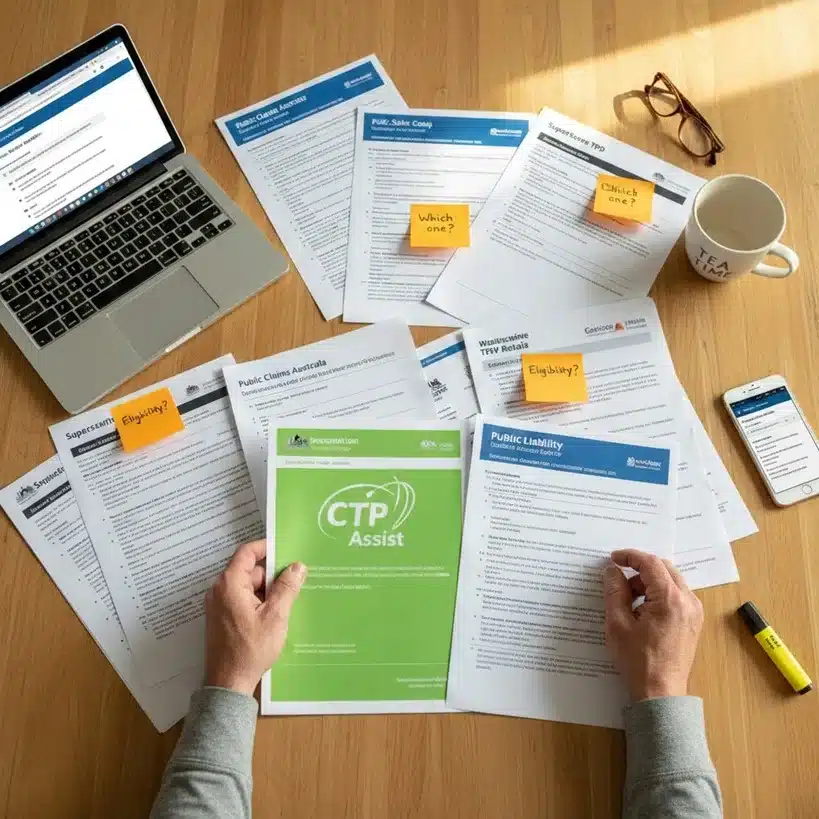
Every year, millions of Australians suffer injuries entitling them to compensation, yet many never access injury compensation they deserve. Whether injured in motor vehicle accidents, workplace incidents, public places, or through medical negligence, multiple legal pathways exist to secure financial recovery for your losses.
This comprehensive guide explains how to access injury compensation in Australia, covering eligibility requirements, claim processes, documentation needs, and strategies for maximising your entitlement.
Understanding Different Compensation Pathways in Australia
Australia’s compensation system offers various pathways depending on injury circumstances. Selecting the correct pathway is crucial for successful claims.
Compensation Types by Injury Source
Motor Vehicle Accidents: Compulsory Third Party (CTP) insurance covers injuries from traffic accidents, regardless of fault, in most cases. Each state operates distinct CTP schemes with varying benefits and thresholds.
Workplace Injuries: Workers’ compensation provides benefits for injuries arising from employment, including medical expenses, weekly payments, and lump sum compensation for permanent impairment.
Public Liability Incidents: Public liability claims address injuries on public or private premises due to negligence, such as slip and fall accidents, inadequate maintenance, or dangerous conditions.
Total and Permanent Disability (TPD): TPD insurance claims through superannuation or private policies compensate for permanent disabilities preventing future work.
Criminal Injuries Compensation: State-operated schemes assist victims of violent crimes, providing compensation when perpetrators cannot be identified or lack financial means.
Choosing the Right Pathway
Identifying liable parties determines appropriate compensation pathways. Some injuries involve multiple potential pathways – workplace motor vehicle accidents may qualify for both workers’ compensation and CTP claims. Specialist legal advice ensures you pursue all available avenues.
Eligibility Requirements for Injury Compensation
To successfully claim compensation injury, you must satisfy specific eligibility criteria.
General Eligibility Criteria
Most personal injury claims require establishing:
Duty of Care: The defendant owed you a legal duty to take reasonable care. This exists in numerous relationships – drivers to other road users, employers to workers, property owners to visitors, and healthcare providers to patients.
Breach of Duty: The defendant breached that duty through negligent acts or omissions falling below acceptable standards.
Causation: Direct causal link between the breach and your injuries. You must prove the negligence actually caused your harm, not merely provided an opportunity for injury.
Quantifiable Damages: Demonstrable losses including medical expenses, lost income, pain and suffering, and future care needs.
Specific Scheme Requirements
Different compensation schemes impose additional criteria:
CTP Insurance: Most jurisdictions require injury severity thresholds. Minor soft tissue injuries may not qualify unless they meet statutory definitions or exceed minimum impairment percentages.
Workers Compensation: An employment relationship must exist at the time. Independent contractors face different rules, and coverage may depend on specific arrangements.
Public Liability: The premises occupier or activity organiser must have breached a duty owed to you as a visitor or participant.
TPD Insurance: Policy definitions vary significantly. “Total and permanent disability” may require the inability to perform any occupation, versus inability to perform your specific occupation, dramatically affecting eligibility.
Step 1: Seek Immediate Medical Treatment
Medical treatment serves dual purposes – protecting your health and establishing injury documentation essential to claim compensation injury.
Why Medical Treatment Is a Priority
Health Comes First: Injuries worsen without proper treatment. Delayed care may permanently compromise recovery prospects.
Creates Injury Documentation: Medical records establish injury nature, severity, and causation. Gaps in treatment suggest injuries aren’t serious, weakening claims.
Establishes Causation Timeline: Contemporaneous medical evidence linking injuries directly to incidents is powerful proof that insurers struggle to refute.
Documentation to Request
Obtain copies of:
- Emergency department records
- GP consultation notes
- Specialist reports and imaging results
- Treatment plans and rehabilitation programs
- Medication prescriptions and pharmaceutical records
These documents form the evidentiary foundation for access injury compensation claims.
Step 2: Report the Injury Appropriately
Formal reporting creates official records and satisfies mandatory notification requirements.
Motor Vehicle Accidents
Police Reports: Contact the police at accident scenes. Official reports document circumstances, parties involved, and witness information.
Insurance Notifications: Notify your insurer and the at-fault party’s insurer promptly. Most policies require timely reporting.
CTP Claim Lodgement: Each state has specific CTP claim forms and lodgement processes with strict timeframes.
Workplace Injuries
Employer Notification: Immediately report injuries to supervisors or HR departments. Written notification creates an evidence trail if employers later dispute injury circumstances.
Workers Compensation Forms: Complete required claim forms within statutory timeframes, typically ranging from six months to three years, depending on jurisdiction.
Independent Medical Certificates: Obtain certificates from treating doctors supporting work capacity restrictions and causation.
Public Place Incidents
Incident Reports: Request that property owners or managers complete incident reports detailing what occurred, who witnessed events, and what hazards existed.
Witness Information: Collect contact details from anyone who saw the incident. Witness statements become crucial if liability is disputed.
Photographic Evidence: Document hazardous conditions, visible injuries, and accident scenes immediately. Evidence deteriorates rapidly – repairs occur, conditions change, and memories fade.
Step 3: Gather Supporting Evidence
Comprehensive evidence strengthens claims and counters insurer dispute tactics.
Essential Documentation
Medical Records: Complete treatment history from all healthcare providers demonstrates injury severity and ongoing impacts.
Witness Statements: First-hand accounts from bystanders, family members, and colleagues corroborate your version of events.
Financial Loss Records: Pay slips, tax returns, medical bills, and receipts quantify economic losses.
Photographs and Videos: Visual evidence of injuries, accident scenes, and property damage provides powerful support.
Preserving Evidence
Act quickly – evidence disappears as:
- Surveillance footage is automatically deleted
- Witnesses become unavailable, or memories fade
- Physical conditions change through repairs or weather
- Documents are lost or destroyed
Professional legal representation ensures critical evidence is identified and preserved before it’s too late.
Step 4: Understand Your Compensation Entitlements
Accurately valuing claims prevents accepting inadequate settlements and ensures you access injury compensation fully owed.
Economic Damages
Medical Expenses: Past and future treatment costs, including surgery, rehabilitation, medication, aids, equipment, and home modifications.
Lost Income: Wage loss from injury date through settlement, plus future earning capacity reduction if permanent impairment affects work capacity.
Care and Assistance Costs: Professional care needs, domestic assistance for tasks you can no longer perform, and family member care compensation.
Non-Economic Damages
Pain and Suffering: General damages compensating for physical pain, emotional distress, and reduced quality of life.
Loss of Enjoyment: Compensation for activities and hobbies you can no longer participate in due to injuries.
Psychological Impacts: Mental health conditions arising from injuries, including anxiety, depression, and post-traumatic stress.
Calculating Claim Value
Professional assessment by experienced motor vehicle accident lawyers or specialists in your injury type ensures accurate valuation. Insurers rely on claimants’ unfamiliarity with compensation ranges to secure cheap settlements. Don’t accept offers without independent legal valuation.
Step 5: Engage Specialist Legal Representation
Specialist representation dramatically improves prospects of successfully claim compensation injury at maximum value.
Why Specialist Lawyers Matter
Navigating Complex Legislation: Compensation law involves intricate statutes, regulations, and case law precedents. Specialists understand technical requirements and avoid procedural pitfalls.
Maximizing Compensation Outcomes: Experience with thousands of similar claims provides insight into fair settlement ranges and effective negotiation strategies.
Countering Insurer Tactics: Insurers employ sophisticated strategies to minimise payouts. Specialist lawyers recognise and neutralise these tactics.
No Win No Fee Availability: Most firms offer conditional fee arrangements, eliminating financial barriers to quality representation.
Selecting the Right Lawyer
Seek lawyers with:
- Proven experience in your specific injury type
- Strong track record of successful settlements and verdicts
- Clear communication and accessibility
- No-win no-fee arrangements for meritorious claims
Goodman Spring specialises in all compensation claim types, providing the expertise necessary for optimal outcomes.
Step 6: Lodge Your Claim Correctly
Proper claim lodgement is essential to access injury compensation without unnecessary delays or denials.
Formal Claim Requirements
Each compensation pathway has specific requirements:
Required Forms: CTP claims, workers’ compensation applications, and court proceedings each demand particular forms completed accurately.
Supporting Documentation: Medical reports, employment records, incident reports, and financial loss calculations must accompany claim forms.
Lodgement Deadlines: Statutory limitation periods are strict. Missing deadlines may permanently bar claims regardless of merit.
Common Lodgement Mistakes
Avoid these pitfalls:
Missing Time Limits: Limitation periods vary by claim type and jurisdiction. Legal advice ensures compliance with all deadlines.
Incomplete Documentation: Missing information delays processing and may result in claim rejections requiring appeals.
Incorrect Scheme Selection: Choosing the wrong compensation pathways wastes time and may exhaust limitation periods for correct claims.
Professional legal assistance ensures proper lodgement from the start.
Step 7: Navigate the Assessment Process
After lodgement, insurers assess claims through various evaluation methods.
Medical Assessments
Independent Medical Examinations: Insurers typically require examinations by their selected doctors. These assessments evaluate injury severity, causation, impairment levels, and future treatment needs.
Assessment Types: Depending on schemes, you may undergo functional capacity evaluations, psychiatric assessments, or whole-person impairment ratings.
Preparation: Your lawyer prepares you for examinations, reviews reports for accuracy, and challenges biased or incorrect findings.
Insurer Investigations
Information Requests: Expect requests for additional medical records, employment history, tax returns, and incident details.
Surveillance Possibilities: Insurers may conduct surveillance or social media monitoring. Your lawyer advises on protecting your claim throughout this process.
Responding Appropriately: Timely, accurate responses to reasonable requests expedite claims while protecting your interests.
Step 8: Negotiate Settlement or Proceed to Court
Most claims resolve through negotiation, though court proceedings become necessary when insurers refuse fair settlements.
Settlement Negotiations
Initial Offers Evaluation: First offers typically undervalue claims significantly. Your lawyer assesses adequacy based on comparable cases and your specific circumstances.
Counter-Offer Strategies: Effective negotiation requires understanding insurer motivations, litigation costs, and settlement authority levels.
Structured Settlements: Large claims may benefit from periodic payments rather than lump sums, providing long-term financial security.
Court Proceedings When Necessary
When settlement fails:
Litigation Timeline: Court cases typically take 1-3 years from filing through trial, depending on complexity and court availability.
Court Process: Formal pleadings, discovery, expert conferences, mediation attempts, and ultimately trial if settlement remains elusive.
Trial Preparation: Your lawyer prepares evidence, instructs expert witnesses, and presents your case effectively to judges or juries.
State-Specific Compensation Schemes
Australia’s federated system creates state and territory variations in compensation schemes.
New South Wales
CTP Scheme: The Motor Accident Injuries Act 2017 provides injury definitions and treatment frameworks affecting claim eligibility.
Workers Compensation: The Workers’ Compensation Act 1987 provides benefits with recent reforms which are likely to affect psychological injuries.
Dust Diseases: specialised scheme for asbestos and silica-related conditions provides unique compensation pathways.
Victoria, Queensland, and Other States
Each jurisdiction operates distinct schemes with variations in:
- Injury severity thresholds
- Benefit amounts and calculations
- Time limits and procedural requirements
- Available damage categories
Interstate injuries or claims involving multiple jurisdictions require specialised legal knowledge of applicable laws.
Time Limits You Must Know
Strict time limits govern all compensation claims. Missing deadlines can permanently bar otherwise valid claims.
Statute of Limitations by Claim Type
Personal Injury Claims: Generally, three years from the injury date or discovery date for latent injuries, though exceptions exist.
Workers Compensation: Notification timeframes range from six months to several years, depending on state and injury type.
CTP Claims: Must be lodged within specific periods post-accident, varying by jurisdiction.
Court Proceedings: After initial claim lodgement, subsequent limitation periods apply for commencing court action if settlements fail.
Importance of Acting Promptly
Beyond legal deadlines, early action provides:
Evidence Preservation: Witnesses, documents, and physical evidence remain available when claims are pursued promptly.
Medical Treatment Continuity: Early claim lodgement ensures treatment costs are covered, preventing gaps that weaken cases.
Better Negotiating Position: Insurers take seriously claimants who act decisively with professional representation.
Don’t delay seeking legal advice. Initial consultations are typically free, and no-win no-fee arrangements mean early engagement costs nothing while protecting your rights.
Common Obstacles and How to Overcome Them
Understanding typical challenges helps you claim compensation injury successfully despite insurer resistance.
Insurer Denial Tactics
Liability Disputes: Insurers often deny fault entirely or argue that contributory negligence reduced their responsibility.
Causation Challenges: Claims that injuries pre-existed accidents or resulted from unrelated causes attempt to avoid compensation obligations.
Pre-Existing Condition Arguments: Even when accidents aggravated dormant conditions, insurers argue no liability for worsening pre-existing injuries.
Your lawyer counters these tactics with strong evidence, expert opinions, and legal precedents establishing your entitlements.
Evidentiary Challenges
Insufficient Documentation: Gaps in medical treatment or lost incident reports weaken claims. Your lawyer helps reconstruct evidence through witness statements, expert reconstructions, and comprehensive investigations.
Witness Availability: Years may pass between injuries and trials. Early witness statement collection preserves testimony before memories fade or witnesses relocate.
Medical Opinion Conflicts: Competing expert opinions require careful analysis and potentially additional independent assessments.
Administrative Barriers
Complex Paperwork: Compensation schemes involve extensive forms, strict procedural requirements, and technical legal language. Professional assistance navigates these complexities efficiently.
Scheme Rule Interpretation: Ambiguous provisions are often interpreted favorably to insurers. Lawyers ensure rules are applied correctly and fairly.
Procedural Compliance: Missing deadlines, improper service, or incorrect court filings can derail strong claims. Legal expertise prevents procedural disasters.
No Win No Fee Arrangements
No-win no-fee agreements make quality legal representation accessible regardless of financial circumstances.
How They Work
No Upfront Costs: You pay nothing to engage lawyers or pursue claims initially.
Success Fees: If claims succeed, lawyers receive fees as a percentage of compensation (subject to statutory caps) or based on work done with agreed maximums.
Cost Risk Transfer: Lawyers absorb the risk of unsuccessful claims, ensuring they only pursue meritorious matters with reasonable success prospects.
Eligibility for No Win No Fee
Most legitimate injury claims with:
- Clear liability or reasonable prospects of proving negligence
- Significant injuries warranting compensation
- Sufficient potential recovery to justify legal costs
qualifies for no-win no-fee representation. Initial consultations assess eligibility at no cost.
Conclusion
Multiple pathways exist to access injury compensation in Australia, but navigating complex schemes, meeting strict deadlines, and countering insurer tactics requires specialised knowledge and experience. Understanding how to claim compensation injury through appropriate channels maximises your recovery prospects.
From initial injury reporting through evidence gathering, claim lodgement, assessment negotiations, and potential court proceedings, each stage demands careful attention to legal and procedural requirements. Professional legal representation ensures compliance while allowing you to focus on physical and emotional recovery.
Don’t let complexity, insurer pressure, or financial concerns prevent pursuing legitimate compensation. If you’ve suffered injuries due to negligence, contact us for a free, confidential assessment of your claim. Experienced solicitors will evaluate your circumstances, explain available pathways, and guide you through every step toward securing the compensation you deserve.