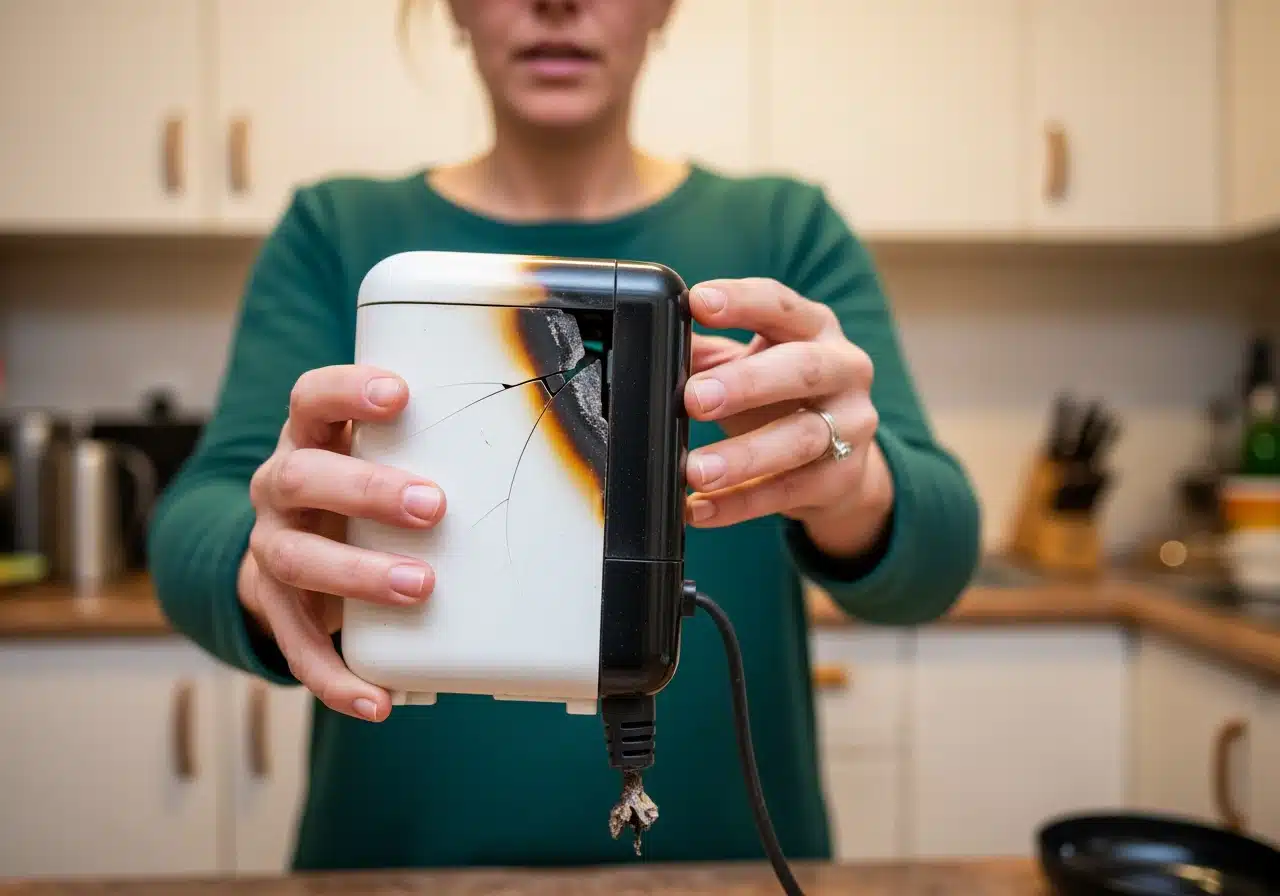
A faulty airbag that fails to deploy. A lithium battery that explodes during charging. A child’s toy containing toxic materials. When products fail, the consequences extend far beyond inconvenience. They can cause catastrophic injuries, permanent disabilities, and even death.
Across Australia, defective product injuries account for thousands of hospital presentations annually. The Australian Competition and Consumer Commission (ACCC) recorded over 750 product recalls in 2023 alone, spanning everything from household appliances to medical devices. Yet many people injured by defective products never pursue compensation, unaware that Australian Consumer Law provides robust protections when manufacturers, distributors, or retailers place dangerous products into the market.
Understanding product liability law becomes critical when a defective product causes harm. Unlike typical negligence claims where fault must be proven, product liability operates under strict liability principles. That means establishing that a company was careless is not necessary. Only three things need to be proven: the product was defective, an injury was suffered, and the defect caused that harm.
How Product Liability Differs from Standard Negligence Claims
The Strict Liability Framework Under Australian Consumer Law
Most compensation claims require proving that someone breached their duty of care through negligent actions. Product liability claims operate differently. Under Part 3-5 of the Australian Consumer Law (Schedule 2 of the Competition and Consumer Act 2010), manufacturers face strict liability for injuries caused by defective goods.
A personal injury claim against a manufacturer under strict liability is fundamentally different from standard negligence. There is no need to show the company knew about the risk and failed to act. Only the defect, the injury, and the causal link between them need to be established.
Power Imbalance and Why Consumers Are Protected
This approach acknowledges the power imbalance between individual consumers and large corporations. Manufacturers control the design, testing, and production processes. They possess the technical knowledge, resources, and data about potential risks.
Requiring injured consumers to prove specific acts of negligence would create an impossible burden, particularly when crucial evidence remains in the manufacturer’s possession. A product liability claim – like a public liability claim – recognises that individuals deserve legal protection when powerful entities fail in their responsibilities.
The Three Categories of Product Defects
Australian Consumer Law recognises three distinct types of product defects, each with different implications for proving claims.
Manufacturing Defects
Manufacturing defects occur when a product departs from its intended design during production. These defects affect individual items or limited production runs rather than entire product lines. Examples include a batch of bicycle helmets with improperly cured adhesive that fails on impact, or a single vehicle that leaves the assembly line with incorrectly installed brake components.
Manufacturing defect cases often present the strongest claims because the defect is readily apparent when comparing the faulty product to properly manufactured versions.
Design Defects
Design defects exist when the product’s blueprint itself creates unreasonable safety risks, even when manufactured perfectly according to specifications. These defects affect every unit produced. A kitchen appliance designed with insufficient insulation that creates burn risks, or a child’s crib with slat spacing that creates entrapment hazards, exemplify design defects.
Design defect claims require demonstrating that an alternative, safer design was feasible and practical. Expert testimony becomes crucial here.
Warning Defects
Warning defects occur when manufacturers fail to provide adequate instructions or warnings about non-obvious risks. Even properly designed and manufactured products can cause harm if consumers lack essential safety information.
Consider a powerful cleaning chemical that is safe when used as directed but causes severe burns if mixed with common household products. If the manufacturer fails to provide clear warnings about this risk, they may face liability for resulting injuries.
Who Can Be Held Liable for a Defective Product
Product liability claims across Australia can target multiple parties in the supply chain, depending on the circumstances of each case.
Manufacturers and Importers
Manufacturers bear primary responsibility under Australian Consumer Law. This includes the actual producer of the finished product, component manufacturers whose parts contributed to the defect, and companies that assemble products from various components.
Importers assume manufacturer liability when they bring foreign-made products into Australia. This provision ensures injured consumers have a local entity to pursue when overseas manufacturers prove difficult to sue.
Workers injured by defective workplace equipment may have both a workers compensation claim and a product liability claim. Workers compensation lawyers sydney regularly advise injured workers on pursuing both pathways simultaneously. Workers compensation lawyers sydney note that product liability compensation can cover heads of damage not available under standard workers compensation, including pain and suffering and economic loss beyond weekly payments. This makes exploring both pathways essential for workers seriously injured by defective equipment. Workers compensation lawyers sydney also advise that a TPD claim through superannuation may be available where the injury results in permanent inability to return to work.
Suppliers, Retailers, and Brand Owners
Suppliers and retailers face more limited liability, but can be held responsible in specific circumstances. If a retailer cannot identify the manufacturer or importer, they may face direct liability. Retailers who modify products or sell products they know are defective also risk liability.
Brand owners who apply their name or trademark to products manufactured by others may face liability as deemed manufacturers. This prevents companies from outsourcing production to avoid responsibility while still benefiting from brand recognition.
The ability to pursue multiple parties provides important practical advantages. If the manufacturer has limited assets or operates overseas, the importer or retailer can be pursued instead.
Establishing Causation in Product Liability Cases
Proving that a defective product caused injury requires establishing a clear causal link between the defect and harm. This element often determines whether claims succeed or fail.
Direct and Complex Causation Scenarios
Direct causation cases present straightforward scenarios. A defective ladder rung breaks, causing a fall and spinal fracture. The temporal proximity and mechanical connection between defect and injury leave little room for dispute.
Complex causation scenarios prove more challenging. Consider a defective pharmaceutical that increases heart attack risk by 15%. If suffering a heart attack while taking the medication, establishing that the drug caused the specific cardiac event requires sophisticated medical evidence and statistical analysis.
Expert Evidence and Proportionate Liability
Expert evidence becomes indispensable in most product liability cases. Engineers analyse how the product failed. Medical specialists establish the nature and extent of injuries. Accident reconstruction experts demonstrate how the defect led to the incident.
Australian law applies proportionate liability principles where multiple factors contribute to product-related injuries. Compensation is reduced based on contributory negligence while still holding the manufacturer accountable for the defect’s role in causing harm.
Defences Manufacturers Assert in Product Liability Claims
Understanding common defences helps anticipate challenges and strengthen claims from the outset.
State of Scientific Knowledge and Compliance Defences
The state of scientific knowledge defence allows manufacturers to avoid liability if the defect could not have been discovered given the state of scientific and technical knowledge when they supplied the product. This defence rarely succeeds. Courts set a high bar for what counts as genuinely undiscoverable.
Compliance with mandatory standards provides another defence. If a product complied with a mandatory Commonwealth, State, or Territory standard, the manufacturer may escape liability. However, this only applies to mandatory standards, not voluntary industry guidelines.
Misuse and Post-Supply Defect Defences
Manufacturers must anticipate reasonably foreseeable misuse, particularly for products marketed to children or used in emergency situations.
Post-supply deterioration from improper maintenance provides a partial or complete defence depending on circumstances. If a product is used beyond its intended lifespan or improperly stored after purchase, the manufacturer may argue that post-supply factors, not manufacturing defects, caused the failure.
These defences underscore the importance of preserving evidence after a product-related injury. Photographing the product in its post-incident condition before anyone touches it, retaining all components, packaging, and instructions are crucial steps.
Time Limits for Product Liability Claims
The Limitation Act 1969 imposes strict time limits for commencing product liability claims across Australia. Courts possess extremely limited discretion to extend expired limitation periods.
Primary Limitation Period and Discoverability
The primary limitation period gives three years from when awareness reasonably occurred of the injury, the defect, and the causal connection between them. This discoverability rule recognises that product defects and their health consequences may not be immediately apparent.
Someone who develops mesothelioma from asbestos exposure in a defective product begins their three-year period when they receive the diagnosis and understand the connection to the product. Product liability specialists can help assess exactly when your limitation period began.
The 10-Year Long-Stop Provision and Exceptions
The long-stop limitation period imposes an absolute 10-year deadline from when the manufacturer supplied the product into the market. This applies regardless of when discovery occurred of the injury or defect.
Exceptions to limitation periods exist for people under 18 and people under legal incapacity due to mental disability.
For Commonwealth employees injured by defective equipment in the course of their duties, comcare workers compensation sydney entitlements may apply in addition to product liability claims. Comcare workers compensation sydney claims operate under the Safety, Rehabilitation and Compensation Act 1988 (Cth) and have their own specific time limits that differ from state-based schemes.
Types of Compensation Available for Defective Product Injuries
Product liability claims can encompass substantial compensation across multiple categories.
Economic Damages
Medical expenses include all reasonable and necessary treatment costs. Lost income compensates for wages and employment benefits lost due to injury. For permanent injuries, claims can include the present value of future income losses.
Loss of superannuation represents a separate head of damage, compensating for retirement savings not accumulated because of the injury. Where permanent disability results, a TPD claim through superannuation may provide additional compensation on top of product liability damages. A TPD claim may pay a lump sum that is entirely separate from and in addition to any product liability settlement. A compensation lawyer sydney can help calculate the full economic value of these losses, including future care costs and lost earning capacity.
Non-Economic Damages
Pain and suffering damages compensate for physical pain, mental anguish, loss of enjoyment of life, and reduced quality of life. Australian law caps non-economic loss damages, with the maximum available only for the most catastrophic injuries.
Domestic assistance and care costs compensate for help with household tasks and personal care that can no longer be performed independently. Gratuitous care provided by family members also has quantifiable economic value and forms part of the compensation entitlement.
A motor vehicle accident claim may arise alongside a product liability claim where a defective vehicle component contributed to a road accident. This can significantly increase the total compensation available.
Why Expert Legal Representation Matters in Product Liability Cases
Product liability claims present unique complexities that make experienced legal representation essential.
Technical Complexity and Resource Imbalance
Technical complexity characterises these cases. Understanding whether a product was defective requires engineering expertise, manufacturing knowledge, and familiarity with relevant safety standards.
Resource imbalance heavily favours defendants. Manufacturers and their insurers employ sophisticated legal teams. Experienced compensation lawyers level this playing field by matching the defendant’s resources and expertise. Consulting a compensation lawyer sydney experienced in product liability ensures you do not underestimate or undervalue your claim at the outset.
Evidence Preservation and Identifying All Responsible Parties
Evidence preservation requires immediate action. Products deteriorate, get repaired, or disappear. Witnesses’ memories fade. Experienced lawyers know how to preserve crucial evidence before it is lost.
Identifying all responsible parties maximises recovery prospects. Skilled lawyers investigate the entire supply chain, identifying manufacturers, component suppliers, importers, distributors, and retailers who may bear liability.
Goodman Spring assists injured Australians with product liability claims, Comcare claim matters for injured Commonwealth employees, and the full range of personal injury and compensation entitlements on a no-win-no-fee basis.
Conclusion
Product liability law exists because consumers cannot protect themselves from defects hidden within complex manufactured goods. The strict liability framework under Australian Consumer Law recognises the fundamental imbalance between individual consumers and corporate manufacturers.
Product liability cases require substantial evidence, expert analysis, and strategic litigation to overcome well-resourced defendants and their sophisticated legal defences. Time limits create urgency, and preservation of evidence demands immediate action. Every claim is different – the outcome depends on your specific circumstances and the strength of available evidence.
If a defective product has caused serious injury to you or a family member, document everything, preserve the product, and seek legal advice promptly. For a free, confidential case assessment, speak with our product liability lawyers on (02) 9261 1799.