Millions of Australians participate in sports and recreational activities each year. Most activities conclude safely. But accidents causing serious injuries do occur – and when they do, the legal questions can be complex.
A rugby player suffers a spinal injury from an illegal tackle. A gym member falls on a poorly maintained treadmill. A swimmer strikes their head on an unmarked shallow pool bottom. A mountain biker crashes due to inadequate trail maintenance. In each situation, understanding who bears legal responsibility and what compensation is available requires careful analysis.
The key questions involve voluntary risk assumption, facility negligence, equipment defects, and supervision failures. Understanding sports injury compensation NSW rights protects both your recovery and your financial security when accidents disrupt your life.
Common Sports and Recreation Injuries in NSW
Contact Sports and Gym Injuries
The injury landscape varies across recreational activities, and each sport presents distinct legal considerations.
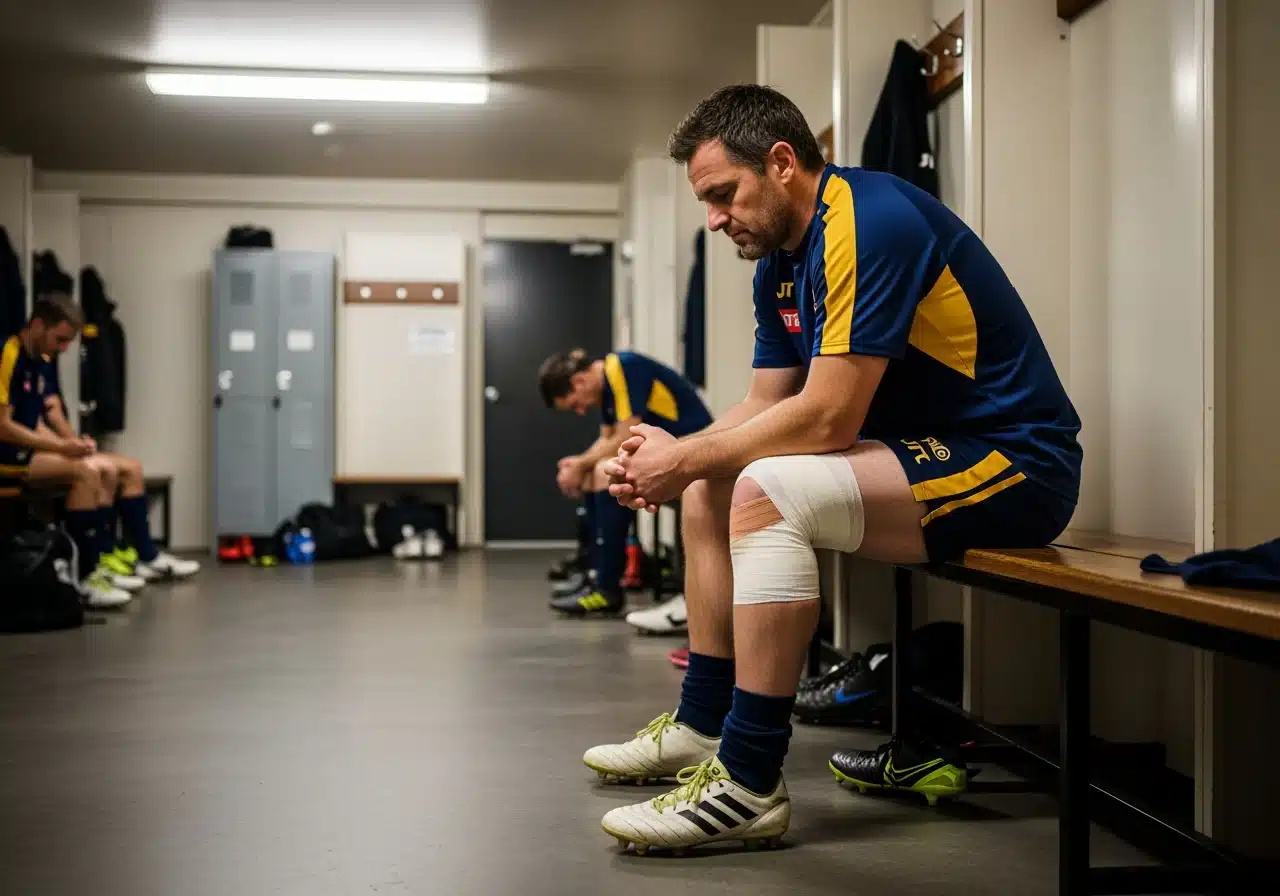
Contact sports – rugby league, rugby union, AFL, and soccer – generate high rates of fractures, concussions, ligament tears, and spinal injuries. While participants accept certain risks from physical contact, organisers and facilities must still prevent injuries caused by dangerous playing conditions, inadequate equipment, or failure to enforce player safety rules.
Head injuries and concussions receive particular scrutiny. Sports organisations that fail to implement concussion protocols, allow symptomatic players to continue, or fail to train staff on head injury recognition face liability for resulting harm.
Gym and fitness centre accidents arise from equipment failures, slippery floors, inadequate instruction, or insufficient supervision. Treadmill falls, weight machine malfunctions, and injuries from improper technique when trainers fail to supervise properly all create potential liability. Fitness facilities owe patrons a duty to maintain safe premises, provide adequate instruction, and ensure staff hold appropriate qualifications.
Swimming Pool and Cycling Accidents
Swimming pool incidents range from diving injuries in shallow water to slip and fall accidents on wet pool decks. Pool operators must clearly mark safe depths, provide adequate supervision – particularly in facilities serving children – maintain non-slip surfaces, and ensure water quality meets health standards.
Cycling and mountain biking accidents frequently involve falls on poorly maintained trails or crashes due to inadequate hazard warnings. When accidents result from trail defects, missing signage, or dangerous conditions that operators failed to address, liability attaches despite cycling’s inherent risks.
Adventure sports operators – rock climbing, skydiving, white-water rafting – must use properly maintained equipment, employ qualified instructors, conduct activities to industry safety standards, and warn participants about specific hazards beyond inherent risks.
Understanding Liability in Recreational Activities
Voluntary Assumption of Risk and the Civil Liability Act 2002
NSW law recognises that sports and recreational activities carry inherent risks that participants voluntarily assume. However, this doesn’t eliminate liability for negligence.
The Civil Liability Act 2002 Section 5L provides that people participating in “dangerous recreational activities” cannot recover damages for injuries from “materialisation of an obvious risk” of that activity. This protects activity providers from liability when injuries result from risks participants clearly understood and accepted.
A public liability claim remains available, however, when injuries result from negligence rather than inherent risk.
When Liability Remains Despite Voluntary Participation
Section 5L does not protect against negligence. This distinction proves critical.
A rugby player accepts the risk of injury from legal tackles but doesn’t accept risk from illegal dangerous play that referees fail to penalise. A rock climber accepts falling risks but doesn’t accept risks from defective equipment that operators knew required replacement.
Courts examine whether injuries resulted from risks inherent to the activity – where no liability exists – or from the defendant’s failure to take reasonable precautions, where liability follows.
Sports injury compensation NSW claims succeed when plaintiffs prove defendant negligence caused their injuries. This requires showing the defendant owed a duty of care, breached that duty, the breach caused the injury, and the plaintiff suffered compensable damages.
Negligence in Sports Facilities and Equipment
Poorly Maintained Premises and Defective Equipment
Facility operators and equipment providers face liability when negligence creates dangers beyond inherent activity risks.
Poorly maintained premises – uneven playing surfaces, damaged equipment, inadequate lighting, or unsafe spectator areas – create actionable negligence. A soccer player breaking their ankle in an unmarked pitch hole, a tennis player falling due to damaged court surfaces, or a basketball player injured by broken backboard glass all involve facility negligence rather than inherent risk.
Defective equipment that fails during use creates liability for suppliers, manufacturers, and facility operators. Equipment must be regularly inspected, maintained to manufacturer specifications, and replaced when wear makes it unsafe. Climbing ropes, gym machines, protective gear, and playing equipment all require systematic maintenance. When inspection records show facilities ignored maintenance requirements or used equipment beyond its safe lifespan, liability follows.
Supervision Failures and Missing Safety Warnings
Inadequate supervision particularly affects activities requiring instruction or monitoring. Gymnastics facilities must provide qualified spotters for complex manoeuvres, swimming pools need lifeguards in appropriate ratios, and rock climbing centres require staff monitoring climbers and belayers. When injuries occur because supervision was absent or inadequate, facilities face liability.
Missing safety warnings create liability when hazards aren’t obvious to participants. Pool depth markings, trail difficulty ratings, equipment weight limits, and warnings about specific dangers must be clearly displayed. A diver suffering spinal injury because depth wasn’t marked involves a failure to warn.
Failure to enforce safety rules that facilities themselves established also creates liability. If a facility’s policy requires protective equipment but staff don’t enforce it, injuries to participants not wearing mandated protection may generate facility liability.
Insurance Coverage and Public Liability Claims
Personal Accident Insurance Through Clubs
Many sports participants hold personal accident insurance through their clubs, associations, or individual policies.
Club and association coverage varies dramatically. Some sporting organisations provide comprehensive insurance covering medical expenses, income loss, permanent disability benefits, and rehabilitation costs. Others offer minimal coverage with low caps and numerous exclusions. Reviewing the club’s insurance certificate reveals what protection actually exists.
Coverage limitations create gaps that injured participants must address through other pathways. Common limitations include benefit caps on medical expenses, waiting periods before benefits begin, exclusions for pre-existing conditions, and time limits on income loss payments.
Public Liability Claims Against Sports Organisations
When personal accident insurance doesn’t provide adequate compensation, injured participants may pursue personal injury claims against sports organisations, facility operators, or equipment providers whose negligence caused injury.
Duty of care owed by clubs and associations requires safe playing conditions, properly maintained equipment, qualified coaching and officiating, and appropriate safety protocols. The specific duty varies with the activity’s nature and risk level – contact sports demand more comprehensive safety measures than non-contact activities.
Equipment supplier liability arises when defective gear causes injury. Manufacturers must design equipment meeting safety standards, warn of proper use requirements, and recall dangerous products. Retailers and rental operators must inspect equipment and withdraw damaged gear from service.
Proving breach of duty requires expert evidence about industry standards, documentation of the defendant’s actual practices, and evidence showing how the gap caused injury.
Goodman Spring is a personal injury law firm assisting injured Australians across NSW and beyond with motor vehicle accident, TPD, public liability, personal injury, workers compensation, and Comcare claims – all on a no win no fee basis.
Spectator Injuries and Children’s Sports Claims
Venue Safety and Spectator Rights
Spectators injured at sporting events may have recreational accident claims Australia against venue operators, event organisers, or other responsible parties.
Stadium and venue safety obligations require adequate seating maintenance, safe crowd circulation paths, proper railings and barriers, adequate lighting, and clear emergency exits. Venues must conduct regular safety inspections and address identified hazards promptly.
Protection from flying objects presents particular challenges at venues where balls or projectiles enter spectator areas. While spectators accept some risk of contact with objects integral to the sport, venues must provide protective netting where risks are highest and warn spectators about specific dangers.
Crowd control failures that cause injuries through overcrowding, inadequate security, or poor crowd management create venue liability.
Enhanced Duty of Care for Children
Enhanced duty of care for minors recognises that children cannot assess risks as adults do and require greater protection.
Parental consent and waivers required before children participate don’t eliminate organisers’ liability for negligence. Courts scrutinise these documents carefully and refuse to enforce waivers that attempt to exclude liability for serious negligence or breach of fundamental safety obligations.
School sports program liability attaches when schools organise sporting activities during school hours or school-sponsored programs. Schools must provide qualified supervision, age-appropriate activities, proper safety equipment, and emergency response capability.
Competition organisers must ensure age and skill-appropriate matching, enforce safety equipment requirements, provide medical staff at events, and implement injury response protocols.
Parents pursuing claims on behalf of injured children should act within limitation periods that can differ from adult claims. Prompt investigation and legal consultation ensures proper protection of children’s rights.
Time Limits and Proving Your Claim
Limitation Periods and Evidence Requirements
NSW imposes strict limitation periods for sports injury compensation NSW claims.
Three-year limitation periods apply to most personal injury claims, typically running from the accident date. Court proceedings must be filed before three years expires.
Discovery provisions may extend limitation periods when injuries or their causation wasn’t immediately apparent. Athletes who develop chronic conditions from repeated impacts, or whose full injury extent emerges gradually, may argue the period started when they reasonably should have known about the injury’s severity.
Incident reports and witness statements provide crucial contemporaneous evidence. Report injuries immediately to coaches, facility staff, or event organisers. Obtain contact details for witnesses. Written statements collected soon after events prove more reliable than testimony reconstructed years later.
Medical evidence must address causation – how the incident caused the diagnosed injuries. Video footage from sporting events or security cameras provides objective evidence. Request access to facility camera recordings immediately, as many systems overwrite after short periods.
For cyclists or participants involved in vehicle-related incidents travelling to competitions, a motor vehicle accident claim may run alongside a sports liability claim.
Workers Compensation for Professional Athletes
Professional and semi-professional athletes may qualify for workers compensation depending on their employment status and the circumstances of their injury.
Workers compensation lawyers sydney regularly advise professional athletes on whether their arrangements qualify as employment for compensation purposes. Professional athletes with employment contracts generally qualify as employees covered by workers compensation. Questions arise with independent contractor arrangements, appearance-based payments, and athletes receiving minimal compensation.
Workers compensation lawyers sydney understand that training injuries, travel to competitions, and promotional appearances required by contract all occur during employment, creating potential coverage for injuries sustained during these activities. For high-earning athletes, standard workers compensation caps on weekly payments may not replace full income loss, requiring supplementary claims against negligent parties.
For professional athletes whose career-ending injuries meet the relevant criteria, a TPD claim through superannuation may provide significant additional compensation beyond workers compensation entitlements.
Commonwealth employees – including those working in federal government sporting or recreation facilities – should consider whether comcare workers compensation sydney applies to their circumstances. Comcare workers compensation sydney entitlements operate under the Safety, Rehabilitation and Compensation Act 1988 rather than state-based workers compensation schemes, and the claims process differs accordingly. Comcare workers compensation sydney coverage extends to training activities, official competitions, and travel required by the employment arrangement.
Conclusion
Sports injury compensation NSW law balances encouraging participation in healthy recreational activities with protecting participants from negligent conduct by organisers, facilities, and equipment providers. The voluntary assumption of risk doctrine prevents liability for inherent sporting risks but doesn’t shield defendants from consequences of failing to provide safe facilities, equipment, adequate supervision, or reasonable care.
Recreational accident claims Australia require prompt action documenting injuries, preserving evidence, understanding insurance coverage, and seeking legal advice before limitation periods expire. The difference between inherent risk and negligence often requires expert analysis.
Every claim is different – outcomes depend on your specific circumstances. If you have suffered serious injury during sporting or recreational activities, contact our personal injury lawyers on (02) 9261 1799 to discuss whether your injuries resulted from actionable negligence and what compensation pathways may be available.