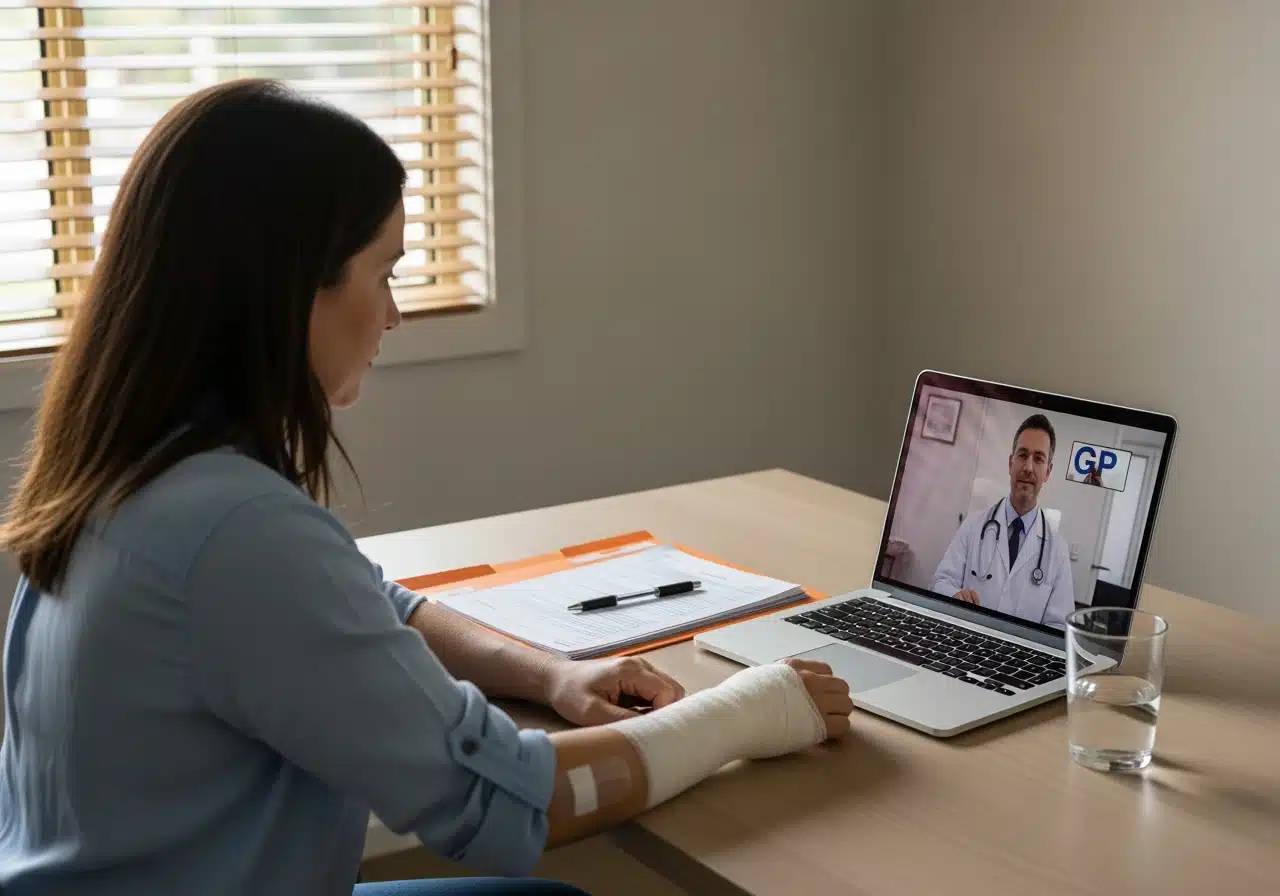
Telehealth appointments have become standard medical care across NSW since 2020. You’re getting the treatment you need conveniently, but when it comes time to prove your injuries in a compensation claim, the uncertainty sets in. Virtual consultations create questions about evidence that traditional face-to-face appointments never raised.
Courts are now determining how to treat digital medical records in personal injury cases. The legal framework is still catching up to medical reality, and that gap creates real anxiety for injured people who’ve relied on virtual consultations.
Understanding Telemedicine Evidence in NSW Courts
NSW courts have decades of precedent about how to weigh traditional medical evidence, but only a handful of cases specifically address telehealth records. That gap creates genuine concern when you’re already worried about proving your case.
The hesitation makes sense. A video call isn’t quite the same as a physical examination. Your doctor can’t palpate your shoulder, test your range of motion hands-on, or observe your gait as you walk into the consulting room. These limitations feel like they might weaken your claim, and that fear can stop you from seeking the care you actually need.
Telemedicine records are being accepted as evidence in NSW compensation cases right now. The courts recognise that virtual consultations are legitimate medical care, not second-rate substitutes. What matters is understanding how to present this evidence effectively and when you might need to supplement it.
How NSW Courts Evaluate Telemedicine Injury Claims NSW
When a judge or insurer reviews your telehealth records, they’re not automatically dismissing them because they weren’t face-to-face appointments. Instead, they’re asking the same questions they’d ask about any medical evidence: Is it relevant? Is it reliable? Does it help establish your injury and its impact on your life?
The State Insurance Regulatory Authority has acknowledged telehealth as a valid form of medical consultation for workers compensation purposes, which signals acceptance across the broader compensation system. This matters because it establishes that virtual care isn’t inherently less credible than in-person treatment.
Courts look at several factors when weighing digital medical evidence NSW. They’ll consider whether your doctor already knew you from previous in-person visits, which provides important context. They’ll examine whether the virtual consultation was appropriate for the type of injury being assessed. And they’ll look at whether the doctor’s notes reflect a thorough evaluation, even if it was conducted remotely.
A GP reviewing your progress on a lower back injury they’ve been treating for months can provide valuable telehealth evidence. They know your baseline, they’ve examined you physically before, and they’re tracking changes over time. That’s different from a first-time consultation with a new specialist who’s never seen you in person, which might carry less weight in proving the initial extent of your injuries.
Documentation Requirements for Digital Medical Evidence NSW
Many claims hit a snag with documentation, and it’s frustrating because it’s not something you’d naturally consider when you’re just trying to get medical care. Telehealth consultations often generate less detailed records than in-person visits, not because doctors are being careless, but because the format is different.
Your doctor might not document what they can’t observe through a screen. They’re not noting your posture as you sit in the waiting room, they’re not recording how you moved from the chair to the examination table, and they’re not observing dozens of small physical cues that inform their clinical judgment. These observations often don’t make it into telehealth notes because they simply weren’t available.
This documentation gap doesn’t make your injury less real, but it can make it harder to prove. When you’re dealing with an insurer who’s looking for reasons to minimise your claim, sparse medical records give them ammunition. They’ll argue that without detailed physical examination findings, there’s insufficient evidence of the severity you’re claiming.
You can address this proactively. During telehealth appointments, specifically ask your doctor to note what you’re showing them. If you’re demonstrating a reduced range of motion in your shoulder, ask them to record what they’re observing. If you’re describing pain levels or limitations, request that these details be documented thoroughly. It feels awkward to direct your doctor’s note-taking, but it’s your claim and your future financial security at stake.
When Virtual Evidence Isn’t Sufficient
Telehealth records alone won’t always be sufficient for a compensation claim. This isn’t about the legitimacy of virtual care, it’s about the practical reality of proving your case to sceptical insurers and courts.
If you’re claiming significant physical injuries that require objective assessment, you’ll almost certainly need at least some in-person medical evidence. An orthopaedic assessment of a knee injury, a neurological examination after a head trauma, or a psychiatric evaluation for psychological injury all benefit enormously from face-to-face consultation. The doctor needs to physically examine you, observe you, and conduct tests that simply can’t happen through a screen.
We worked with a warehouse worker from Bankstown who’d injured his back lifting boxes. He’d been managing his care entirely through telehealth because he couldn’t take time off work for appointments. When his workers compensation claim was disputed, the insurer argued there was no objective evidence of his injury severity. We arranged for him to see an independent specialist in person, who conducted a thorough physical examination and provided a detailed report. That single appointment transformed his claim from questionable to compelling.
The lesson isn’t that his telehealth care was worthless; it established his treatment history and showed he’d been consistently seeking help. But the in-person examination provided the concrete, objective findings that the insurer couldn’t easily dismiss.
Combining Virtual and In-Person Medical Evidence
The most successful injury claims use a combination of telehealth and in-person evidence, and this approach makes sense both medically and legally. You get the convenience of virtual care for routine follow-ups and ongoing management, while ensuring you have the solid, detailed physical examinations that strengthen your legal case.
Consider the analogy of building a house. Telehealth appointments are your regular maintenance; they keep things running, they document your ongoing issues, and they show consistent care. In-person examinations are your foundation; they provide the structural support that everything else rests on. You need both.
This hybrid model also helps address a common concern: that relying too heavily on telehealth might suggest your injuries aren’t serious. If someone’s truly hurt, wouldn’t they insist on seeing their doctor face-to-face? This is faulty logic; plenty of seriously injured people use telehealth for perfectly valid reasons, but it’s a logic that insurers sometimes employ. Having a mix of consultation types neutralises this argument.
Practically, this might mean using telehealth for your regular GP check-ins and medication reviews, but making sure you see specialists in person for detailed assessments. It might mean having your initial consultation after an injury, face-to-face to establish baseline findings, then using virtual appointments for progress reviews.
Common Insurer Arguments Against Telemedicine Evidence
Understanding the other side’s tactics helps you prepare better evidence. Insurers challenging telemedicine injury claims NSW typically raise three main arguments, and you should anticipate them from the start.
First, they’ll question whether a proper examination actually occurred. They’ll point to the absence of physical examination findings and suggest the doctor couldn’t adequately assess you. This argument has some merit in certain situations, which is why supplementing with in-person assessments matters.
Second, they’ll argue that telehealth notes are less reliable because they’re based primarily on your self-reporting rather than objective clinical findings. This is particularly common in soft tissue injury claims where physical signs are subtle. The insurer’s position is essentially that you could be exaggerating, and the doctor had no way to independently verify your claims through a screen.
Third, they’ll sometimes suggest that choosing telehealth over in-person care indicates your injuries weren’t as serious as you’re claiming. This argument is weaker and increasingly outdated as telehealth becomes normalised, but it still appears in insurer correspondence and legal submissions.
You can counter these arguments with strategic evidence gathering. Make sure your doctors document everything they can observe, even remotely. If you’re showing them a swollen ankle on video, ensure they note what they saw. Request that doctors explain in their notes why telehealth was appropriate for that particular consultation. And maintain a clear record of which appointments were virtual and which were face-to-face, so there’s no confusion about the nature of your care.
Technical Requirements for Digital Medical Records
The quality and format of your telehealth records can affect their admissibility and weight as evidence. A poorly documented video call with technical problems creates weaker evidence than a well-conducted virtual consultation with proper record-keeping.
Courts need to be satisfied that your telehealth consultation was conducted securely and that the records are authentic. This usually isn’t a problem with established platforms used by major medical practices, but it can become an issue if you’ve used informal video calling services or if records are incomplete.
Your doctor should be using a platform that complies with Australian privacy laws and maintains proper medical records. The notes should clearly indicate the consultation was conducted via telehealth, the date and duration, and what was discussed and observed. If your doctor’s telehealth records are sparse or informal, you might need to request more detailed documentation or follow up with an in-person appointment to create a more complete record.
Some medical practices are still developing their telehealth documentation standards, which means the quality varies significantly. If you’re pursuing a compensation claim and relying on virtual consultations, it’s worth checking that your medical records are actually detailed enough to be useful. You have the right to request copies of your medical records, and reviewing them early can help you identify gaps before they become problems.
Independent Medical Examinations via Telemedicine
Independent medical examinations present particular complexity for telemedicine injury claims NSW. NSW courts have traditionally placed significant weight on these examinations conducted by specialists who assess you specifically for legal purposes. These examinations have always been in-person, comprehensive evaluations. Now, some experts are offering virtual assessments, and the legal community is divided on their value.
A virtual independent medical examination will almost always carry less weight than an in-person assessment for a serious injury claim. Courts and insurers expect experts to conduct thorough physical examinations when providing opinions about injury severity, causation, and prognosis. A specialist who’s never physically examined you will find it harder to provide the definitive opinions that win cases.
That said, virtual expert consultations can still serve useful purposes. They’re valuable for psychological injury assessments where observation and conversation are central to the evaluation. They work well for follow-up assessments when the expert has previously examined you in person. And they can be appropriate for reviewing specific aspects of your claim that don’t require physical examination, like vocational capacity or treatment planning.
At Goodman Spring, we’re careful about when we recommend virtual versus in-person expert assessments. For a significant motor vehicle accident claim with disputed physical injuries, we’ll virtually always arrange face-to-face specialist examinations. For ongoing matters where the expert already knows the client, a telehealth follow-up might be perfectly adequate.
Psychological Injury Claims and Telehealth Evidence
Interestingly, telehealth evidence is generally more accepted for psychological injury claims than physical injury claims, and this makes sense when you consider how these conditions are assessed. A psychiatrist or psychologist doesn’t need to physically examine you in the traditional sense, they’re evaluating your mental state through conversation, observation, and clinical interview.
The NSW Government has recognised telehealth as appropriate for mental health services, which strengthens its acceptance in psychological injury claims. Courts understand that a video consultation allows the mental health professional to observe your presentation, affect, and communication in ways that are clinically meaningful.
This doesn’t mean you should rely exclusively on telehealth for a psychological injury claim, but it does mean you can be more confident that virtual consultations will be taken seriously. If you’re claiming psychological injury following a workplace incident or accident, your regular telehealth sessions with your psychologist create a strong treatment record that demonstrates the ongoing impact.
The key is ensuring your mental health provider documents thoroughly. They should note your presentation, your reported symptoms, their clinical observations, and how your condition is progressing. These details matter enormously when your claim is assessed.
Building Your Evidence Strategy
If you’re managing an injury while also considering a potential compensation claim, you’re juggling competing priorities. You need convenient, accessible medical care, but you also need evidence that will stand up to scrutiny months or years down the track.
Start with an in-person assessment shortly after your injury if at all possible. This creates a baseline record with detailed physical examination findings that document your initial condition. Even if you use telehealth for most of your follow-up care, having that initial face-to-face consultation makes an enormous difference to your claim.
Use telehealth strategically for ongoing management, regular check-ins, and consultations where physical examination isn’t critical. These appointments maintain your treatment record and demonstrate that you’re taking your recovery seriously. They’re valuable evidence, just not sufficient on their own for proving serious injuries.
Schedule in-person appointments at key points: when your condition changes significantly, when you need a specialist assessment, and when you’re preparing for any formal claim process. These appointments provide the objective clinical findings that strengthen your case.
Keep your own records too. Note what you’re experiencing, what you’re telling your doctors, and what advice they’re giving you. If your formal medical records end up being sparse, your contemporaneous notes can help fill gaps and refresh your memory later.
When Legal Advice Becomes Essential
If you’re relying primarily on telehealth evidence for a significant injury claim, you’re probably going to face challenges from the insurer. That doesn’t mean your claim is doomed, but it does mean you need proper legal advice about how to strengthen your evidence before the insurer makes a decision.
Many people wait until their claim is rejected to seek legal help, which makes everything harder. If you know you’ll be making a compensation claim and you’ve been using mostly telehealth, talking to a compensation lawyer early helps you understand what additional evidence you need to gather while you’re still in the treatment phase.
We see this pattern repeatedly: someone has a genuine injury, they’ve been managing it sensibly through telehealth, and then they’re blindsided when the insurer disputes their claim based on “insufficient medical evidence.” By that point, it’s often months or years after the injury, and arranging fresh medical assessments is more complicated.
If you’re dealing with a Total and Permanent Disability claim or Comcare matter, the stakes are even higher and the evidentiary requirements more demanding.
The Current State of Telemedicine Evidence in 2026
NSW courts are accepting telemedicine evidence as part of injury claims in 2026, but they’re evaluating it carefully and often giving it less weight than traditional in-person medical evidence. This isn’t necessarily unfair; there are genuine limitations to what can be assessed remotely, but it means you need to be strategic.
The law will continue evolving as more cases work through the system and as courts develop clearer principles for evaluating telehealth evidence. But you can’t wait for perfect legal clarity if you’re injured now and need to protect your claim. You have to work with the current reality, which means using telemedicine thoughtfully while ensuring you have the in-person medical evidence that courts and insurers still expect for serious injury claims.
Your telehealth consultations aren’t wasted or worthless; they’re part of your treatment record and they demonstrate ongoing medical care. But they’re unlikely to be sufficient on their own if you’re claiming significant injuries with substantial compensation. The hybrid approach, combining virtual and face-to-face care, gives you both convenience and the robust evidence you need.
If you’re unsure whether your medical evidence is strong enough or whether you need additional in-person assessments, contact us for a free case assessment. We can review what you have, identify any gaps, and help you build the strongest possible claim. Telemedicine has changed how we access healthcare, but the fundamentals of proving an injury claim haven’t disappeared; they’ve just become more complex, and that’s exactly where experienced legal guidance makes the difference.