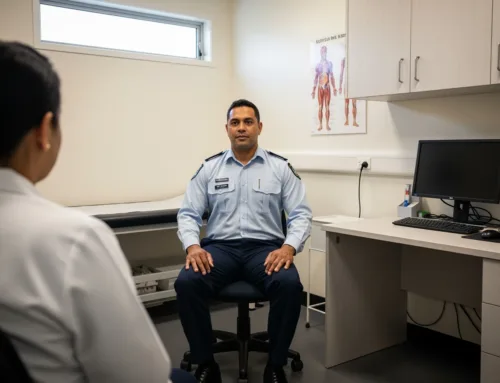
You’ve been injured at work, and someone’s just told you that you should look into workers’ comp. If you’re like most people, you’re not entirely sure what that means, whether you qualify, or how to even start the process. That’s completely normal – and it’s exactly why so many injured workers in NSW miss out on the support they’re entitled to.
Workers’ compensation isn’t some abstract legal concept. It’s a system designed to help you when an injury or illness stops you from doing your job. Whether you’ve hurt your back lifting boxes, developed a repetitive strain injury, or been injured in a workplace accident, workers’ compensation NSW exists to cover your medical bills, lost wages, and recovery costs. The challenge is that the system can feel overwhelming when you’re already dealing with pain, stress, and uncertainty about your future.
What you need to know to get started – without the legal jargon or runaround.
What Workers’ Compensation Actually Covers
Workers’ compensation in NSW provides financial support if you’re injured or become ill because of your work. That includes physical injuries like fractures or burns, but also conditions that develop over time, such as hearing loss, mental health issues, or chronic pain from repetitive tasks.
The system covers several types of support. You’re entitled to have your medical expenses paid, including doctor visits, physiotherapy, surgery, and medication. If your injury means you can’t work – or can only work reduced hours – you’ll receive weekly payments to replace your lost income. In more serious cases, if your injury results in permanent impairment, you may be eligible for a lump sum payment.
What surprises many people is that workers’ comp also covers injuries that happen outside your usual workplace. If you’re injured while travelling for work, attending a work event, or even during your lunch break in some circumstances, you may still be covered. For injuries involving motor vehicle accidents during work, you may have additional compensation options available.
Why This Feels Harder Than It Should
The workers’ compensation system should be straightforward, but it rarely feels that way when you’re the one trying to navigate it. Part of the problem is that you’re expected to understand eligibility rules, deadlines, and paperwork requirements while you’re in pain and worried about money.
There’s also the emotional weight of it. You might feel guilty for “making a fuss” or worry that your employer will see you as difficult. Some workers hesitate because they’re concerned about job security or because they don’t want to seem like they’re exaggerating their injury. These feelings are incredibly common, but they shouldn’t stop you from claiming what you’re legally entitled to.
Then there’s the insurance company. Even though workers’ compensation is designed to help you, the insurer’s job is to assess claims carefully – and sometimes that means questioning your injury, delaying payments, or offering less support than you actually need. It’s not personal, but it certainly feels that way when you’re struggling to pay bills.
Who Qualifies for Workers’ Comp in NSW
If you’re employed in NSW, you’re almost certainly covered by workers’ compensation insurance. This includes full-time, part-time, and casual workers. It doesn’t matter if you’ve only been in the job for a week – you’re still covered.
The key requirement is that your injury or illness must be work-related. That means it happened while you were doing your job, or it developed because of the type of work you do. A warehouse worker who injures their shoulder lifting stock qualifies. So does an office worker who develops carpal tunnel syndrome from typing, or a teacher experiencing anxiety due to workplace stress.
Independent contractors and some types of workers aren’t automatically covered, though there are exceptions. If you’re unsure about your employment status, it’s worth checking with Goodman Spring or reviewing the guidelines on the State Insurance Regulatory Authority (SIRA) website.
One important point: you don’t need to prove that your employer did anything wrong. Workers’ compensation is a no-fault system, which means you can claim even if the injury was partly your fault or simply an accident.
The First Steps After a Workplace Injury
When you’re injured at work, the immediate priority is getting medical help. Don’t downplay your injury or push through the pain because you’re worried about inconveniencing your employer. Your health comes first, and delaying treatment can make your injury worse – and your claim more complicated.
Once you’ve seen a doctor, you need to report the injury to your employer as soon as possible. NSW law requires you to notify your employer within a specific timeframe, and missing that deadline can jeopardise your claim. You don’t need to submit a formal written report straight away, but let your supervisor or HR department know what’s happened.
Your employer should then provide you with a workers’ compensation claim form. Fill it out carefully and return it promptly. Many claims start to go wrong at this stage – incomplete or delayed forms give insurers a reason to question your claim.
Keep records of everything. That means medical certificates, receipts for any treatment you’ve paid for, details of time off work, and copies of any correspondence with your employer or the insurer. Your claim is like building a case – the stronger your evidence, the better your position.
What Happens Once You Lodge Your Claim
After you submit your claim, it goes to your employer’s workers’ compensation insurer. They’ll review the details, and in many cases, they’ll approve straightforward claims without much fuss. You should start receiving weekly payments and have your medical expenses covered.
But not all claims are approved immediately. The insurer might ask for more information, request an independent medical examination, or investigate the circumstances of your injury. This process can feel intrusive and stressful, especially if you’re already anxious about money.
If your claim is rejected, don’t assume that’s the end of it. Insurers reject claims for all sorts of reasons – some valid, others not. You have the right to dispute a rejection, and many rejected claims are overturned on review. Our team has helped countless NSW workers successfully challenge insurer decisions and secure the compensation they deserve.
The Guilt You’re Probably Feeling (and Why It’s Misplaced)
It’s incredibly common to feel guilty about claiming workers’ compensation. You might worry that you’re letting your team down, that your boss will think less of you, or that you’re somehow taking advantage of the system.
The truth is straightforward: workers’ compensation exists because work injuries happen, and when they do, you deserve support. Your employer pays insurance premiums specifically to cover situations like yours. You’re not asking for a favour – you’re accessing a legal entitlement.
Some workers also hesitate because they fear retaliation. While it’s illegal for an employer to punish or dismiss you for making a workers’ comp claim, that doesn’t stop the worry. If you’re concerned about how your employer might react, it’s worth speaking to a lawyer who can explain your rights and protections under NSW law.
When Weekly Payments Stop (and What to Do)
Weekly payments aren’t indefinite. Depending on the severity of your injury and how long you’re off work, your payments may reduce or stop after a certain period. This can come as a shock if you’re still recovering and not ready to return to work.
In NSW, weekly payments are divided into different stages. Initially, you’ll receive a higher percentage of your pre-injury wages. After 13 weeks, the amount may reduce, and after 130 weeks, payments can stop altogether unless you meet specific criteria, such as having no current work capacity and being unlikely to return to work.
Suppose your payments are about to stop, but you’re still unable to work. In that case, you may be able to challenge that decision or explore other options, such as making a Total and Permanent Disability claim through your superannuation. We’ve supported many clients in this situation – one client, a construction worker from Parramatta, had his payments cut off after 18 months, but we successfully argued that his back injury prevented him from returning to any type of work, securing ongoing support.
Medical Disputes and Independent Examinations
One of the most frustrating parts of a workers’ comp claim is when the insurer questions your doctor’s assessment. They might send you to an independent medical examiner (IME) – though “independent” is a stretch, since the insurer chooses and pays the doctor.
These examinations can feel like an interrogation. The doctor may spend only a few minutes with you, and their report might downplay your symptoms or suggest you’re fit to return to work when you’re clearly not. It’s disheartening, especially when your own treating doctor has a completely different view.
If an IME report doesn’t reflect your reality, you can dispute it. Your treating doctor’s opinion carries weight, and if there’s a significant discrepancy, you may be able to request a further assessment or take the matter to the Personal Injury Commission for resolution.
Returning to Work (Even When You’re Not Ready)
At some point, your insurer or employer may push for you to return to work. Sometimes this is reasonable – light duties or a gradual return can be part of a healthy recovery. But other times, it’s premature, and you’re being pressured back before you’re physically or mentally ready.
You’re not obligated to return to work until your doctor clears you. If your employer offers modified duties that suit your restrictions, that’s worth considering. But if they’re asking you to do tasks that will aggravate your injury, you have every right to refuse.
We once worked with a nurse who’d injured her shoulder. Her employer wanted her back on the ward within weeks, but lifting patients would’ve made the injury worse. We helped her negotiate a phased return with genuinely suitable duties, and she eventually made a full recovery without compromising her claim.
Start Here, Not with Perfection
If you’re injured and unsure whether to claim, the answer is almost always yes – it’s worth exploring your options. You don’t need to have everything figured out before you start. You just need to take the first step: see a doctor, report your injury, and lodge your claim.
The workers’ compensation NSW system is there to support you, but it won’t come looking for you. The system rewards people who act quickly, keep good records, and don’t give up when things get complicated.
If your claim has been rejected, if your payments have stopped, or if you’re simply not sure where to start, contact us today for a free case assessment. We’ve helped thousands of NSW workers secure the compensation they’re entitled to, and we can do the same for you.
You’re not alone in this. You’re not asking for too much. You’re simply asking for what’s fair – and that’s something worth fighting for.